
SERVICE · R&D
R&D & Custom Project Development
Technology Solutions Tailored to Your Needs
Alongside standard products, TEDEG Defence develops engineering projects tailored to customer requirements.
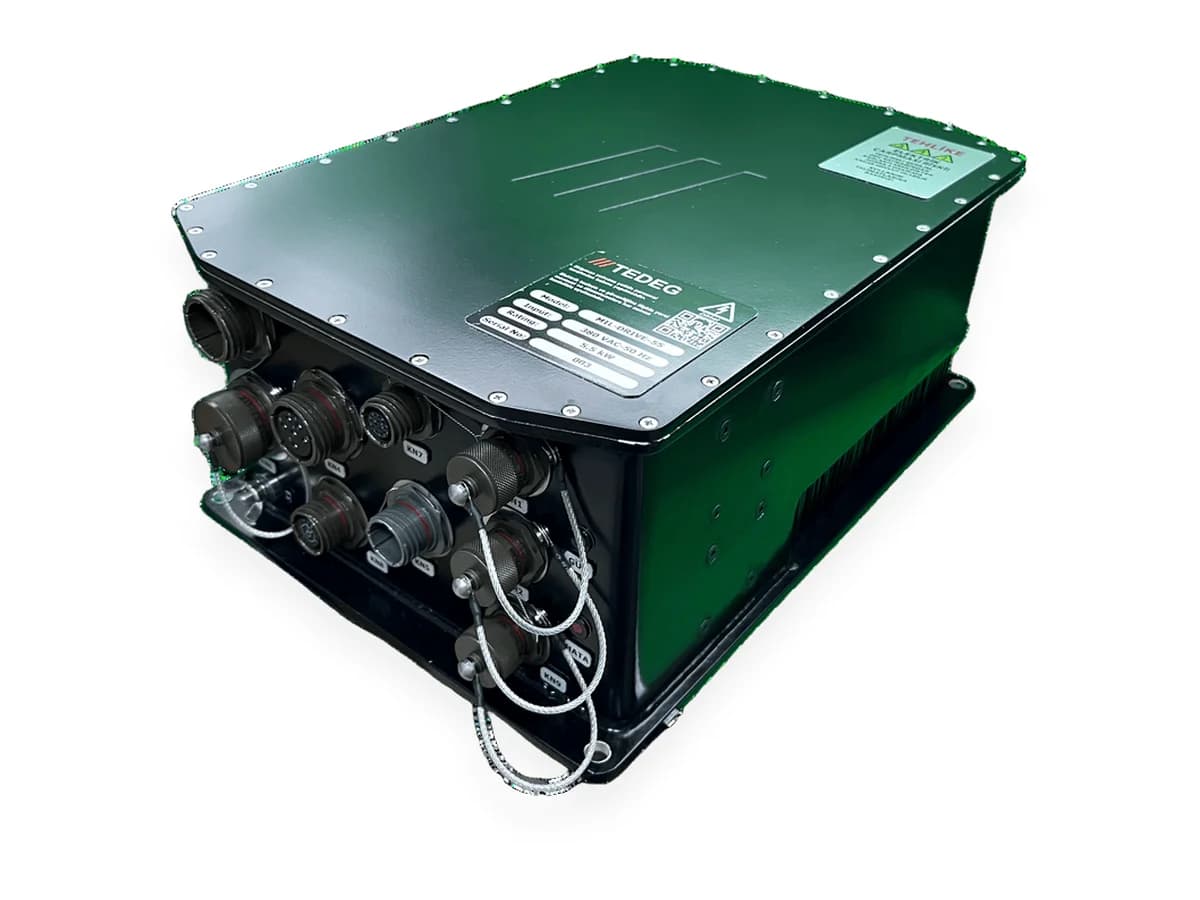
Custom Project Capabilities
Concept development
Custom power system design
Platform-based electronic solutions
Prototype production
Rapid engineering solutions
Indigenous equivalent development projects
Obsolescence solution studies
Military modernisation projects
Critical subsystem localisation studies
How we work
Custom projects start from your technical requirements document, or from a problem statement when no document exists yet: a unit that the market does not offer in the combination you need, an imported subsystem whose supply has become uncertain, a product that keeps failing in the field, or a load profile that off-the-shelf equipment cannot handle. We read the requirement against our existing product platforms first, because the fastest route is usually a configured or extended product rather than a new design.
The concept phase closes with an agreed architecture and a verification approach. Prototypes are built in-house and taken through bench verification; where it helps, a verification unit is trialled on your own test infrastructure with your real loads before the design is frozen. Series qualification follows on the frozen configuration. Throughout, electronics, software and mechanical work run as one team, so that interfaces between disciplines do not become open items at the end.
What we deliver
The deliverables follow the phases. The concept phase produces the architecture description, the compliance matrix against your requirements document and the verification approach. The design phase produces the design package: schematics, PCB data, firmware, 3D models and manufacturing drawings, with the bill of materials and the approved sources for critical components. The prototype and verification phases produce the prototypes themselves, the test procedures and the records of bench and platform trials.
For indigenous equivalent and obsolescence work the delivery also states the interchangeability basis: which interfaces, envelope and performance points are matched to the original and where the design deliberately differs. Supply-risk components are identified at the design stage following the IEC 62402 and SD-22 (DMSMS) approach, with alternative options recorded in the bill of materials. The final delivery is a configuration ready for series production under our own quality system, with the documentation needed to maintain it over the platform's life.
Standards and products we build on
Custom designs follow the same basis as our products: MIL-STD-810 for environmental ruggedness, MIL-STD-461 for EMI/EMC, MIL-STD-1275 on 28 VDC vehicle networks, MIL-STD-1399 on naval platforms and MIL-DTL-38999 connectors. Qualification is demonstrated at an accredited laboratory; until then a design is described as designed to the standard.
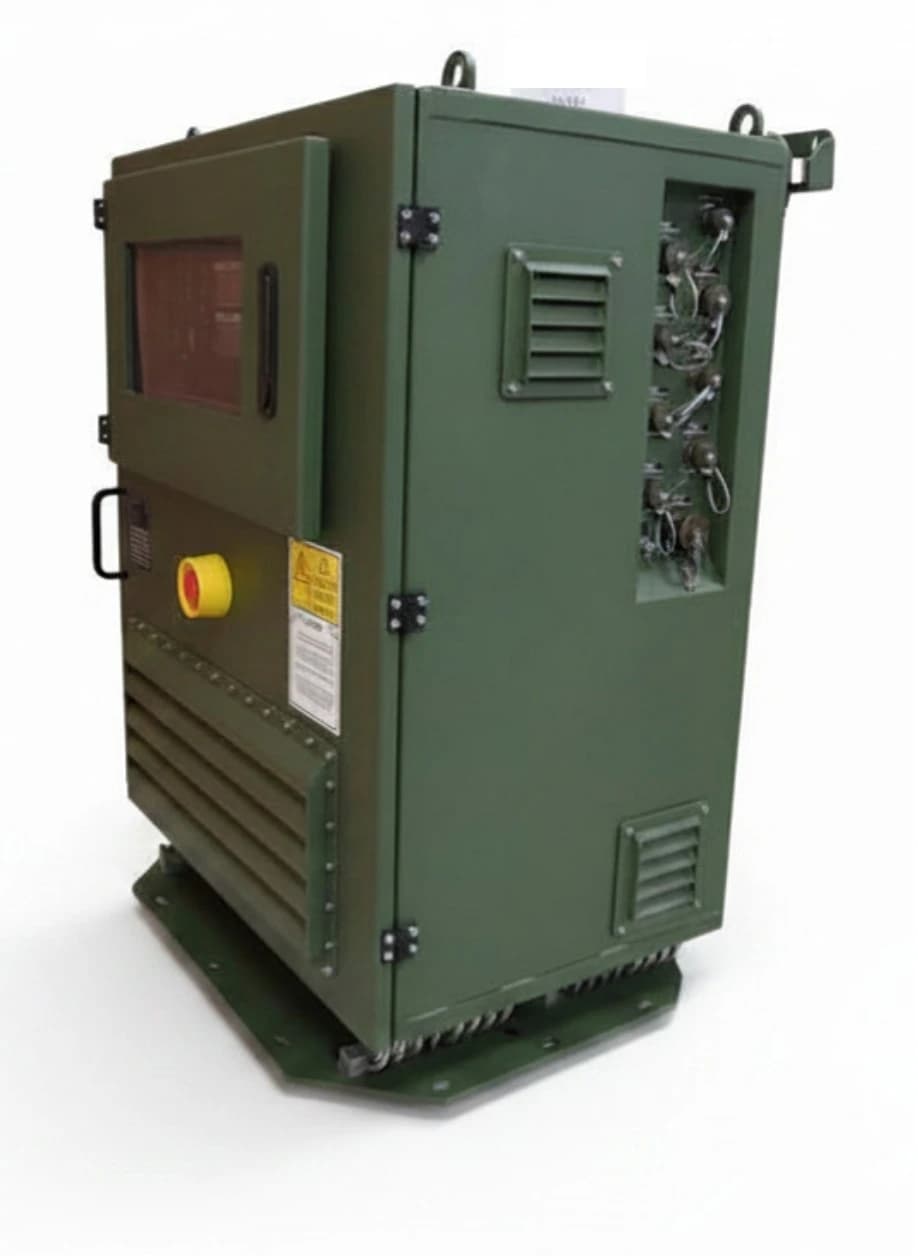
Our product families are the starting points. The Mil-Drive-55 induction motor drive has been configured for pedestal and turret motion, with its control loop tuned to the platform's dynamics. The PowerGuard Outdoor converter answered a requirement the market did not meet, combining 60 Hz and 400 Hz outputs, outdoor durability and a PDU in one enclosure, and was later qualified to MIL-STD-810G CHG-1 / 810F and MIL-STD-461E (reports V 1731 23228 00 00 BE and A 1731 23228 00 01 BE). The MIL-UPS-2K3 was designed around a capacitive radar load that commercial units could not carry. Our R&D is also carried out with TÜBİTAK 1507 support, and reducing external dependency on critical subsystems is part of the company's stated mission.
Engineering Approach
The goal is to offer customers not only products but long-term technology solutions.
FAQ
How is a custom development project structured?+
Concept, design, prototype, verification and series qualification, each closed with a review and a document set, following the same path as our own products. Where possible, a verification unit is trialled on your test infrastructure before the configuration is frozen. The length of each phase depends on how much of the design can be reused from existing platforms.
Who owns the intellectual property in a custom design?+
Ownership and usage rights for the customer-specific parts of a design are defined in the contract before work starts, and the delivery package is specified against that. Our existing product platforms and the building blocks reused from them remain ours. Test reports and design documents are shared under a non-disclosure agreement.
Can you replace an imported or discontinued unit with a form-fit-function equivalent?+
That is one of the typical requests: indigenous equivalent development, obsolescence solutions and localisation of critical subsystems. The work starts from the interfaces, the envelope and the performance points that must be matched, and the delivery states where the design matches the original and where it deliberately differs. Qualification against the platform's requirements is then demonstrated by testing.
What happens after the prototype, and how do we get to series production?+
The frozen configuration goes through series qualification and is then manufactured under our own quality system in low and medium volumes, with the same traceability as our catalogue products. Changes after qualification are notified in writing and submitted for your approval. Spare parts, repair and change notification follow our published lifecycle policy.