
Power Systems · 9 products
Frequency Converters, Motor Drives & Military UPS Systems
60 Hz and 400 Hz supply, motor control and uninterruptible AC power
Many subsystems on radar, missile and naval platforms run on 60 Hz or 400 Hz rather than the 50 Hz grid. The static frequency converters in this category convert grid or generator power to the frequency these systems need — with no moving parts. The same family includes a variable-frequency military motor drive, which is essentially a frequency converter working for a motor. For systems that need uninterrupted AC supply, the category also includes a military online UPS.
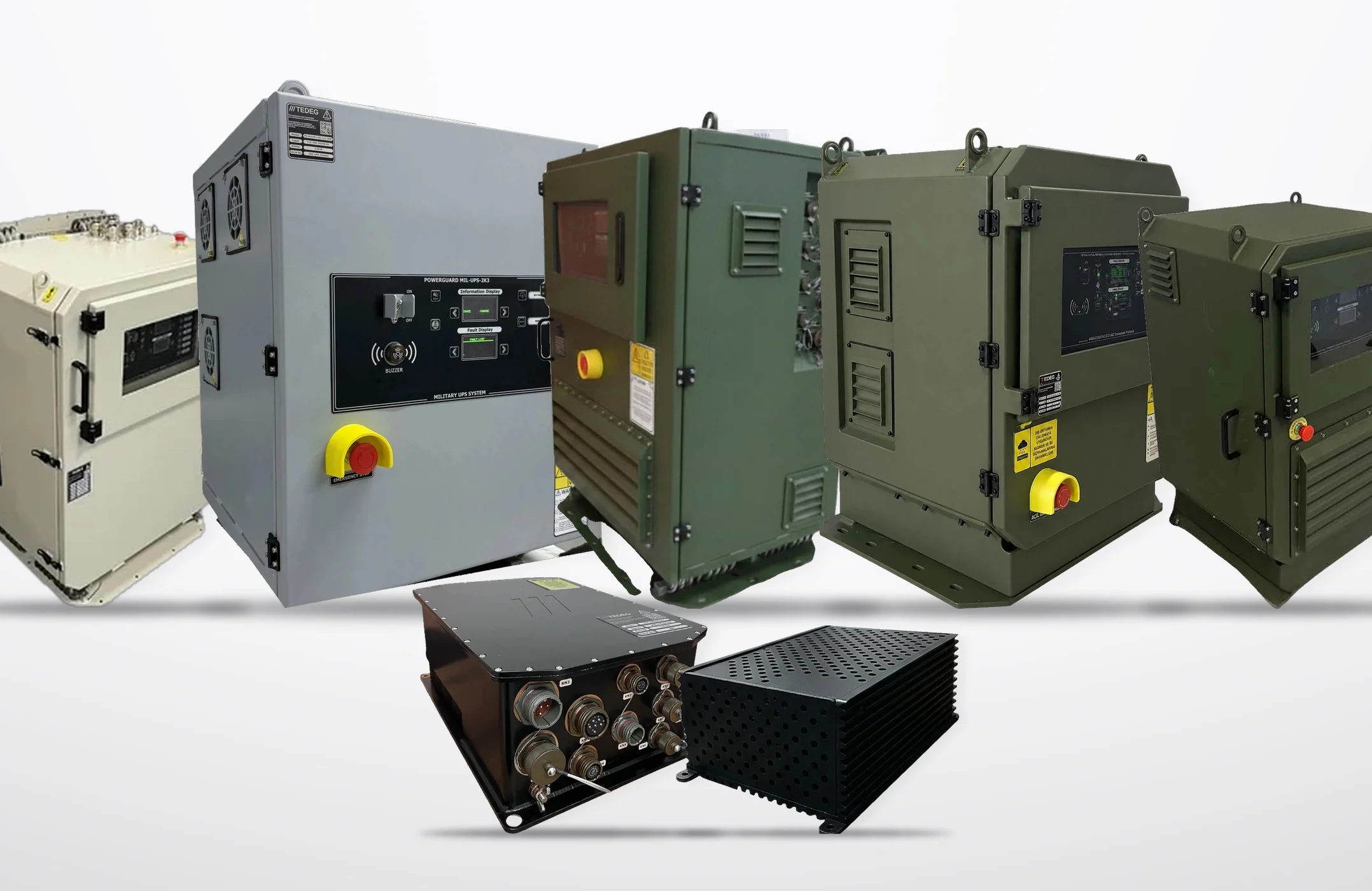
Frequency Converters, Motor Drives & Military UPS Systems — products
TEDEG Defence is an Ankara-based Turkish defence manufacturer that designs and builds 60/400 Hz frequency converters, induction motor drives and military UPS systems for land and naval platforms.
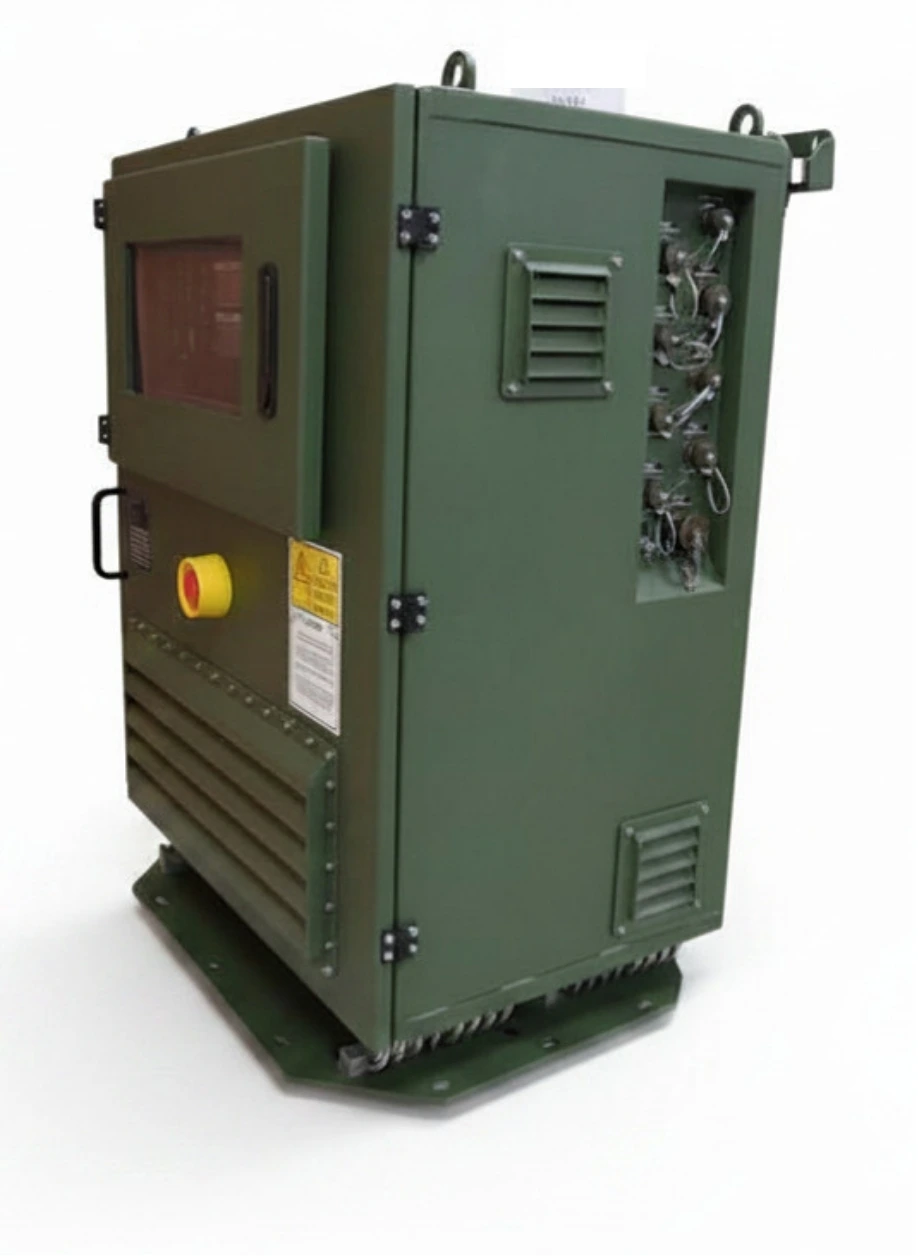
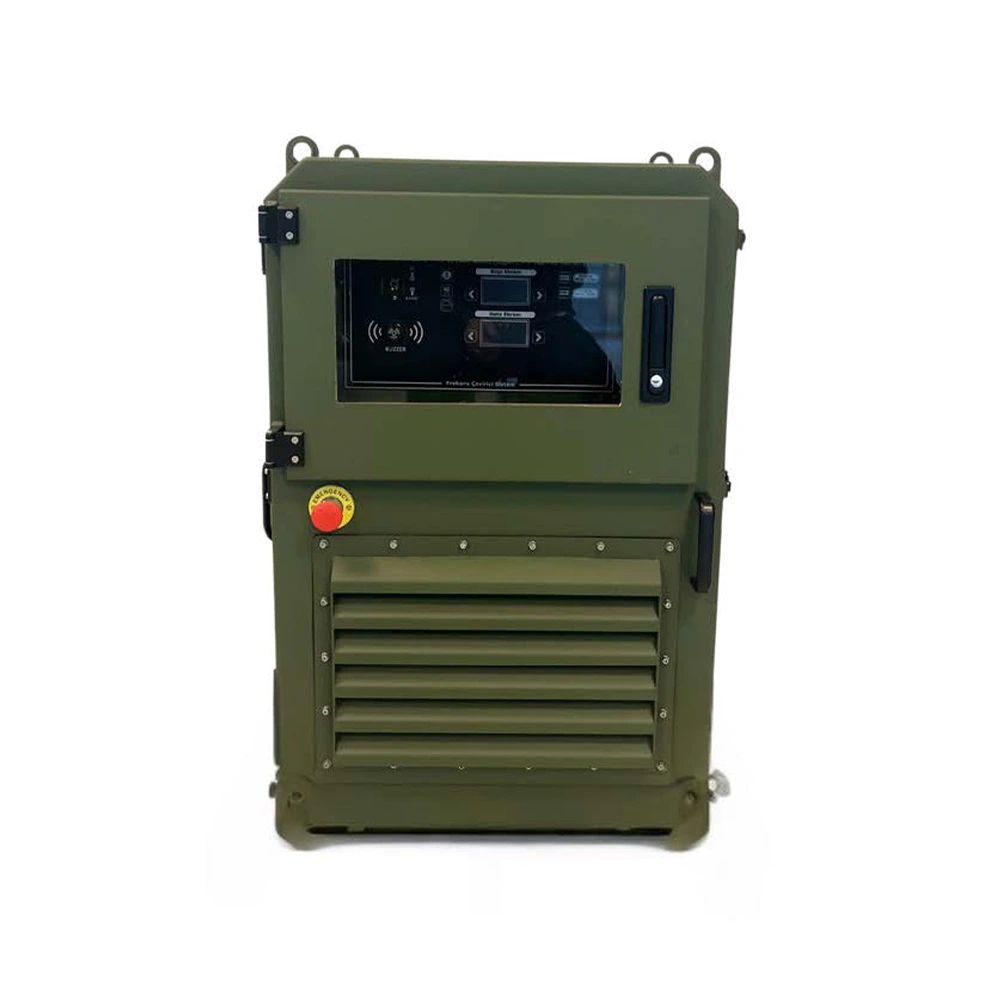
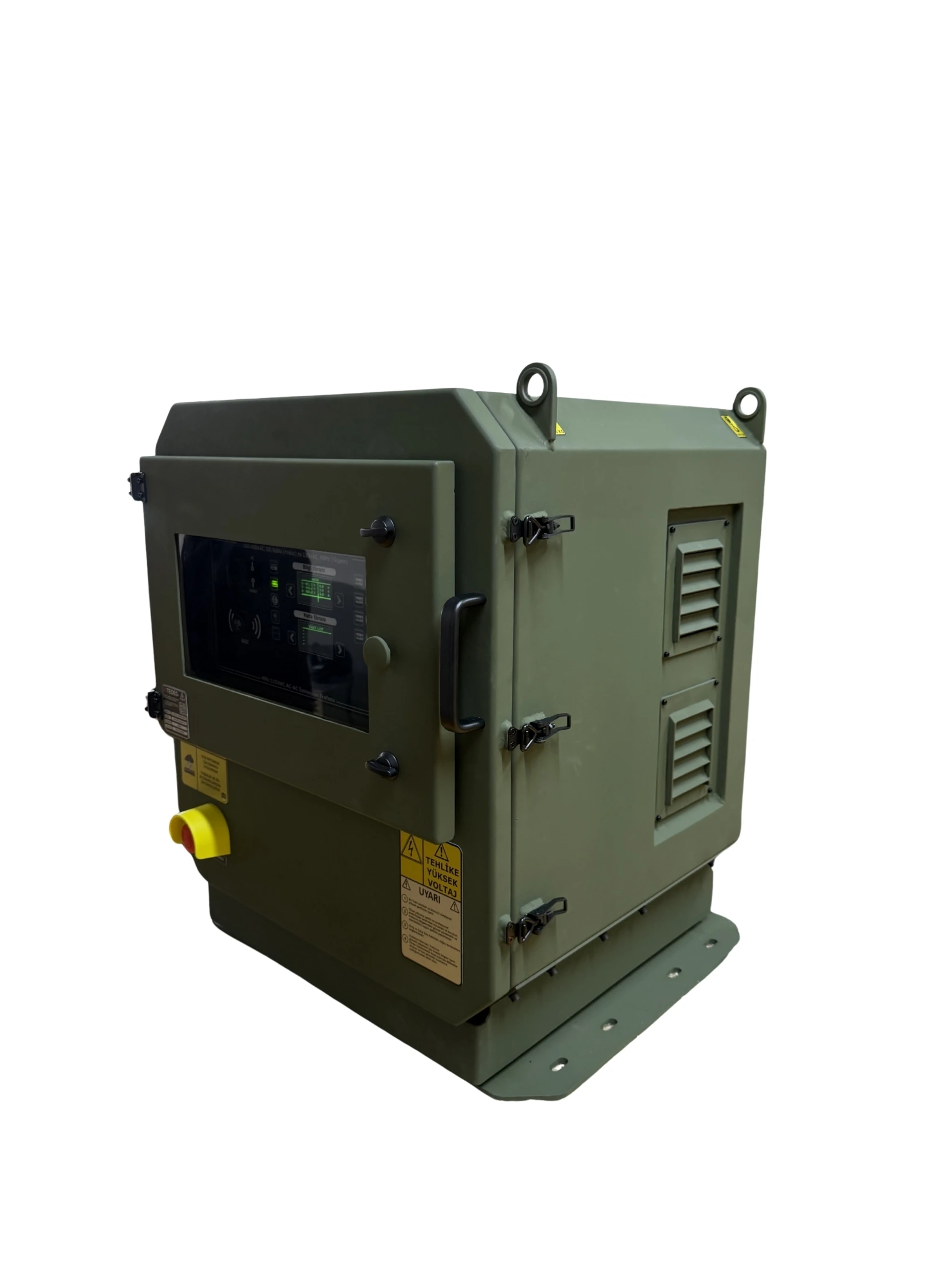
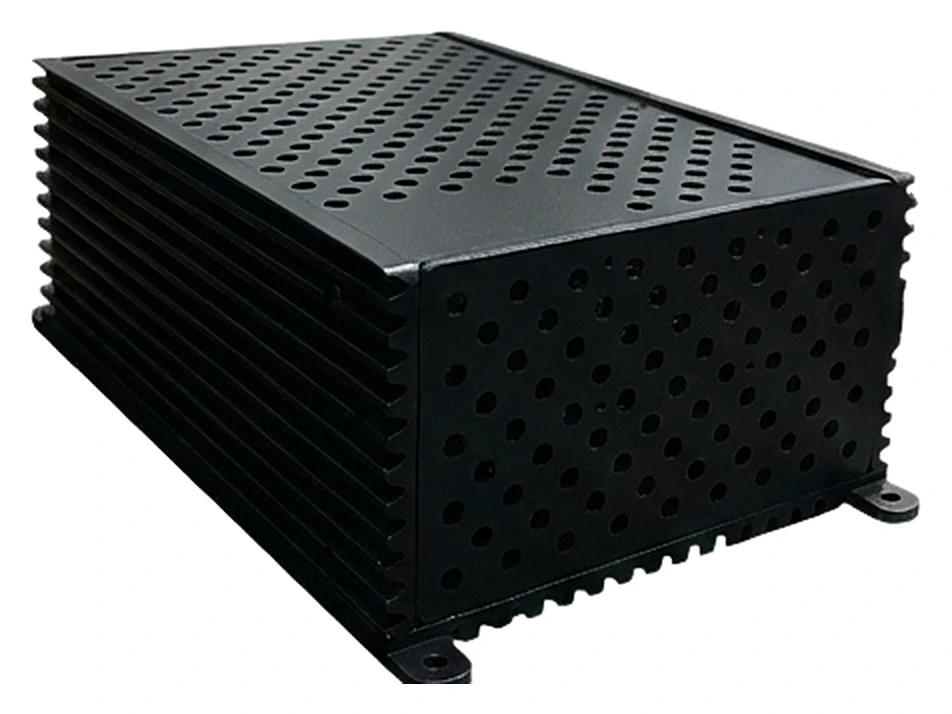
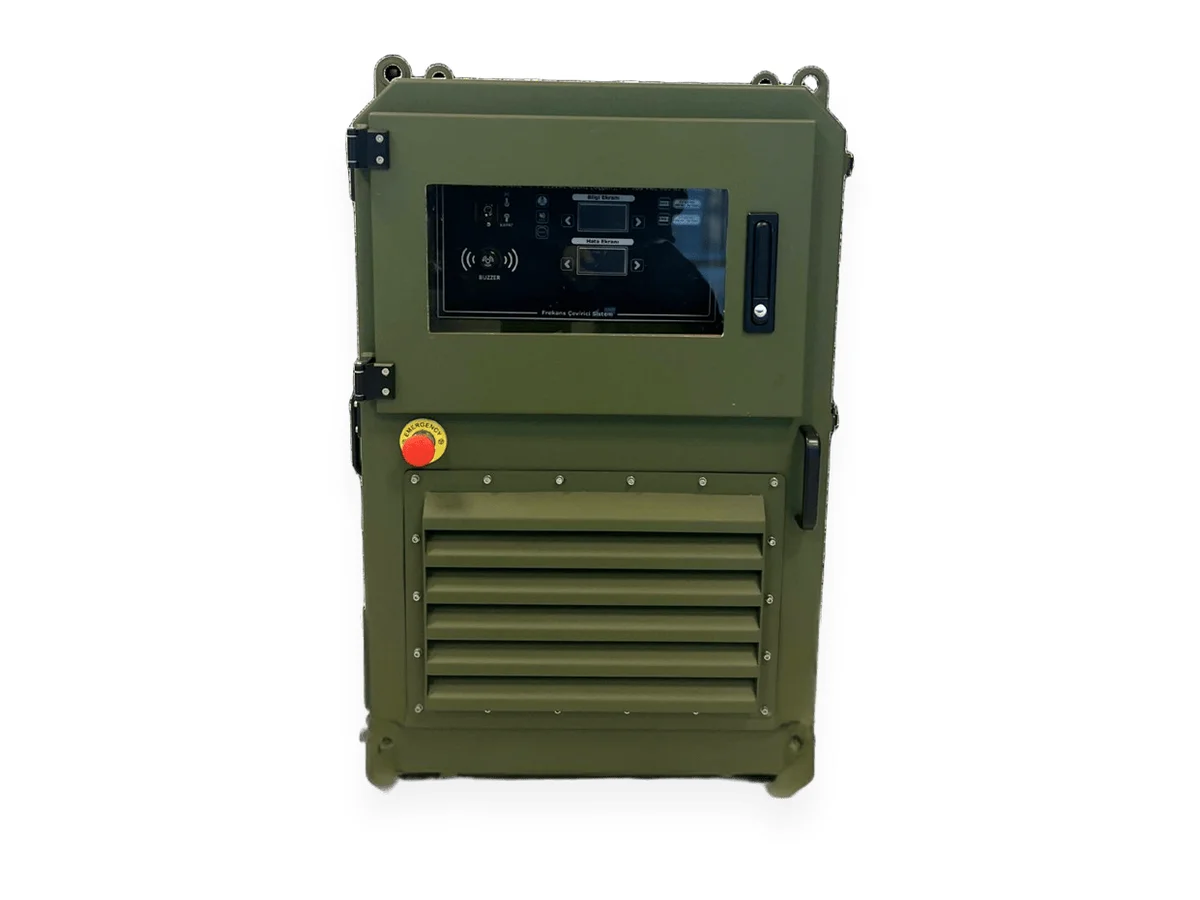
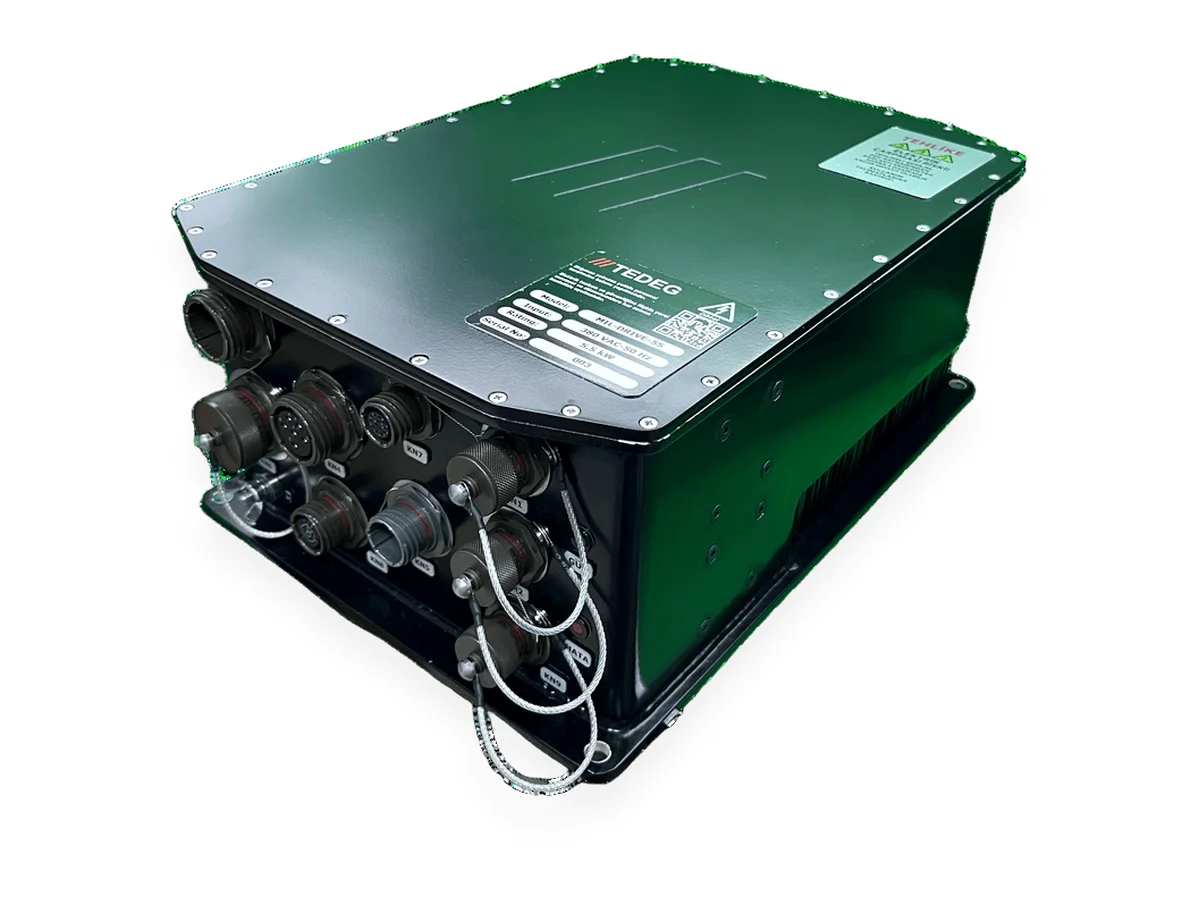
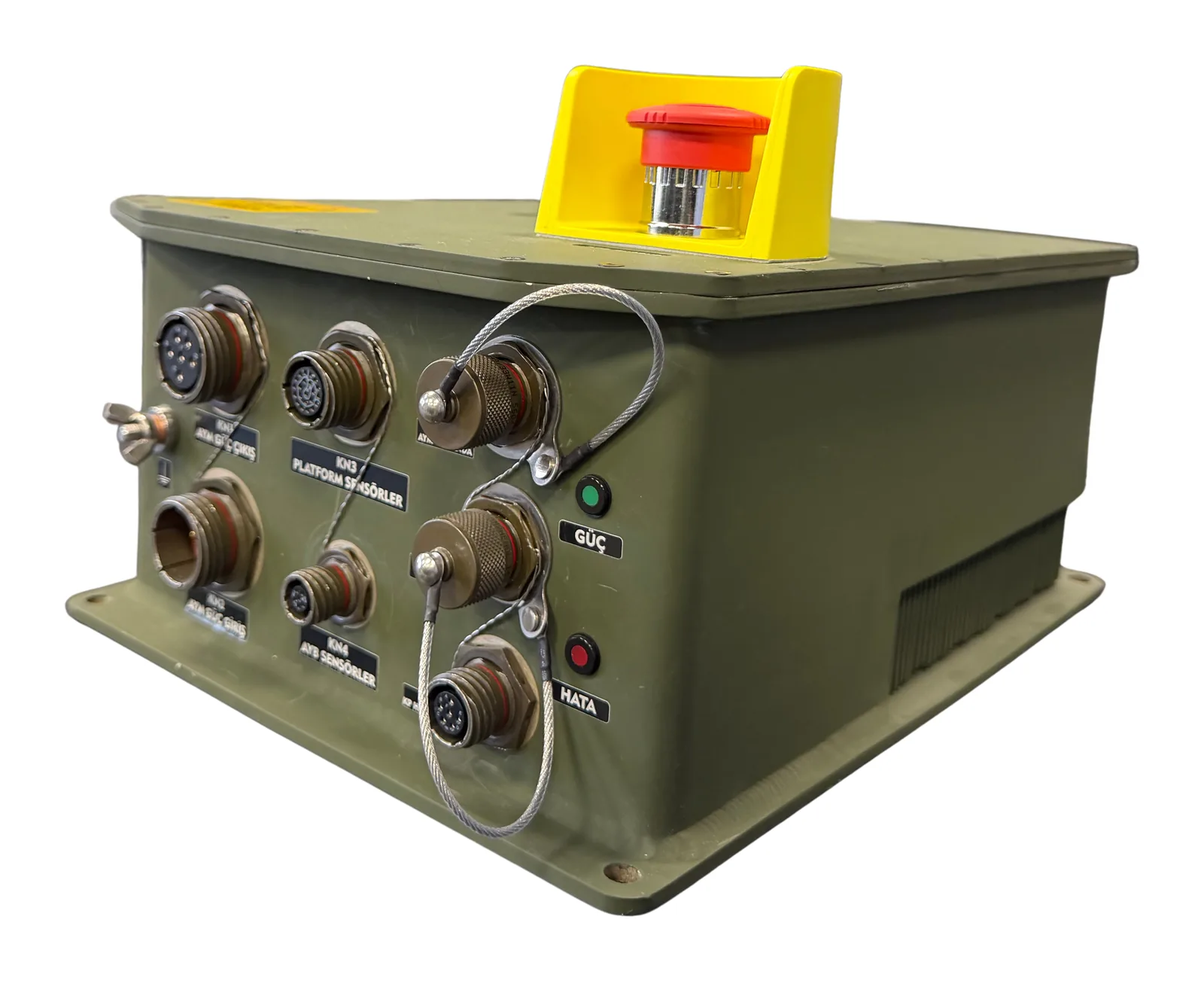
All products in this and the other six categories: Product Catalogue 2026 (PDF)
Model comparison
Key values from each model's specifications, side by side. Open a model for its full specifications.
Swipe sideways to see all columns.
| Model | Input | Output | Power / current | Ingress protection (IP) | Operating temperature | Weight |
|---|---|---|---|---|---|---|
3-phase, 360–440 VAC, 50 Hz, star (WYE) connection | 7 isolated outputs (5×60 Hz + 2×400 Hz) | 12 kVA | Not listed | -32 °C to +55 °C | 270 ± 5 kg | |
3-phase, 360–440 VAC, 50–60 Hz | Variable 115–220 VAC, 60–400 Hz | 8 kVA | Not listed | -30 °C to +50 °C | 210 ± 5 kg | |
3-phase, 400 VAC, 50/60 Hz | 115 VAC, 50 Hz | 10 kVA continuous at 0.8 PF | Not listed | -30 °C to +50 °C | 160 ± 5 kg | |
200–240 VAC, 50 Hz |
| 600 VA (AC) + 600 W (DC) | Not listed | -40 °C to +55 °C | Not listed | |
220–460 VAC, 50 Hz |
| 12 kVA | Not listed | −32 °C … +50 °C | Not listed | |
400 VAC ±10%, 48–62 Hz | 3 × 400 VAC, 0–500 Hz |
| Not listed | −30 °C to +55 °C | 12 ± 0.5 kg | |
3-phase 400 VAC + N + PE, 50–60 Hz, 10 A rms | 3-phase induction motor; FOC vector control; 0–50.0 Hz, ±1500 rpm | 10 A rms continuous (≈ 6.9 kVA); induction motors up to 4 kW (400 V, 4-pole) | IP67 | −35 °C … +50 °C | 9.25 kg | |
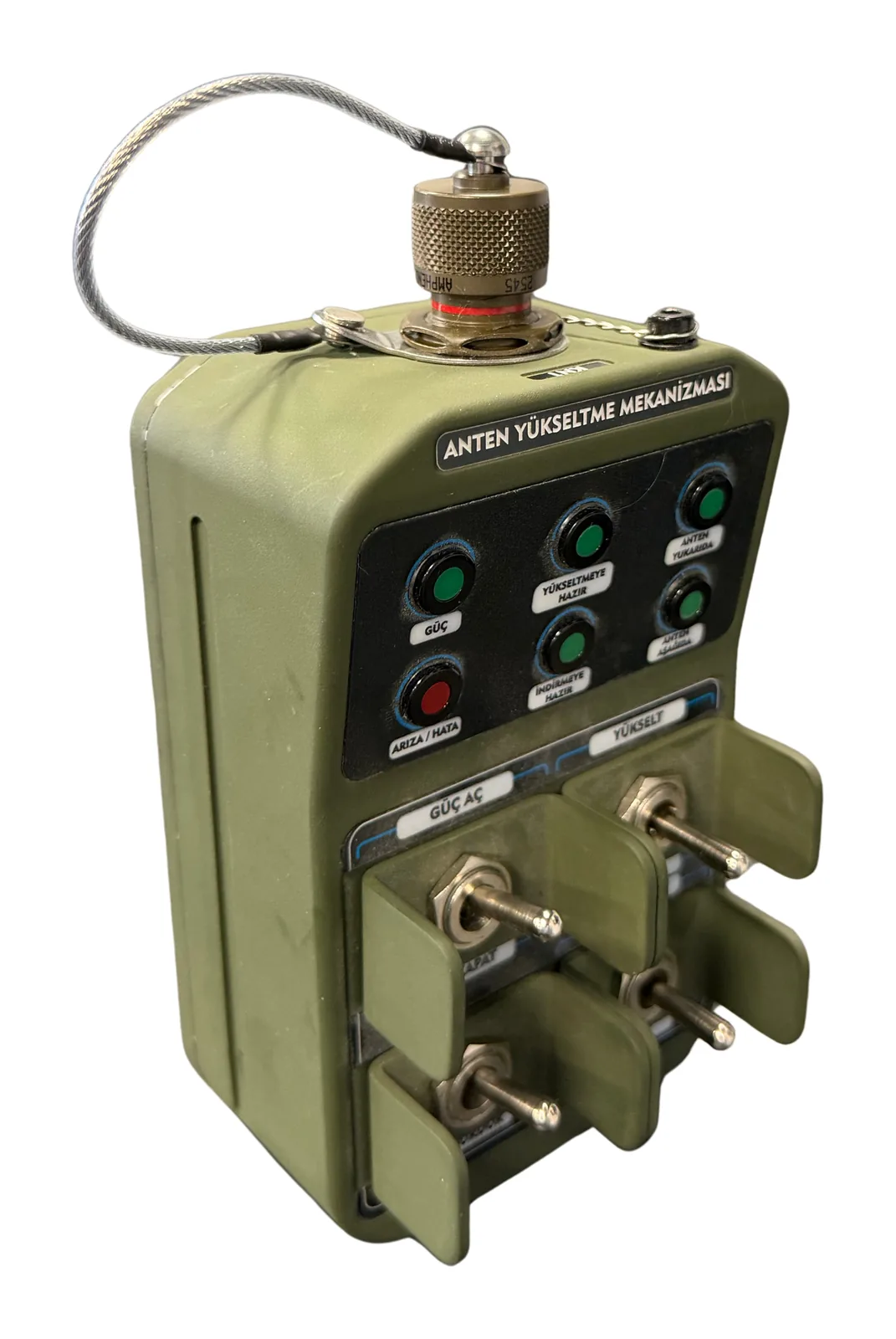
Not listed | Not listed | Not listed | IP67 | −35 °C … +50 °C | 0.65 kg (excluding cable) | |
115 VAC ±20%, 45–65 Hz, 3-phase | 115 VAC ±2.5 VAC, 60 Hz, pure sine | 2.3 kVA (750 W nominal · 2.3 kW max.) | Not listed | Not listed | 82 kg (without batteries) |
— = not listed in the model's key specifications; see the product page for full details.
About Frequency Converters, Motor Drives & Military UPS Systems
Which product for which need?
- 60 Hz and 400 Hz together outdoors, with a smart PDU: PowerGuard Outdoor 60/400 Hz Frequency Converter — 12 kVA, 7 isolated outputs (5 × 60 Hz + 2 × 400 Hz)
- Adjustable output between 60 and 400 Hz: PowerGuard 115/200 VAC 400 Hz Static Frequency Converter — 115–220 VAC variable output, RS-422 + Ethernet
- Isolated 115 VAC from a 400 VAC grid: PowerGuard 400/115 VAC AC-AC Inverter — 10 kVA, 4 outputs, isolated output transformer
- 400 Hz and 28 VDC in one compact unit: PowerGuard TPS-115 — 3-phase 115 VAC 400 Hz (600 VA) + 3 × 28 VDC from 230 VAC, RS-485
- 115 VAC 60 Hz + 400 Hz transformer system: AC-AC Frequency Converter Transformer System — 12 kVA, 7 outputs, CAN-Bus
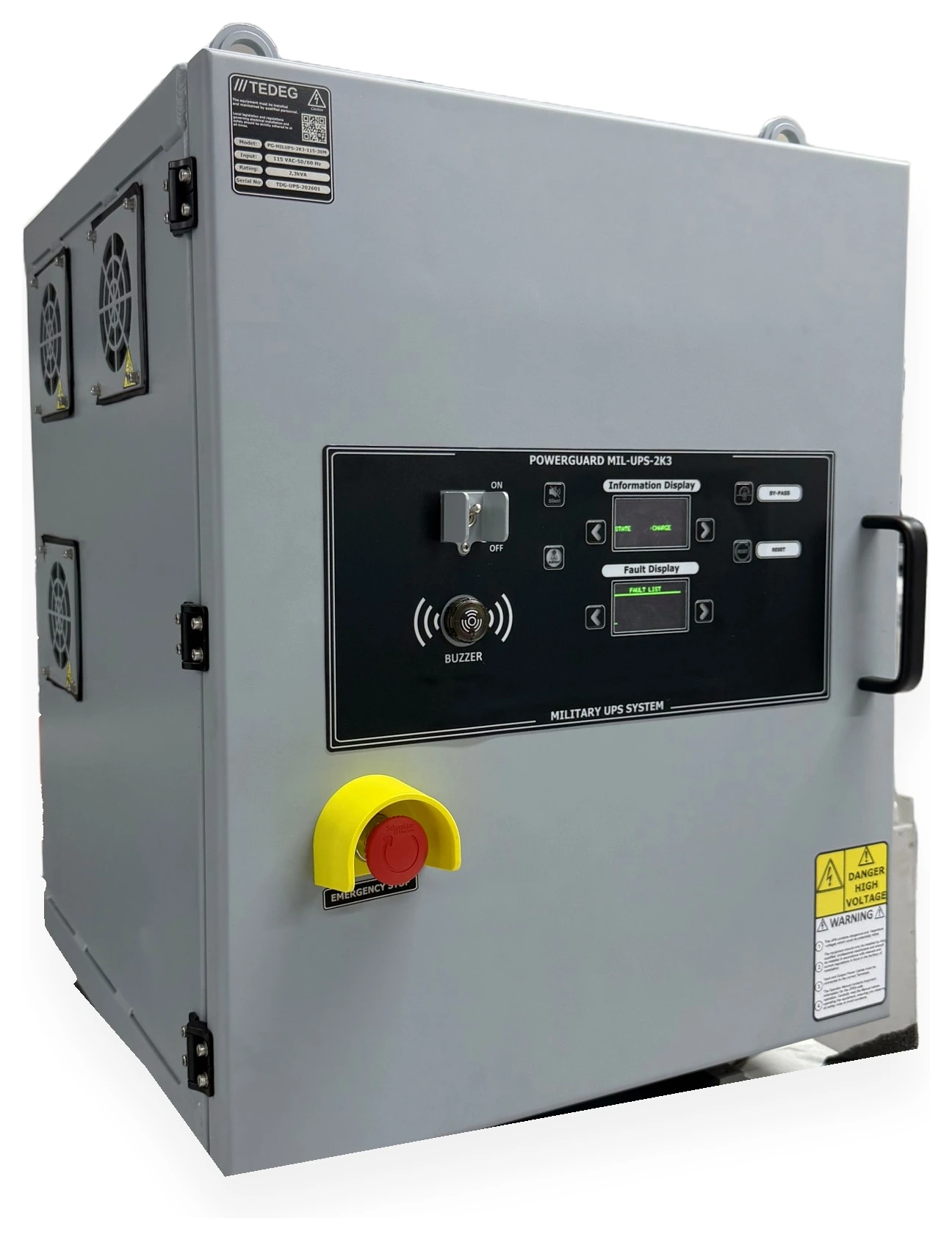
- Uninterrupted 115 VAC on naval and shore systems: PowerGuard MIL-UPS-2K3 — 2.3 kVA online UPS, 30 min gel battery, capacitive load support
- Speed and torque control of military induction motors: Mil-Drive-55 Motor Drive — FOC vector control
Which platform is it for?
- Ships and naval platforms: for shipboard 400 Hz and 60 Hz loads, the 115/200 VAC 400 Hz Static Frequency Converter, whose output is defined to MIL-STD-1399-300B, and the PowerGuard Outdoor; for uninterrupted 115 VAC 60 Hz, the MIL-UPS-2K3 military UPS; and where a 400 VAC, 50 Hz supply must feed 115 VAC, 50 Hz equipment, the 400/115 VAC AC-AC Inverter. All four name MIL-STD-1399, the interface standard for shipboard systems, in their datasheets. Mounting and interface requirements of the platform are assessed at project stage.
- Shelters and containers: in field command posts, mobile operations centres and camp infrastructure, the PowerGuard Outdoor supplies 60 Hz and 400 Hz from one outdoor-rated cabinet, the 400/115 VAC AC-AC Inverter feeds 115 VAC, 50 Hz equipment from a 400 VAC grid, and the MIL-UPS-2K3 keeps mission consoles running when the supply fails.
- Land vehicles: the TPS-115 supplies command, control and mission electronics with 3-phase 115 VAC 400 Hz and 28 VDC from one compact unit, the AC-AC Frequency Converter Transformer System connects to the vehicle data bus over CAN-Bus, and Mil-Drive-55 drives the asynchronous motors of turret and traverse subsystems.
- Radar and weapon systems: the Static Frequency Converter powers 400 Hz radar and fire-control subsystems during maintenance, integration and testing, Mil-Drive-55 positions radar antennas, electro-optical turrets and missile launch pedestals, and the MIL-UPS-2K3 feeds capacitive radar and sonar loads down to a 0.3 power factor.
What to check when choosing a frequency converter: output frequency (fixed 400 Hz, 60 and 400 Hz together, or adjustable), total power and number of outputs, indoor or outdoor use, and remote monitoring needs.
Family comparison: input, output and power as given in each datasheet; standards as stated in the datasheet or test report; an independent test report is a report from an ISO/IEC 17025 accredited laboratory; typical applications as described on each product page.
| Product | Input | Output | Power | Standards | Independent test report | Typical application |
|---|---|---|---|---|---|---|
| Static Frequency Converter 115/200 VAC 400 Hz | 3-phase 360–440 VAC, 50–60 Hz | Variable 115–220 VAC, 60–400 Hz | 8 kVA | MIL-STD-1399 (300B) · 810G · 461G | Yes: 810G CHG-1 + 461G | Shipboard 400 Hz; radar and fire-control subsystems |
| PowerGuard Outdoor 60/400 Hz | 3-phase 360–440 VAC, 50 Hz | 5 × 115 VAC 60 Hz + 2 × 115 VAC 400 Hz | 12 kVA | MIL-STD-1399B · 810G CHG-1/810F · 461E | Yes: 810G CHG-1/810F + 461E | Shelters, containers and camps; shipboard 60/400 Hz loads |
| AC-AC Frequency Converter Transformer System | 220–460 VAC, 50 Hz | 5 × 115 VAC 60 Hz + 2 × 115 VAC 400 Hz | 12 kVA | Assessed to military test methods | — | Land-vehicle and naval platforms with 400 Hz and 60 Hz loads |
| 400/115 VAC AC-AC Inverter | 3-phase 400 VAC, 50/60 Hz | 115 VAC 50 Hz, 4 outputs | 10 kVA | MIL-STD-1399B · 810G | — | 115 VAC 50 Hz equipment on a 400 VAC grid (shelter, camp, ship) |
| TPS-115 | 200–240 VAC, 50 Hz | 3-phase 115 VAC 400 Hz + 3 × 28 VDC | 600 VA + 600 W | — | — | Land-vehicle command, control and mission electronics |
| Mil-Drive-55 | 400 VAC ±10%, 48–62 Hz | 3 × 400 VAC, 0–500 Hz to the motor | 5.5 kW (optional up to 18 kW) | MIL-STD-810G · 461F | — | Motor control: turret, radar antenna, launch pedestal |
| MIL-UPS-2K3 | 3-phase 115 VAC ±20%, 45–65 Hz | 115 VAC 60 Hz, pure sine | 2.3 kVA; backup 30 min at 2 kW | MIL-STD-1399 · 810G · 461F | — | Uninterrupted 115 VAC for naval and shore radar, communication and console loads |
The Static Frequency Converter's 8 kVA rating and the 2 kW load behind the MIL-UPS-2K3's 30-minute backup are TEDEG manufacturer data; they are not yet shown in the current datasheets.
See how these products replaced three separate systems on a land rocket platform in our case study, and read the technical background in our mobile frequency converter guide.
If you need DC from a 400 Hz supply, the PowerGuard-A1000 accepts a single-phase 45–420 Hz input and delivers 24 VDC / 1 kW (power factor about 0.75–0.8 at 400 Hz); other options are under military AC-DC and DC-DC converters.
From a 50 Hz or 60 Hz grid to a 400 Hz power supply: the 115/200 VAC 400 Hz Static Frequency Converter accepts a 3-phase 360–440 VAC, 50–60 Hz input, so it handles 60 Hz to 400 Hz as well as 50 Hz to 400 Hz conversion. To size the 400 Hz side, enter the line current and power factor of each 115 VAC 400 Hz load in the 400 Hz load power calculator: it returns apparent power (kVA) and active power (kW) and compares the total with the 400 Hz output ratings in our datasheets.
FAQ
Why do military systems use 400 Hz?+
At 400 Hz, transformers and motors can be smaller and lighter for the same power, which is why many shipboard, radar and weapon-system subsystems are designed for a 400 Hz supply. Site and camp grids deliver 50 or 60 Hz, so a static frequency converter rebuilds the supply at 400 Hz electronically, without a motor-generator set. The 115/200 VAC 400 Hz Static Frequency Converter has its output voltage and frequency requirements defined to MIL-STD-1399-300B for shipboard use, and its output is adjustable between 60 and 400 Hz. Where 400 Hz and 60 Hz loads run side by side, the PowerGuard Outdoor and the AC-AC Frequency Converter Transformer System each provide 2 × 400 Hz and 5 × 60 Hz outputs at 12 kVA; for low-power electronics that also need 28 VDC, the TPS-115 delivers 3-phase 115 VAC 400 Hz (600 VA) alongside three isolated 28 VDC outputs.
Which model should I choose for 60 Hz, 400 Hz or an adjustable output?+
For 60 Hz and 400 Hz at the same time on separate channels outdoors, the PowerGuard Outdoor: 12 kVA, 7 isolated outputs (5 × 60 Hz + 2 × 400 Hz), −32 °C … +55 °C, smart PDU included. For a variable 115–220 VAC output adjustable between 60 and 400 Hz from one unit, the PowerGuard 115/200 VAC 400 Hz Static Frequency Converter: 3-phase 360–440 VAC input, star or delta connection. For naval and land platforms that want transformer, converter and distribution in one cabinet, the AC-AC Frequency Converter Transformer System: 12 kVA, 2 × 400 Hz + 5 × 60 Hz outputs, per-output on/off, CAN-Bus. For low-power mission electronics that need 400 Hz and 28 VDC from the same unit, the PowerGuard TPS-115: 3-phase 115 VAC 400 Hz (600 VA) + 3 × isolated 28 VDC (600 W) from a 230 VAC input, 215 × 340 × 123 mm, fanless. If you are looking for a 115/200 VAC 400 Hz power supply, the Static Frequency Converter delivers it in star connection (115 VAC line-to-neutral); in delta it gives 115 VAC line-to-line. The PowerGuard Outdoor's two 4 kVA, 3-phase 115 VAC 400 Hz outputs are delta-connected (line-to-line, no neutral). Selection criteria are in How to select a 115 VAC 400 Hz power supply.
Does the PowerGuard 400/115 VAC AC-AC Inverter produce 400 Hz?+
No. The "400" in the name is the input voltage: the PowerGuard 400/115 VAC AC-AC Inverter converts a 3-phase 400 VAC, 50/60 Hz input into a 115 VAC, 50 Hz output and splits a total of 10 kVA across four outputs (3.6 + 2.4 kVA three-phase, 2 + 2 kVA two-phase). The output is delivered through an isolated transformer, so it suits 115 VAC equipment at a site or platform connected to a 400 VAC grid. For equipment that needs 400 Hz, see the static frequency converters above.
Which motors is Mil-Drive-55 suitable for, and what can be customised?+
Mil-Drive-55 is an FOC (field oriented control) drive for three-phase asynchronous motors: 5.5 kW nominal, 3 × 400 VAC / 0–500 Hz output, 14 A motor current, 400 VAC ±10% input. It supports resolver, incremental and absolute encoder and NTC temperature sensor inputs, and has dual-channel Safe Torque Off (STO), an emergency input and RS-485 and CAN-Bus communication. With a sealed aluminium enclosure and fanless passive cooling it operates from −32 °C to +55 °C, and is designed for applications such as turret drives, antenna positioning, hydraulic pumps and pedestal motion. Alternative power levels, additional I/O channels and custom communication protocols can be configured per project thanks to the modular design.
When should I choose the military UPS?+
When the load must see no interruption at all if the mains or shore supply fails, the PowerGuard MIL-UPS-2K3 feeds the load through its inverter at all times with a double-conversion online topology; there is no transfer moment when the battery takes over. It runs from a 115 VAC ±20%, 45–65 Hz, 3-phase input, delivers 115 VAC 60 Hz pure sine at 2.3 kVA and provides 30 minutes of backup at a 2 kW load from a VRLA gel battery. It runs stably on capacitive loads down to a 0.3 power factor, and the manual bypass keeps the load running during maintenance. Radar, communication and console loads on naval and shore systems are the typical use.
How are the products monitored and controlled remotely?+
Each product has its own interface; choose the one that matches your specification. The PowerGuard Outdoor is monitored from a browser through its built-in web server without additional software and communicates over Ethernet and RS-422 via KN9. The 115/200 VAC 400 Hz Static Frequency Converter uses RS-422 and Ethernet-based desktop software; the 400/115 VAC AC-AC Inverter and the MIL-UPS-2K3 are monitored and switched on and off remotely over Ethernet on the KN6 connector. The AC-AC Frequency Converter Transformer System uses CAN-Bus, the TPS-115 RS-485 HD (10 Mbps), and the Mil-Drive-55 RS-485 and CAN-Bus. Most units also carry an OLED display and/or BIT (built-in test) on the unit itself.
Which products have been tested at an accredited laboratory, and how do I obtain the test report?+
The PowerGuard Outdoor completed MIL-STD-810G CHG-1 environmental (temperature, vibration, shock) and MIL-STD-461E EMI/EMC testing at an ISO/IEC 17025 accredited laboratory, and the PowerGuard 115/200 VAC 400 Hz Static Frequency Converter has passed MIL-STD-810G CHG-1 and MIL-STD-461G testing at an accredited laboratory. The other products are designed to the standards stated in their datasheets: MIL-STD-810G and MIL-STD-461F for the Mil-Drive-55 and MIL-UPS-2K3, MIL-STD-810G and MIL-STD-1399B for the 400/115 VAC AC-AC Inverter, while the AC-AC Frequency Converter Transformer System has been assessed to military test methods. When requesting a report, ask for the standard and method number, the laboratory name, the test date and the serial number of the unit tested. For a quotation, send the input voltage and number of phases, output frequency, total power and number of outputs, indoor or outdoor use and the monitoring interface through the quote form.
Frequency converter, frequency changer, static converter: what is the difference?+
All three names describe the same kind of device: a power conversion unit that changes the frequency, and usually the voltage, of an AC supply and rebuilds it at the value the equipment expects, such as 400 Hz or 60 Hz. "Static converter" and "static frequency changer" point to how the conversion is done: with power electronics and no rotating machine. The real distinction is between static and rotary designs: a rotary converter, or motor-generator set, uses a mains-fed motor to turn a generator at the output frequency. The frequency converters in this category are static. In industry, "frequency converter" is also used for variable-speed motor drives; in this category that job belongs to the Mil-Drive-55, which controls motor speed and torque through a variable 0–500 Hz output. Because "converter" on its own can also mean an AC-DC or DC-DC unit, state the input and output frequency in your specification.
Engineering Support
Our engineering services can adapt the products in this category to your platform, integrate them or test them against your programme requirements.
Field Examples
Related Guides
Looking for the full range?
Contact our engineering team for datasheets and quotations.