
SERVICE · SOFTWARE
Embedded Software Development
Real-Time and Reliable Control Infrastructure
Reliable software infrastructure is at the core of modern defence systems. TEDEG Defence develops embedded software systems running in real time.
Software Services
Microcontroller software
Real-time control algorithms
Power management software
CAN-Bus communication infrastructure
RS-485 / Modbus communication systems
Ethernet-based control systems
Motor control algorithms
GUI / HMI development
Test and validation software
Data logging and monitoring systems
Remote control infrastructure
How we work
We start from the behaviour the unit must show on the platform: which bus it talks on, which messages it must answer and how fast, what it must do when a sensor, a supply or a communication link fails, and how it must behave during a long mission without a restart. These points are written down as a software requirement set and agreed with you before coding begins.
Control software is developed on the target hardware. Control loops, such as the field-oriented control in our motor drives, are tuned on the real motor and later on the platform's own dynamics. Protection logic, fault detection and the built-in test functions are exercised against injected faults rather than only nominal cases. Communication over CAN-Bus, RS-485 and Ethernet is verified with the counterpart equipment where you can provide it. Long-duration operation tests close each release, and every build is tagged so that the version running on a delivered unit can be traced back to its source.
What we deliver
You receive the firmware images for the unit and, where the product has one, the operator software: the desktop GUI, the browser-based interface served by the unit's own web server, or the HMI on the front panel. The communication interface is documented so that your mission computer or fire-control system can integrate the unit: message lists, data fields, fault codes and the identification data the unit reports, such as serial number and device ID.
The software release notes record what changed between versions and which hardware revisions a version supports. Test software and the test records used to verify a release are part of the package, together with the user and maintenance manual sections that cover configuration, logging and fault handling. Where a protocol is fixed at ordering time, as with units offered in RS-485 and CAN-Bus variants, this is stated in the documentation so that field expectations stay aligned with what was produced.
Standards and products we build on
Our software runs on the communication infrastructures used on defence platforms: CAN-Bus to ISO 11898 and SAE J1939 on vehicle buses, RS-485 and Modbus for serial links, RS-422 and Ethernet for monitoring and remote control. The electromagnetic and environmental behaviour of the hardware the software runs on is designed to MIL-STD-461 and MIL-STD-810, and the software is validated on that hardware, not on a desktop substitute.
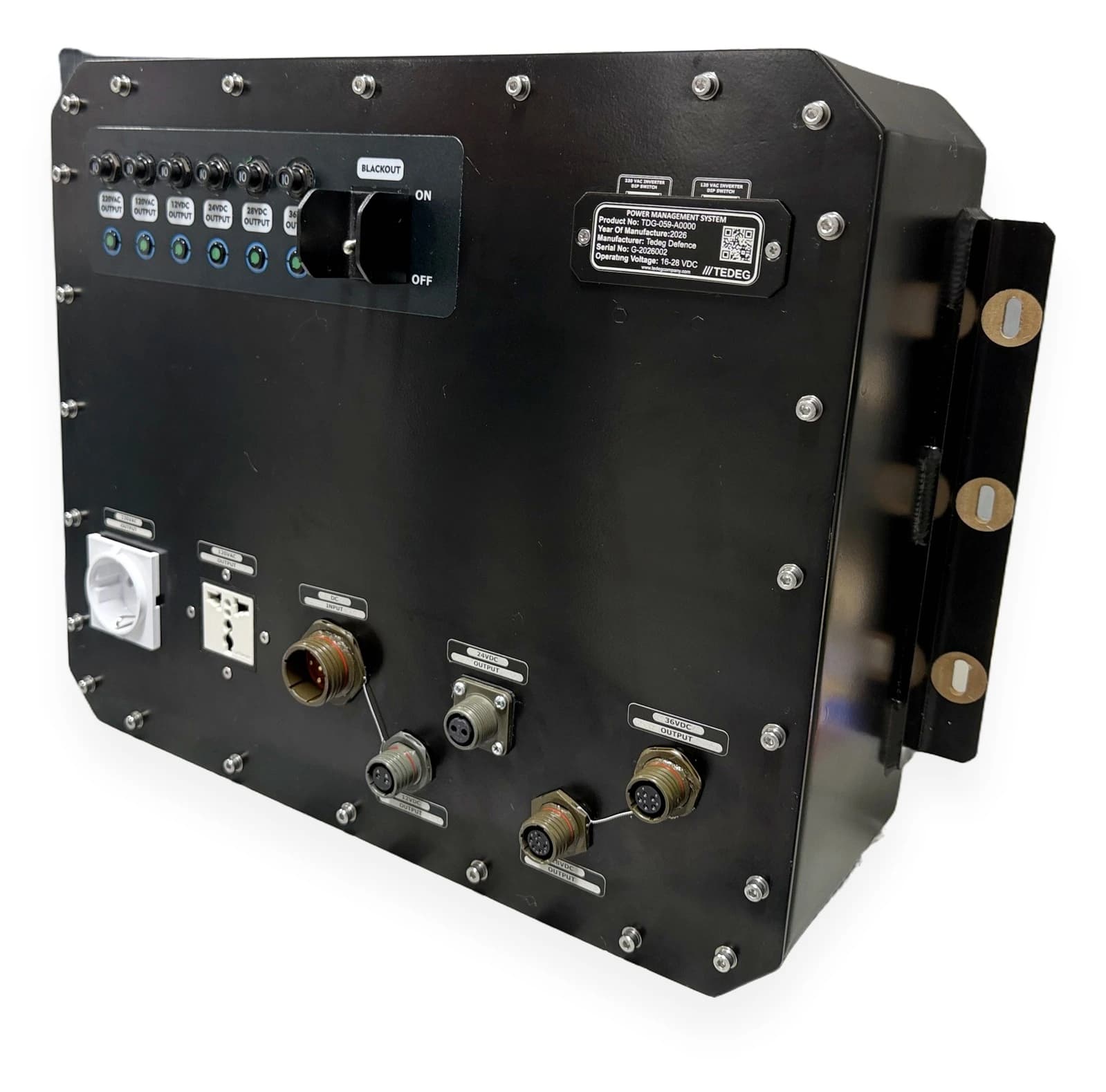
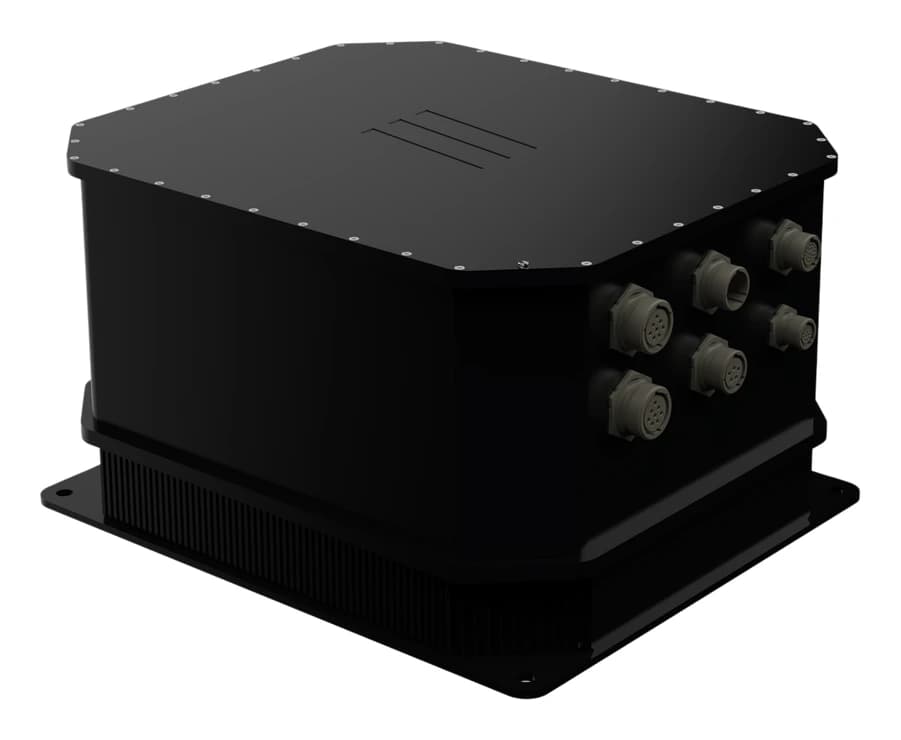
The product families show the range. The Mil-Drive-55 motor drive runs field-oriented control with resolver and encoder feedback, dual-channel Safe Torque Off and remote access to status, fault codes and limit switches over RS-485 and CAN-Bus. The PDU-RT5002 and the PowerGuard converters offer Ethernet monitoring with real-time voltage, current and frequency data, output switching and fault logs. The TPS-28 power management unit measures every converter and output from an MCU-based control board. SENTRA-16 reports seat and belt status to the mission computer over CAN-Bus, and the T-Light warning unit is programmed over CAN-Bus or RS-485 with customisable scenarios.
Engineering Approach
Our software development is built on stability, fault tolerance, traceability and reliable operation during long-duration missions.
Related Products
FAQ
How is an embedded software project structured?+
The project moves from a software requirement set through architecture, implementation on the target hardware, bench verification and release. Each release is tagged, tested and documented; interim builds are shared with you when hardware integration or bus testing on your side needs them. The number and length of iterations depend on the control complexity and the interfaces involved.
Who holds the rights to the software, and do we receive the source code?+
Rights to customer-specific software and the form in which it is delivered, whether binary images, source code or both, are defined in the contract. Every delivery includes the interface documentation, release notes and the test records for the delivered version. Long-term support of the software over the product's life is covered by our after-sales and lifecycle policy.
How do you verify reliability for long missions?+
Fault handling is tested by injecting the failures the unit must survive: lost sensors, supply disturbances, dropped bus communication and over-temperature. Long-duration operation tests run the unit continuously on real loads before a release is approved. Built-in test functions and fault logs let you see the same information in the field that we see on the bench.
How are software updates and changes handled after delivery?+
Changes are tracked per version against the hardware revisions they apply to. Updates that change interfaces, performance or safety-related behaviour are notified in writing and submitted for your approval before release; corrections that do not affect them are documented in the release notes. The configuration record of a repaired or updated unit is kept current so that field units remain traceable.