
SERVICE · INTEGRATION
System Integration
Platform-Specific Integrated Solutions
TEDEG Defence provides active engineering support during integration of developed systems into land and naval platforms and air-defence systems.
Integration Services
In-vehicle power infrastructure integration
Power distribution system integration
Communication infrastructure integration
Cable harness design
EMI/EMC optimisation
Platform compatibility studies
Field installation support
Functional verification tests
System acceptance tests
How we work
Integration starts with the platform's power and data architecture as it is, not as a drawing would like it to be: the sources available (mains, generator, UPS, vehicle battery), the loads and their priorities, the bus the mission systems use, and the harness and connector layout already fitted. From this we produce a platform compatibility study that shows where our units fit, what changes to the harness are needed and which EMI/EMC risks sit between neighbouring equipment such as radar, radios and motor drives.
Units are then configured for the platform: output count and ratings, source priority, connector sets, protocol settings. Load profile simulation and EMI pre-scans are carried out together with your quality team where the programme requires it. Installation is supported in the field by our engineers, followed by functional verification tests on the vehicle or site and the system acceptance tests you define. Findings from pilot vehicles feed the series configuration.
What we deliver
The platform compatibility study is the first deliverable: a document that maps sources, loads and interfaces, states the configuration chosen for each unit and lists the harness and mounting changes. Cable harness design follows as drawings and connector pin-out tables using MIL-DTL-38999 series connectors wherever the platform allows, so that changes to the existing harness stay minimal.
For installation you receive the assembly instructions and the connector and cable interface definitions for every unit. The functional verification and system acceptance tests are run to written procedures, and the records are handed over with the equipment together with the serial-numbered final inspection and functional test forms. Where several of our units work together, such as a PDU with a UPS and a frequency converter, they are delivered as a matched set configured and verified against the same load profile, with one point of contact for design, integration, test support and after-sales service.
Standards and products we build on
Vehicle power integration is designed around MIL-STD-1275 for the 28 VDC vehicle network and MIL-STD-461 for electromagnetic compatibility with the radar, radio and sensor equipment sharing the platform. On naval platforms the power interface follows MIL-STD-1399. Data integration uses CAN-Bus, including SAE J1939 on vehicle buses, RS-485 and Ethernet, so that the status of our units is visible from the mission computer rather than from a separate panel.
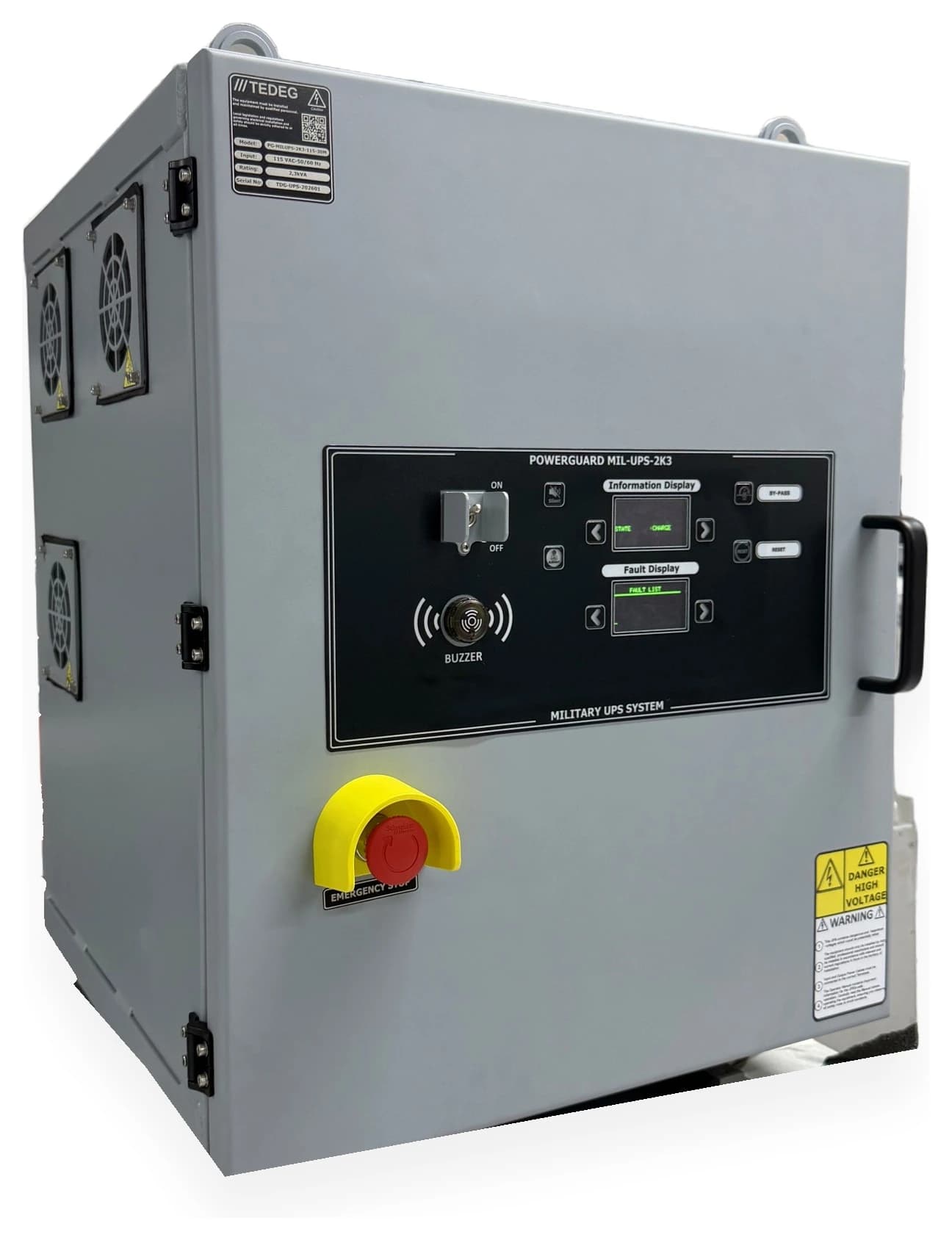
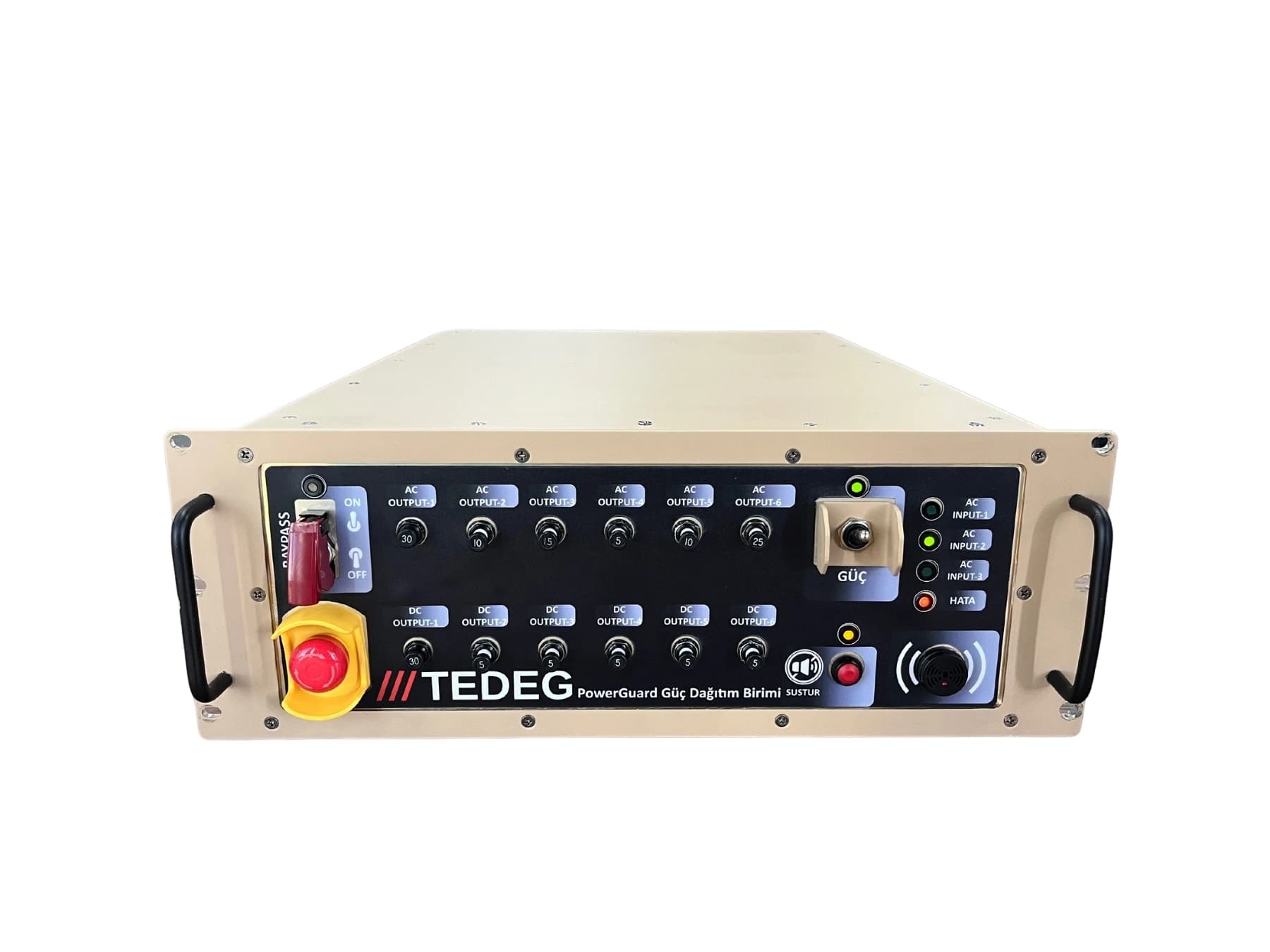
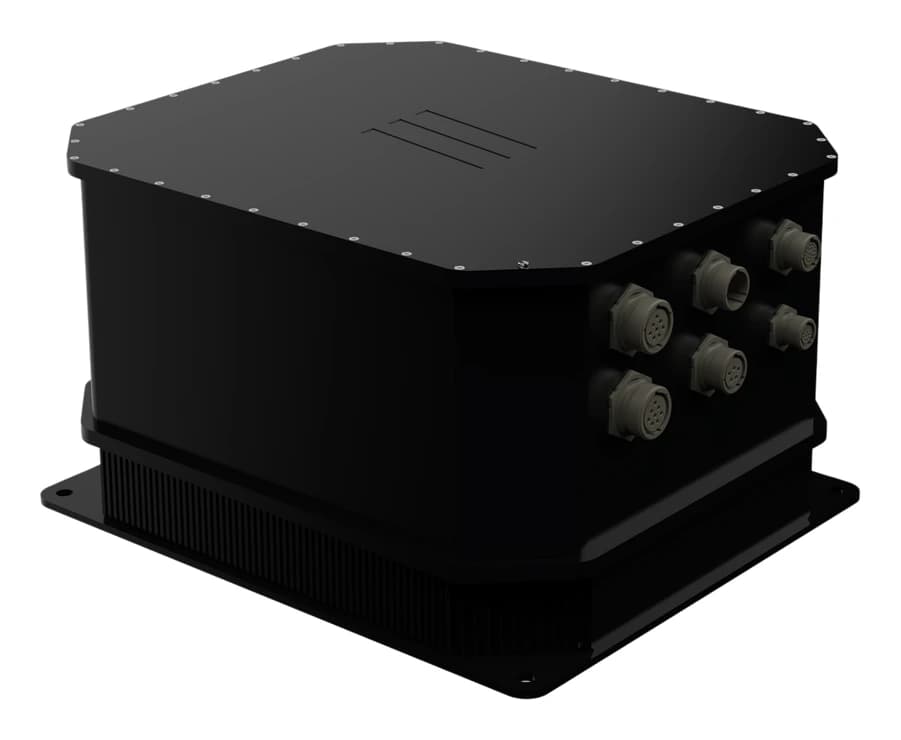
The product families cover the integration cases we see most often. The PDU-RT5002 distributes three 220 VAC sources with priority switching, per-output breakers and Ethernet monitoring in a 19-inch 4U rack. The PowerGuard MIL-UPS-2K3 is a double-conversion online military UPS designed to MIL-STD-1399, MIL-STD-810G and MIL-STD-461F, with manual bypass for maintenance under load. The TPS-28 power management unit converts 230 VAC into isolated, individually switched 28 VDC outputs with per-channel measurement over RS-485. For field systems, the PowerGuard Outdoor converter combines 60 Hz and 400 Hz outputs with an integrated PDU in one outdoor enclosure.
Engineering Approach
Every integration process is conducted with platform safety, sustainability and operational efficiency as priorities.
Related Products
FAQ
How does an integration project run, and where does our team come in?+
It runs from the compatibility study through configuration, bench verification, installation support and acceptance testing, with a review at each step. Your platform, quality and logistics teams are involved from the study onwards, because the harness, the connector positions and the acceptance criteria are theirs. Pilot vehicles are used to confirm the configuration before it is frozen for series.
Can your units be fitted into an existing harness and rack layout?+
That is the normal case. Units are configured to the existing connector layout and envelope, using MIL-DTL-38999 connector sets so that harness changes stay minimal, and 19-inch rack units mount directly in existing cabinets. Where the envelope cannot be met, the compatibility study says so before any hardware is ordered.
How are EMI/EMC conflicts between equipment on the same platform handled?+
They are addressed in the design of the filtering rather than in the field: when several of our units share a platform, their switching noise and output quality are treated within one filtering approach. EMI pre-scans on the bench and with your quality team precede installation. Formal MIL-STD-461 qualification of a unit is demonstrated by testing at an accredited laboratory.
What documentation and support do we get after installation?+
Assembly instructions, interface definitions, user and maintenance manuals and the acceptance test records are handed over with the equipment. Changes to an approved configuration are notified in writing and submitted for your approval. Fault reporting, repair and spare parts follow our published after-sales and lifecycle policy, and reports are shared under a non-disclosure agreement.