
SERVICE · ELECTRONICS
Electronic Hardware Design
Power Electronics and Mission-Critical System Design
TEDEG Defence develops electronic hardware for military and industrial applications requiring high reliability.
Areas of Expertise
Power electronics board design
AC/DC and DC/DC converters
Motor drive systems
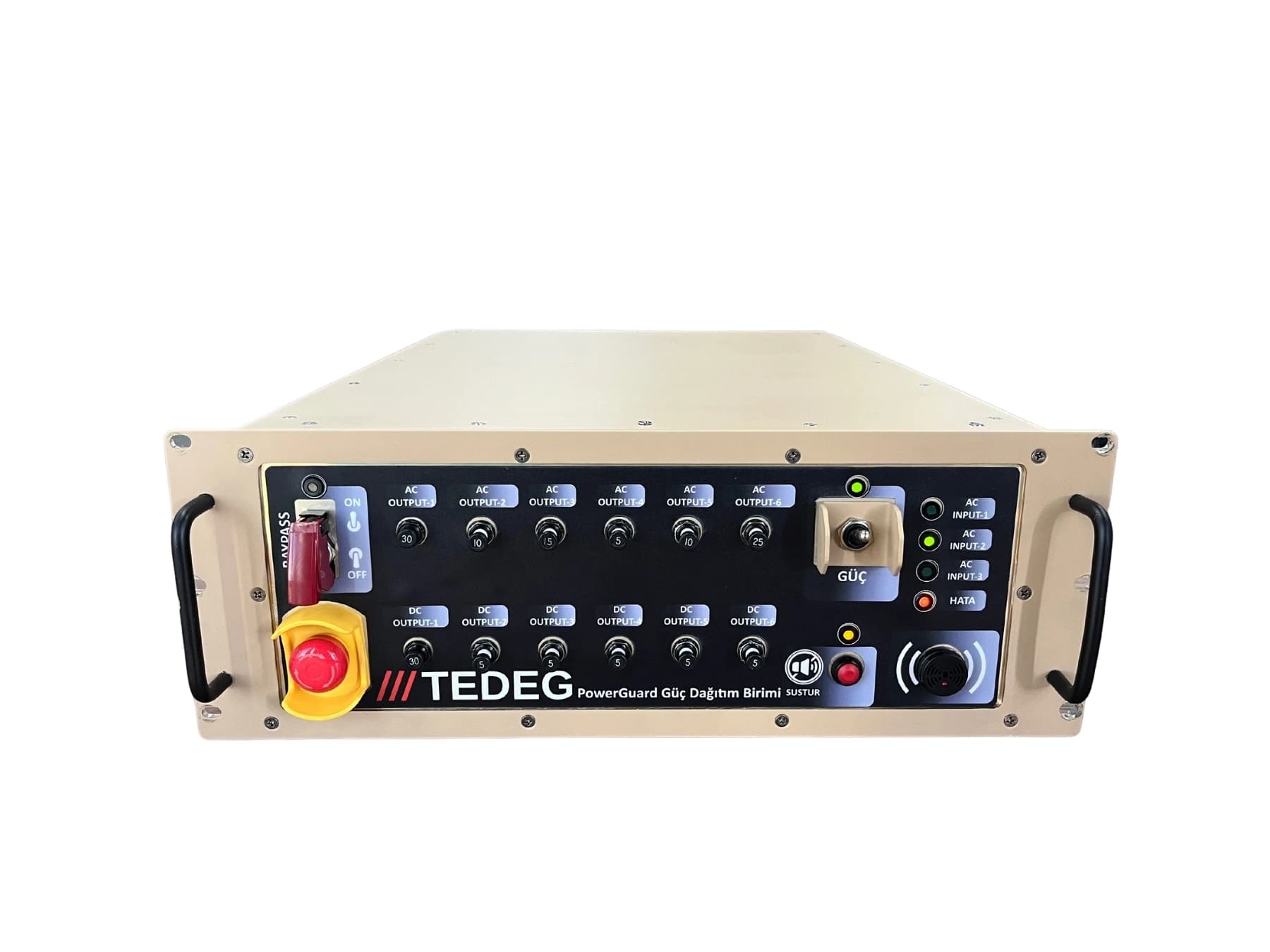
Power distribution units (PDU)
High current and high power systems
EMI/EMC compliant designs
Analog and digital circuit design
Sensor interfaces
Communication boards
Battery management systems
Protection and monitoring circuits
How we work
Work starts with your requirement set: the input source and its disturbances, the loads and their priorities, the interfaces, the envelope, and the environmental and EMI/EMC conditions of the platform. From these we fix the architecture first, including topology, isolation boundaries, the protection concept and the filtering approach, and review it with you before any schematic is drawn.
Schematic capture, component selection and PCB layout follow, with EMI/EMC and thermal behaviour treated as design inputs rather than items to fix later. The first prototype goes through bring-up, functional and load tests and EMI/EMC pre-compliance scans on our own bench. What we learn feeds a revised design, and the revision history stays with the project. Design reviews are held with your engineering and quality teams at the points where decisions are hardest to reverse: architecture, layout release and prototype acceptance.
What we deliver
The deliverables are the files you need to build, test and maintain the hardware, not only a working board. The design package covers schematics, PCB layout and production data, the bill of materials with the approved sources for critical components, and the assembly drawings. Component selection follows our supply-chain policy: parts come from the original manufacturer or its authorised distributors, and alternative options for supply-risk components are identified at the design stage.
Test documentation accompanies the hardware: the test procedure, the records of functional, load and thermal tests, and the EMI/EMC pre-compliance results with the margins observed. For the delivered unit you receive the connector and cable interface definitions, the user and maintenance manual and a serial-numbered final inspection and functional test form. Where a design has been qualified at an accredited laboratory, the report is shared on request under a non-disclosure agreement.
Standards and products we build on
Our boards are designed to MIL-STD-461 for EMI/EMC and MIL-STD-810 for environmental ruggedness, and assembled to IPC criteria. Where the unit sits on a 28 VDC vehicle network, MIL-STD-1275 defines the supply conditions it must survive; on naval platforms the power interface follows MIL-STD-1399. External connections use MIL-DTL-38999 connectors. Designed to a standard and tested to it are two different statements, and we keep them apart on every page and in every document.
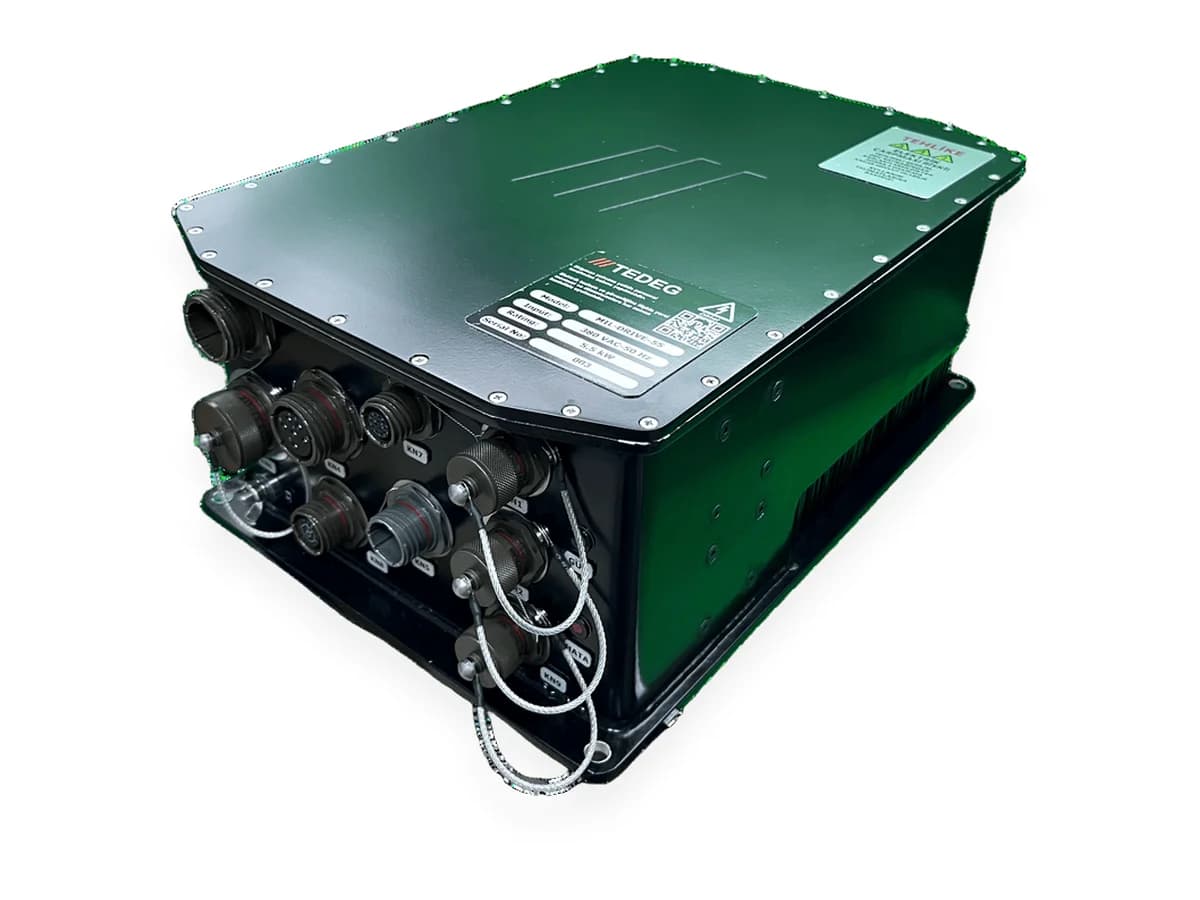
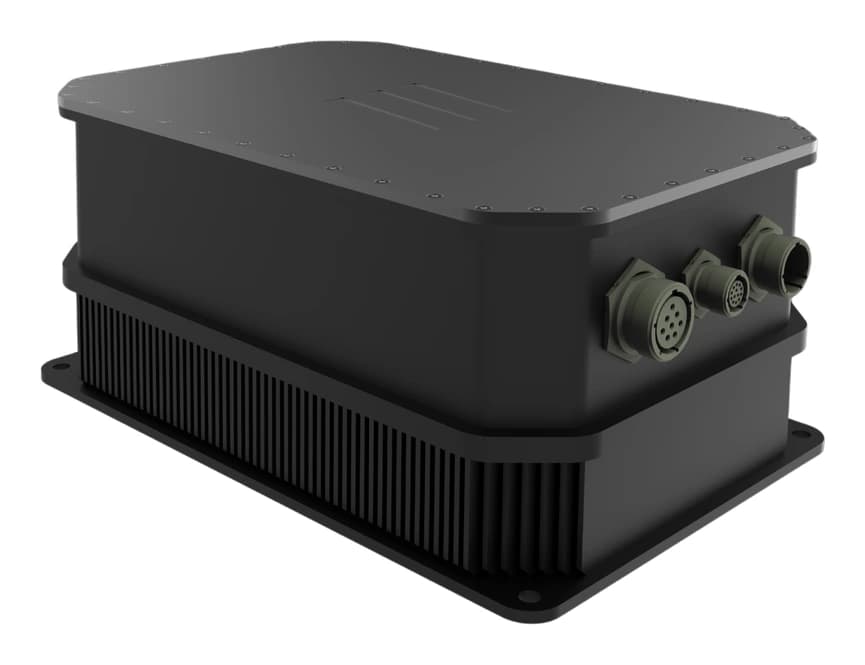
The same hardware blocks appear across our product families. The PDU-RT5002 military power distribution unit uses a dedicated filter topology, per-output circuit-breaker protection and Ethernet monitoring. The Mil-Drive-55 military motor drive combines a FOC power stage with dual-channel Safe Torque Off and RS-485 and CAN-Bus interfaces. The PowerGuard-D1000 DC-DC converter adds cold-crank and transient protection, integrated EMI filters and a conduction-cooled baseplate. Custom designs start from these proven blocks rather than from a blank sheet.
Engineering Approach
All designs are developed considering environmental ruggedness, electromagnetic compatibility and long-life criteria.
Related Products
FAQ
How is a hardware design project structured, and when do we see results?+
The work runs in stages: requirements and architecture, detailed design, prototype and bench verification, then release for production. Each stage closes with a review and a defined set of documents, so you see schematics and layout before the first board is built and test records before the design is released. Stage lengths depend on the scope and the qualification level you require, and are agreed at the start.
Who owns the design files, and what documentation do we receive?+
Ownership and usage rights for customer-specific designs are defined in the contract before work starts. The delivery package includes the design files, the bill of materials, test records and the connector and cable interface definitions. Test reports and MIL-STD test summaries are shared on request under a non-disclosure agreement.
How do you approach EMI/EMC and environmental qualification?+
Filtering, grounding and layout are designed to MIL-STD-461 from the first revision, and EMI/EMC pre-compliance scans are run on our own bench before formal testing. Formal qualification is carried out at an accredited laboratory against the methods your programme calls for. Until that report exists we describe a design as designed to the standard, not tested to it.
How are design changes handled after the prototype is accepted?+
Every change is recorded against the revision history of the design. Changes that affect interchangeability, performance, safety or interfaces are notified to you in writing and submitted for approval before they are applied, following the MIL-STD-973 / ACMP classification used in our lifecycle policy. Document corrections and equivalent-part substitutions are tracked without a formal notification.