
PowerGuard-D1000 Mil-Spec DC-DC Converter — Regulated 24 VDC / 1 kW from 12 VDC
Part number (P/N)
DCDC-1000-12-24
Input
10–18 VDC (12 VDC nominal)
Output
24 VDC regulated (23.8–24.5 V)
Output current
41.7 A continuous (45 A max., current limit ~110%)
Power
1000 W continuous, no derating up to +55 °C
Efficiency
≥ 90% (12 V input, full load)
Regulation
±1% typ., ±2% max. (line and load)
Isolation
1500 VDC input–output
Operating temperature
-32 °C to +55 °C
Power connectors
MIL-DTL-38999 Series III
Company:ITAR-FreeNCAGE: TM885
Overview
Product and Purpose
The PowerGuard-D1000 Mil-Spec DC-DC Converter (Part No: DCDC-1000-12-24) is a high-reliability power conversion unit developed by TEDEG Defence for demanding military and outdoor environments. It converts a nominal 12 VDC input (10–18 VDC range) into a regulated 24 VDC / 1 kW continuous output and carries full load at +55 °C without derating.
Where 24 V equipment has to run on a vehicle with a 12 V battery system, D1000 creates a stable 24 V bus between the vehicle supply and the mission electronics. Cold-crank and transient protection are built into the input stage, and the input is compatible with a 12 V military vehicle bus to the ISO 7637-2 profile.
The unit has a fully sealed, fanless aluminium enclosure designed for outdoor installation under rain, dust and vibration. Heat is carried through a conduction-cooled baseplate directly into the host system or an external heatsink. With no moving parts, it runs silently and needs far less maintenance.
Engineering Capability
Input characteristics:
| Feature | Value |
|---|---|
| Input voltage range | 10–18 VDC (12 VDC nominal) |
| Input current at full load | 95 A max. (12 VDC, 1 kW output, η ≥ 90%) |
| Undervoltage lockout (UVLO) | 8.5–9.5 V, with hysteresis |
| Reverse polarity protection | Active electronic protection |
| Input fuse | 100 A, fast-acting, user-replaceable |
| Input filter | Integrated differential- and common-mode EMI filters |
| Surge protection | TVS diodes and LC damping network |
Output characteristics:
| Feature | Value |
|---|---|
| Output voltage | 24.0 VDC (23.8–24.5 V), factory-set; optional ±5% trim |
| Continuous output power | 1000 W, no derating at +55 °C |
| Output current | 41.7 A nominal, 45 A max.; current limit ~110% |
| Voltage regulation | ±1% typ., ±2% max. (over full input and load range) |
| Ripple and noise (20 MHz BW) | 200 mVp-p max. |
| Transient response | 50% load step, recovery < 2 ms |
| Efficiency | 90% typ. (12 V input, full load, +25 °C) |
| Hold-up time | 5 ms typ. (internal capacitance; external bulk optional) |
| Isolation (input–output) | 1500 VDC, 1-minute factory test |
| Start-up delay | 500 ms typ., 1000 ms max. |
| Remote sensing | Optional sense lines, ±5% |
Protection and control:
- Protection functions: Overvoltage (OVP), overcurrent (OCP), short circuit (SCP), overtemperature (OTP) and reverse polarity
- Remote enable/disable: Opto-isolated ON/OFF pin
- Power Good signal: Indicates a stable output within regulation
Optional communication interfaces:
- CAN-Bus (ISO 11898 / J1939): For vehicle integration
- RS-485 (Modbus/RTU): For industrial control networks
- Ethernet (Modbus/TCP or REST): For advanced system monitoring and diagnostics
These interfaces support remote configuration, performance monitoring, fault reporting and firmware updates.
Connectors and mechanical design:
- Power input (CN1): MIL-DTL-38999 Series III, D38999/24WE6PN, 12 AWG
- Power output (CN2): MIL-DTL-38999 Series III, D38999/24WE6SN, 12 AWG
- Optional communication (CN3): PT02E10-6P, 22 AWG (CAN H/L or RS-485 A/B)
- The connectors provide 360° EMI shielding and environmental sealing; keyed configurations prevent input and output cables being mismated.
- Mounting: Directly onto a vehicle frame or system heatsink via the conductive baseplate. Standard EMI filters and bonding points are provided, and pre-terminated harness sets are available on request.
- Main dimensions (mechanical drawing): 220 × 330 × 150 mm, 4 × Ø8.5 mm mounting holes
Environmental resilience:
| Feature | Value |
|---|---|
| Operating temperature | −32 °C to +55 °C (1000 W continuous, no derating) |
| Storage temperature | −40 °C to +71 °C |
| Cooling | Conduction-cooled, fanless |
| Environmental standard | MIL-STD-810G (temperature, vibration, shock, humidity) |
| EMC | MIL-STD-461 (conducted and radiated emissions) |
Remote Commander Control Box (optional): A rugged field accessory that gives operators control without direct access to the unit. It provides remote ON/OFF, fault reset (CIT/Reset) and a Blackout button that instantly disables all outputs. Power, overvoltage, overcurrent and Blackout status are shown on LEDs, with voltage and current on a digital display. The aluminium front plate mounts in a dashboard or rack; the box connects to D1000 over an RS-485 / CAN-Bus line and operates from −32 °C to +55 °C. Cable length is 3 m as standard, with 5–10 m as an option.
Typical Applications
- Military and tactical vehicles: Converting 12 V vehicle power into a stable 24 V bus for onboard electronics, communication and weapon systems
- Mobile command and communication units: Supplying radio transceivers, radar, data routers and network control systems
- Field power distribution systems: Integration into outdoor enclosures or shelters to power surveillance and sensor networks
- Unmanned ground and surface platforms (UGV / USV): A compact DC bus converter for autonomous or remotely operated systems
- Industrial and emergency power systems: Wherever silent, fanless, sealed DC power is needed for critical communication or monitoring
The TEDEG Advantage
D1000 produces 1 kW of 24 V power from a 12 V vehicle bus in a single sealed unit, so 24 V equipment can be fitted to 12 V platforms without reworking the vehicle's electrical system. Cold-crank and transient protection, UVLO, active reverse polarity protection and a replaceable 100 A fuse come as standard on the input side. Delivering 1 kW without derating at +55 °C means the rated capacity holds in hot climates and enclosed vehicle compartments. The optional CAN-Bus (J1939) interface connects the unit straight into the vehicle network.
For 24 VDC / 1 kW from a single-phase AC source, see the PowerGuard-A1000 AC-DC converter; if you need both DC and AC outputs from a vehicle DC bus, see the TPS-24DCAC Military Power Conversion Unit.
Corporate assurance: TEDEG Defence is an approved supplier of ASELSAN, Roketsan and the Turkish Ministry of National Defence (MSB), with NATO supplier registration under NCAGE: TM885.
Specifications
| Part number (P/N) | DCDC-1000-12-24 |
| Input | 10–18 VDC (12 VDC nominal) |
| Output | 24 VDC regulated (23.8–24.5 V) |
| Output current | 41.7 A continuous (45 A max., current limit ~110%) |
| Power | 1000 W continuous, no derating up to +55 °C |
| Efficiency | ≥ 90% (12 V input, full load) |
| Regulation | ±1% typ., ±2% max. (line and load) |
| Isolation | 1500 VDC input–output |
| Operating temperature | -32 °C to +55 °C |
| Power connectors | MIL-DTL-38999 Series III |
| Standards | MIL-STD-810G · MIL-STD-461 |
MIL-STD Compliance
MIL-STD-461
EMI/EMCMIL-STD-810G
EnvironmentalSee Certifications & Quality for our test and validation approach, and our Test & Validation service for programme-specific testing.
Datasheet
Related Products
AC-DC & DC-DC Power Converters
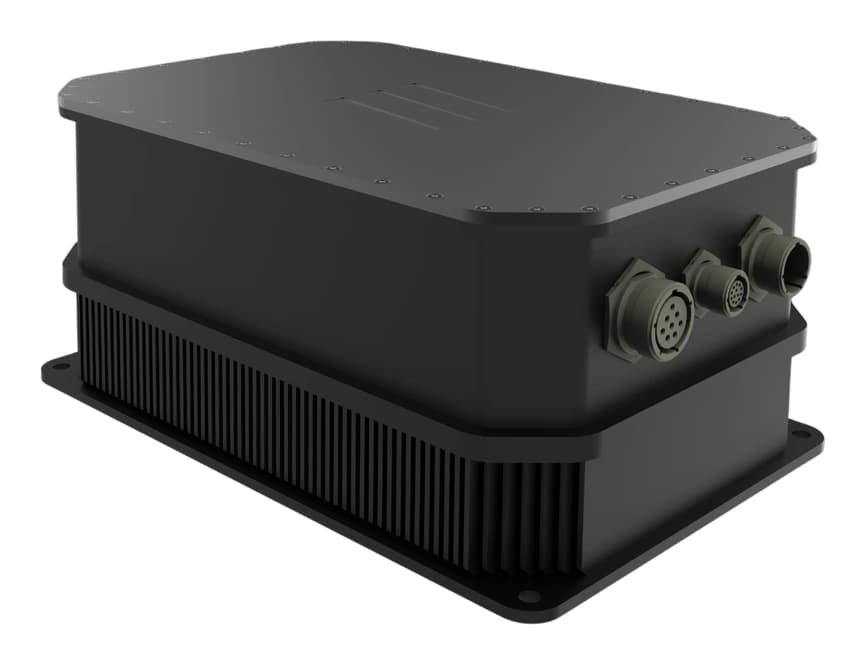
PowerGuard-A1000 Mil-Spec AC-DC Converter — 1 kW Fanless
Details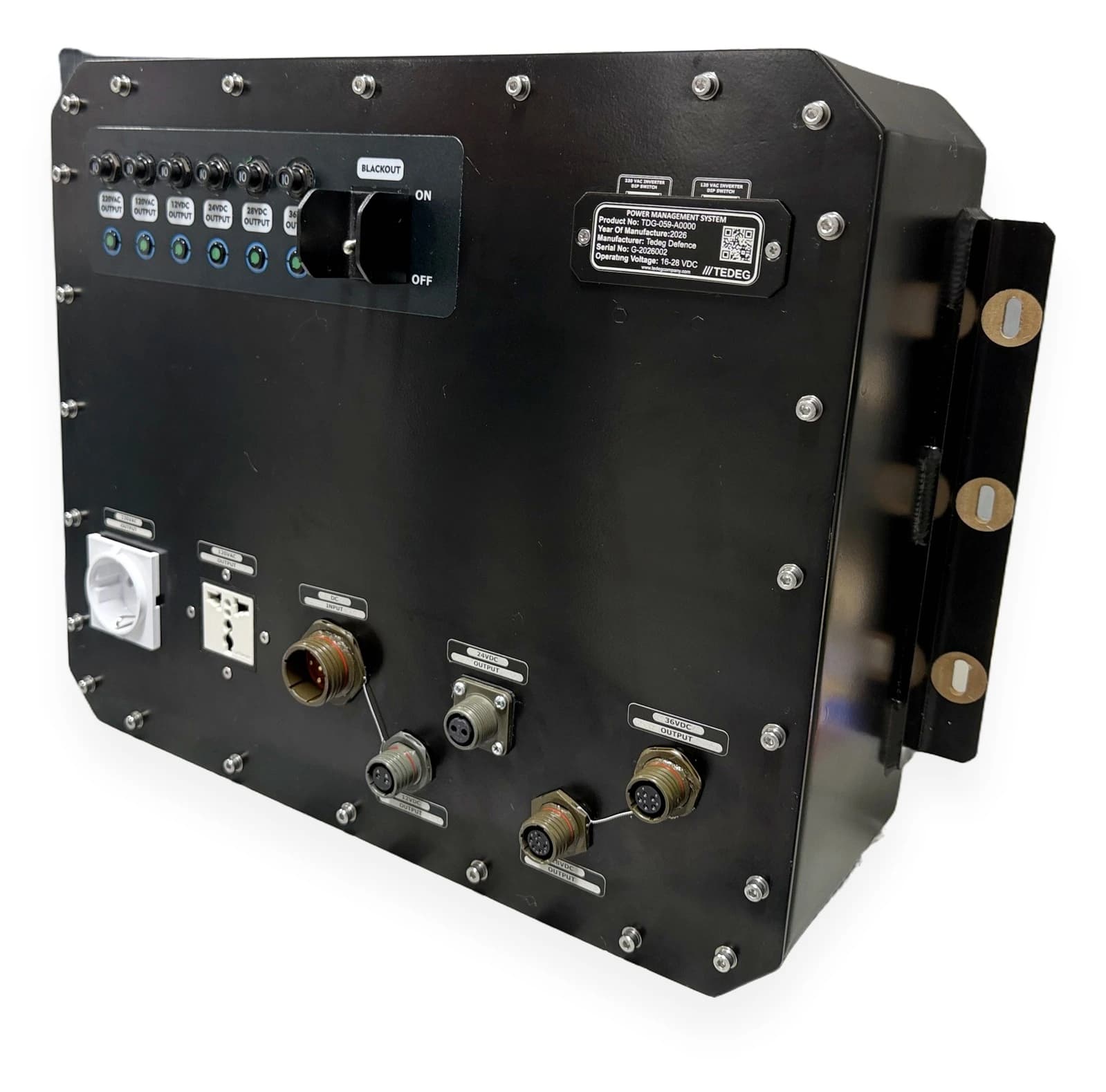
AC-DC & DC-DC Power Converters
PowerGuard TPS-24DCAC Military Power Conversion Unit (4× DC + 2× AC)
Details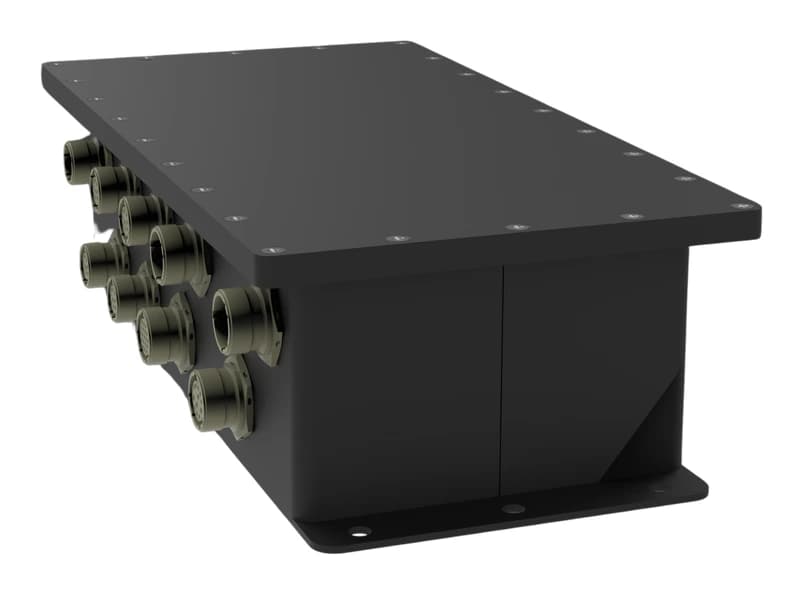
AC-DC & DC-DC Power Converters
PowerGuard-A 380 VAC to 28 VDC Military AC-DC Converter & Distribution System
DetailsFull category: mil-spec AC-DC and DC-DC converters
Engineering Support
Our engineering services can adapt this product to your platform, integrate it or test it against your programme requirements.
Quality and Testing
FAQ
What input voltage range does D1000 accept?+
It runs from 10–18 VDC with a nominal 12 VDC input. The input is compatible with a 12 V military vehicle bus to the ISO 7637-2 profile, with integrated cold-crank and transient protection. Undervoltage lockout (UVLO) engages at 8.5–9.5 V.
How much current does it draw at full load?+
At 12 VDC input and 1 kW output, input current is up to 95 A (η ≥ 90%). The input has a 100 A fast-acting, user-replaceable fuse, and cabling should be sized accordingly.
Can it deliver full power in hot conditions?+
Yes. It provides 1000 W continuous output at +55 °C without derating. The operating range is −32 °C to +55 °C and the storage range is −40 °C to +71 °C. Cooling is fanless; heat passes through the baseplate into the vehicle frame or an external heatsink.
How does it connect to the vehicle network?+
CAN-Bus (ISO 11898 / J1939), RS-485 (Modbus/RTU) or Ethernet (Modbus/TCP or REST) interfaces can be added as options for remote configuration, monitoring, fault reporting and firmware updates. For basic control, an opto-isolated ON/OFF pin and a Power Good signal are always available.
Which connectors does it use?+
Power input and output use MIL-DTL-38999 Series III connectors (D38999/24WE6PN and D38999/24WE6SN). Keyed configurations prevent input and output cables being mismated. A PT02E10-6P connector is specified for the optional communication line.