What Is Reverse Polarity?
Reverse polarity means the positive (+) and negative (−) terminals of a power source are connected to a load the wrong way round. In vehicles, the most common form is a reversed battery connection: the positive cable lands on the negative post and vice versa. Reverse polarity protection is the set of design measures that stops this mistake from damaging electronic loads, the alternator and the wiring.
On a civilian car, a reversed battery usually ends with a blown fuse. On an armoured vehicle, the same mistake can hit the mission computer, communications and cameras at once. This article covers, from a systems engineer's point of view, what reverse polarity does, which protection methods exist and what to ask when selecting a protection unit.
What Happens When a Battery Is Connected in Reverse?
Three areas deserve separate attention.
Electronic Loads
Most electronic inputs contain semiconductors that are reverse-biased in normal operation: transient voltage suppressors and the body diodes of transistors in switch-mode power stages. With the battery reversed they conduct, and battery current flows straight through them. The result can be burnt traces, ruptured electrolytic capacitors or a permanently damaged power stage.
Alternator and Rectifier
The rectifier diodes at the alternator output become forward-biased when the battery is reversed, so the battery is effectively short-circuited through the rectifier. Diodes, terminals and the regulator can overheat quickly. That is why the alternator needs to be treated separately from the electronic loads when it comes to reverse polarity.
Cables, Fuses and Connectors
A correctly sized fuse protects the cable but usually opens too slowly to save semiconductors. On an unfused or badly sized line, insulation and connector pins can be damaged by heat. How a fuse rating is chosen against the cable cross-section is explained in our DC busbar guide.
Where Does Reverse Connection Happen in the Field?
Reverse polarity is usually a maintenance or operating error. Typical situations:
- Battery replacement: Posts mixed up in a tight space, in poor light, with gloved hands
- Jump-starting: Leads reversed when starting from an external battery or another vehicle
- Reconnecting a battery bank: On 24 V systems, the link cable between two series-connected 12 V batteries fitted to the wrong post
Labels, colour coding and different-sized terminal clamps reduce the risk but do not remove it, so an electrical protection layer is still needed.
Reverse Polarity Protection Methods
The main methods and their general trade-offs:
| Method | How it works | Strength | Watch out for |
|---|---|---|---|
| Series diode | A diode in the line blocks reverse current | Simple, passive, reliable | Forward voltage drop becomes heat at high current |
| Shunt diode + fuse | On reversal the diode conducts and the fuse blows | No loss in normal operation | Fuse must be replaced; diode and fuse sized together |
| MOSFET (ideal diode) | A controlled switch stays off under reverse bias | Low conduction loss | Driver circuit, transient withstand, need for parallel devices |
| Contactor / relay | Line closes only when correct polarity is sensed | High current, near-zero drop | Mechanical wear, coil power, vibration tolerance |
On a high-current battery line, the choice largely comes down to voltage drop × current = heat. For example, a device that drops 0.5 V produces 50 W of heat at 100 A, and that heat has to leave the enclosure.
Device Level or Battery Line?
Protection is designed in two layers; one does not replace the other.
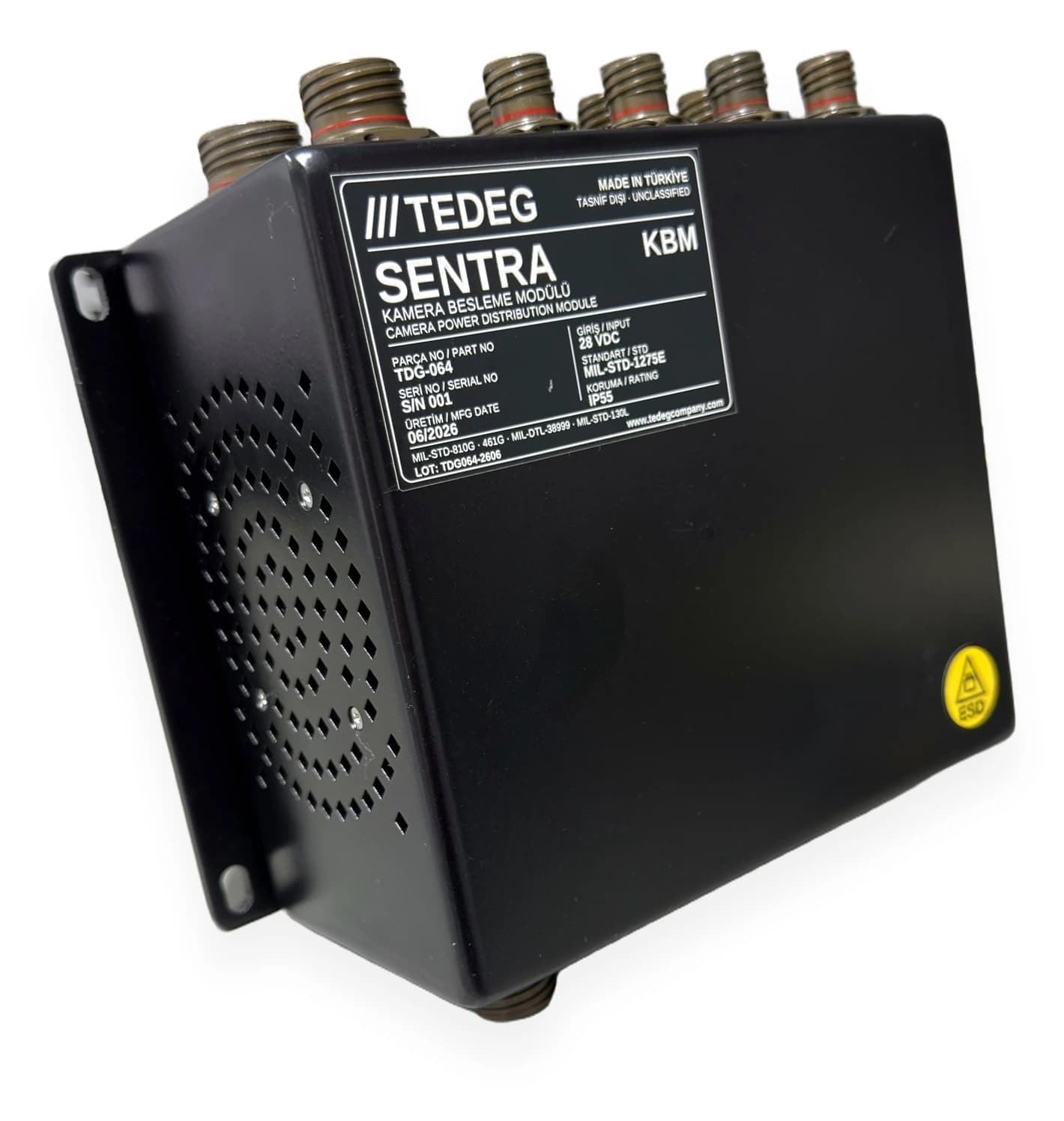
Device level: Each electronic unit protects its own input. The SENTRA KBM Military Camera Power Distribution Module, for instance, has reverse polarity protection and galvanic isolation on its MIL-STD-1275E compliant 28 VDC input, with a reverse polarity warning label on the power input connector. Where this protection sits in a camera package is explained in our guide to powering armoured vehicle cameras. The PowerGuard-D1000 DC-DC converter, which produces 24 VDC / 1 kW from a 12 VDC input, combines active electronic reverse polarity protection with a replaceable 100 A fuse on its input.
Battery line level: Device protection only protects that device. The alternator, loads wired directly to the battery and older unprotected equipment need a separate protection unit between the battery and the vehicle bus. This layer is designed together with the Power Distribution Units that handle bus distribution.
Why Treat Alternator Protection Separately?
With a reversed battery, the alternator draws current through its rectifier and can keep generating voltage while its excitation circuit is active. Breaking the battery current may not be enough; the alternator must also be taken out of circuit in a controlled way, so vehicle protection is assessed together with alternator shut-off logic.
MIL-STD-1275 and Reverse Polarity
The characteristics of the 28 VDC electrical system in military ground vehicles are defined by MIL-STD-1275. Current revisions of the standard include reverse polarity among the conditions that connected equipment is expected to withstand; details such as voltage level and duration should be read from the applicable revision and the platform specification. The bus as a whole, from sources and protection to distribution, conversion and loads, is covered in our military vehicle electrical architecture guide. See our MIL-STD-461 and MIL-STD-810 guide for how these standards relate. For batteries, alternators and load management with the engine off, see the military APU and silent watch guide.
7 Questions When Selecting a Reverse Polarity Protection Unit
- 1.Voltage class: Is the unit designed for 12 V, 24 V or both?
- 2.Current capacity: Does the rating account for cranking and jump-start current as well as continuous load?
- 3.Loss and heat: What are the voltage drop and heat dissipation at full load?
- 4.Alternator control: Can the unit also take the alternator out of circuit, and with what timing?
- 5.Response: How quickly does it detect reverse polarity and break the line?
- 6.Environment: Do the IP rating and operating temperature suit the mounting location, such as the engine bay or battery box?
- 7.Mounting and interfaces: Do the cable entries, signal connector and mounting pattern fit the existing installation?
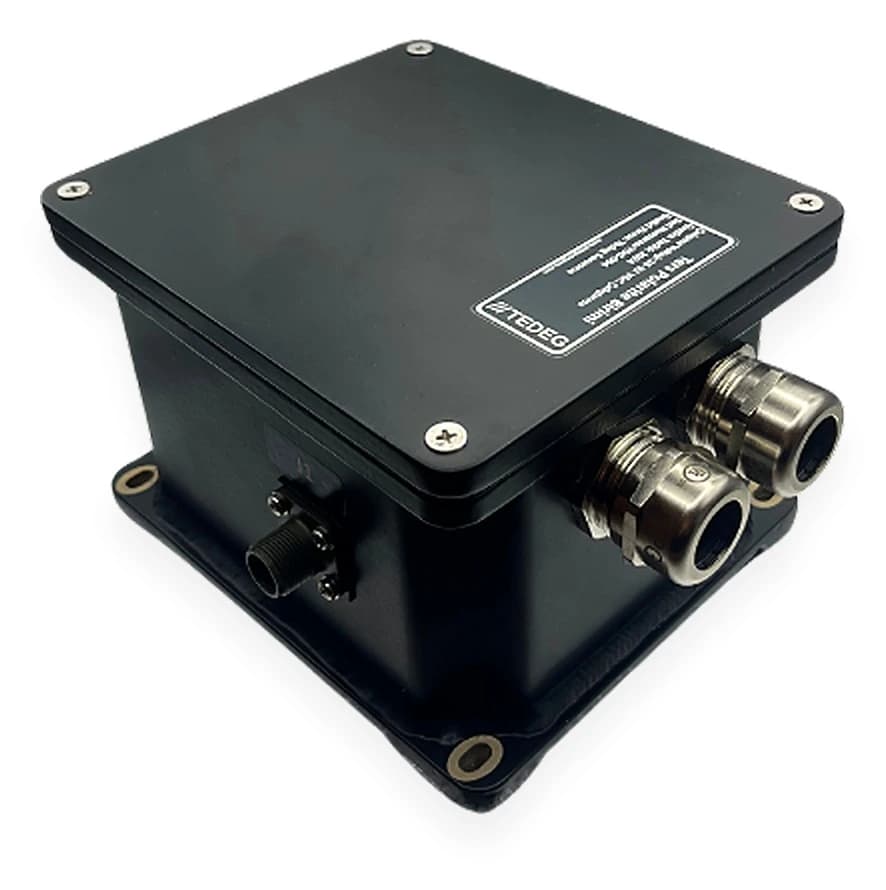
For TEDEG's PowerGuard TPB-01 Reverse Polarity Unit, the datasheet answers are: 12 V / 24 V DC operation, current capacity up to 500 A, internal diode technology aimed at minimal energy loss, and breaking the circuit within milliseconds on reverse polarity. A time control that shuts the alternator off 8 seconds after the excite signal drops protects the alternator from short circuits and overcurrent caused by reverse polarity. The enclosure is rated IP67 and designed for −40 °C … +120 °C; the battery line enters through 2 × Pg21 metal cable glands and control signals use the J1 4-pin circular connector.
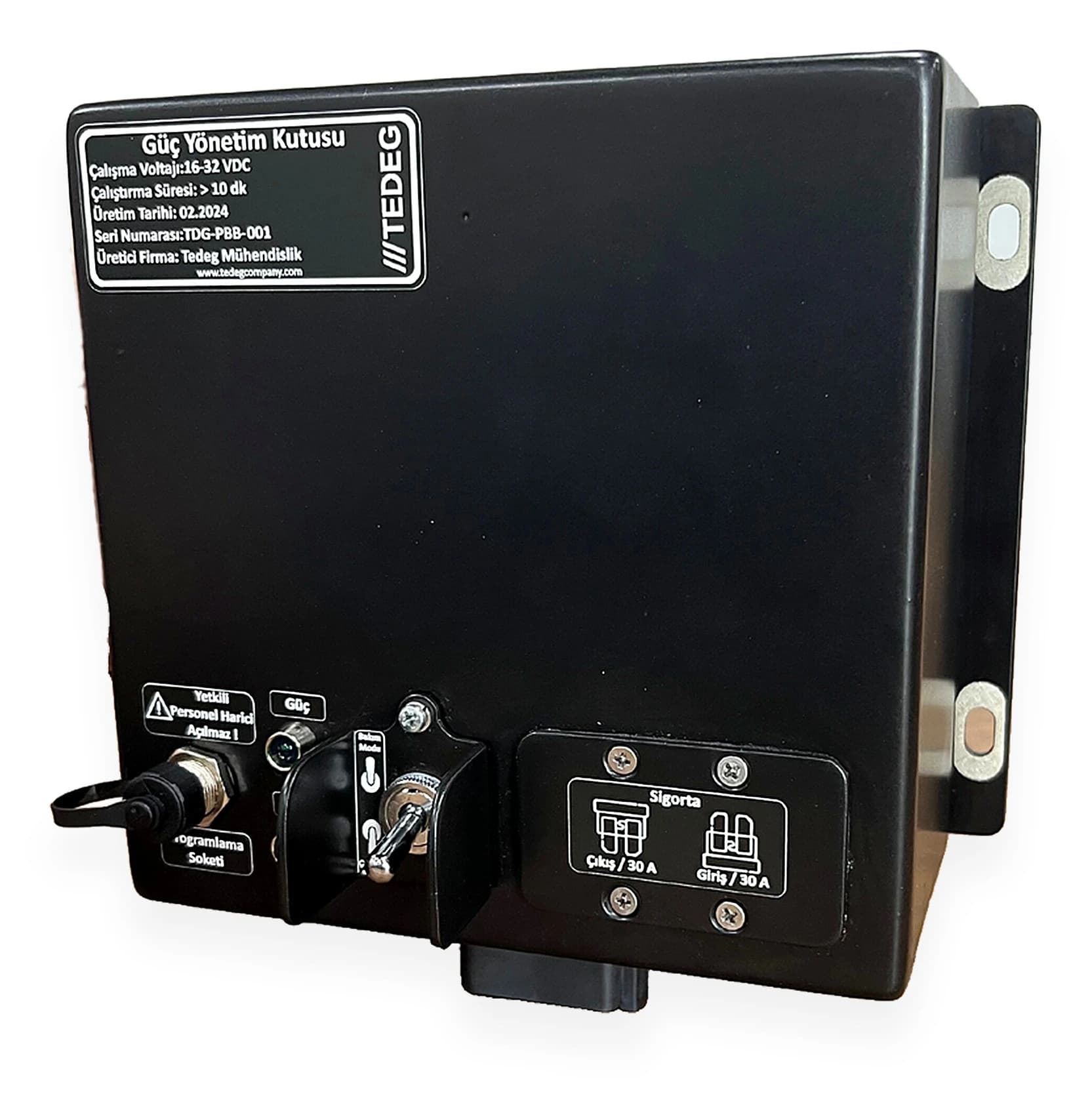
Backup power is a separate question. To keep mission equipment running after the ignition is switched off, the PowerGuard EBB Auxiliary Battery Unit from the same family uses a 3600 F supercapacitor, operates on 16–32 VDC and supplies power for 3 hours after ignition off. Both products are listed under Power Management & Protection.
Frequently Asked Questions
Can reverse polarity protection be done with a fuse alone?
A fuse protects the cable, but semiconductors can be damaged before it opens. It works best combined with a shunt diode or a dedicated protection unit.
Why does diode-based protection get hot?
The voltage drop across a conducting diode, multiplied by the current, becomes heat that the enclosure and mounting surface must dissipate.
If every device has input protection, is a battery-line unit still needed?
Usually, yes. The alternator, loads wired directly to the battery and the wiring itself rely on protection at the battery line.
Is reverse polarity the same as reverse current?
No. Reverse polarity is a source connected with its terminals swapped. Reverse current is current flowing the unexpected way in a correctly connected system, for example back-feed from a charged capacitor or a parallel source. The two can require different protection measures.
Conclusion
Reverse polarity is a human error that will happen in the field; what matters is whether it ends with a blown fuse or a list of damaged units. The sound approach combines device-level input protection with a battery-line protection unit and alternator shut-off logic.
For reverse polarity protection that fits your vehicle's battery and alternator layout, request a quote or contact our engineering team.
Field example: Read the tactical truck power architecture modernisation case study, in which a reverse polarity protection unit was integrated into the power distribution architecture.