
Land Platforms
Tactical Truck Power Architecture Modernisation
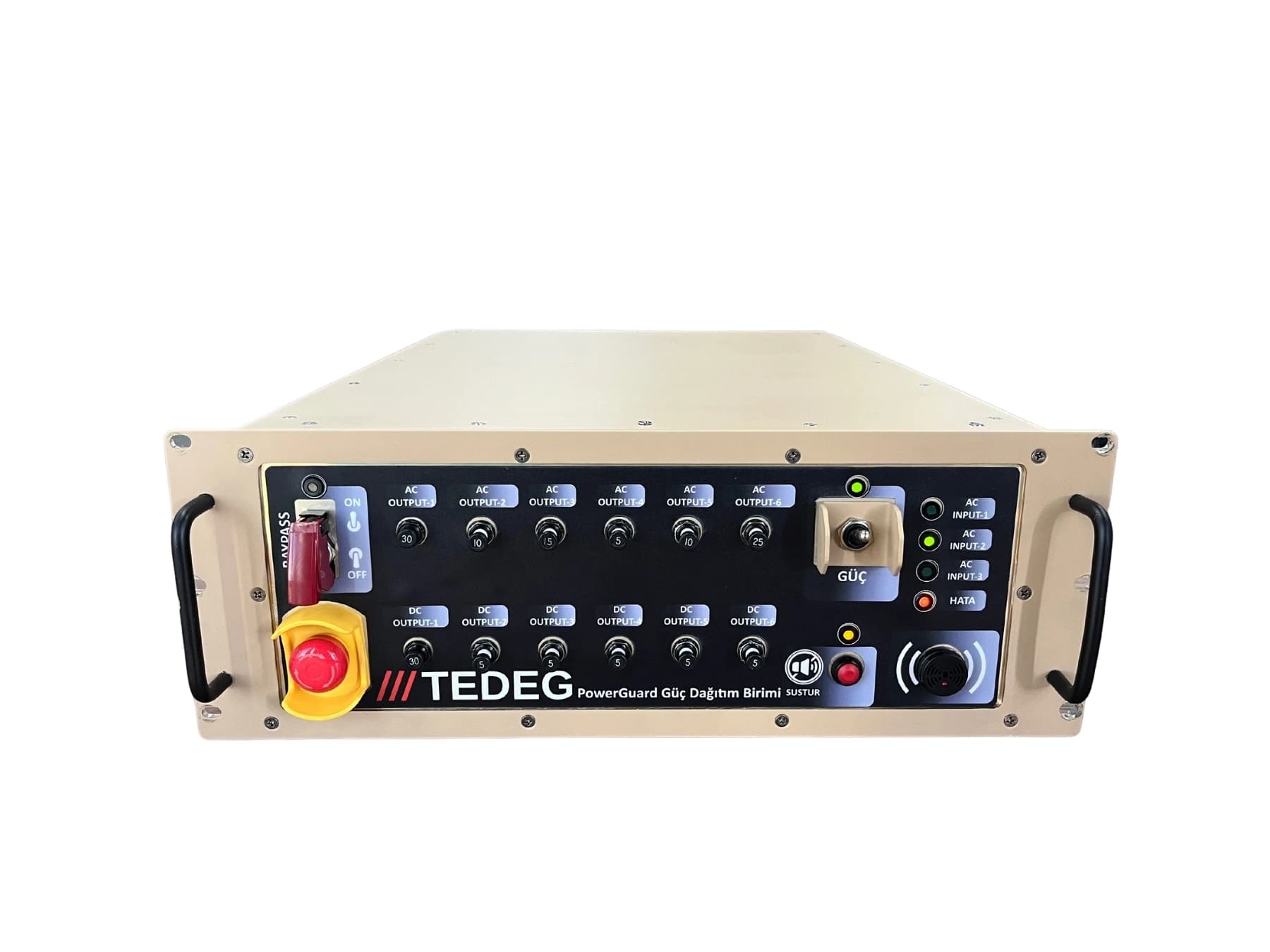
An ageing PDU that could no longer keep pace with growing mission loads was replaced by a remotely monitored power distribution architecture built on the PDU-RT5002 and designed to MIL-STD requirements.
- Platform
- 4×4 tactical wheeled armoured vehicle — series production line
- Customer
- Turkish Tier-1 Land Systems Prime Contractor
- Sector
- Land · tactical wheeled
- Year
- 2024
Customer & Context
A leading Turkish land systems prime contractor brought TEDEG Defence into its next-generation tactical truck programme to renew the power distribution subsystem. The platform powers several mission loads at once, including radar processing, communications, warning units and perimeter lighting. The new power distribution unit had to suit both retrofits and series production, and fit the existing harness routing and connector layout.
Challenge
The legacy PDU could no longer cope with the growing number of loads and the extra power demand that came with new mission equipment. The main issues in the field were:
- Insufficient output capacity: there were no spare outputs for new loads, so some equipment had to share a line.
- EMI margin: MIL-STD-461F field measurements showed a narrowing conducted-emission margin, putting electromagnetic compatibility with radar and radio systems at risk.
- Supply quality: voltage fluctuations on the incoming supply passed straight through to sensitive loads.
- Mechanical robustness: contactor-based distribution carried a risk of early failure under cold starts and heavy vibration.
- Observability: output status could not be seen remotely, so fault-finding had to be done by hand at the vehicle.
The prime contractor needed a solution that fitted the same mechanical envelope and could be monitored and managed in the field.
TEDEG Solution
TEDEG Defence customised the PDU-RT5002 military power distribution unit to the platform's load profile and harness.
- Isolated outputs with per-output circuit-breaker protection: each mission load has its own line, so a fault on one does not spread to the others.
- Prioritised source management: automatic, priority-based switching between mains, generator and UPS supplies.
- Remote monitoring: output management over Ethernet, voltage and current logging, and single-point tracking of fault conditions such as over- and under-voltage, reverse polarity and over-temperature.
- Platform fit: a MIL-DTL-38999 connector set kept changes to the existing harness to a minimum.
- Additional protection: a reverse polarity protection unit and a voltage measurement unit were integrated into the system.
The design was based on MIL-STD-461F EMI/EMC and MIL-STD-810G environmental requirements. Load profile simulation and EMI pre-scans were carried out jointly with the prime contractor's quality team.
Outcome
With the new architecture, each of the platform's mission loads is fed from its own protected line within the same mechanical envelope. Power distribution can now be monitored from a single point, so maintenance crews can see a faulty line remotely instead of tracing it at the vehicle.
- Capacity for new mission equipment was gained without changing the mechanical layout.
- The filtering design was renewed with electromagnetic compatibility with radar and radio systems in mind.
- The distribution layout was reworked to MIL-STD-810G requirements with vibration-heavy field conditions in mind.
- Field experience on the pilot vehicles cleared the way for the solution to move into the series production configuration.
The PDU-RT5002 became a core building block of the platform's power distribution architecture.
Technical Scope
Values are taken from each product's own technical data; full specifications are on the product page.
- Input
- 3 × 220VAC / 50 Hz
- Output
- 10 × 25A AC/DC
- Form factor
- 4U× 19 inch
- Cooling
- Fanactive
StandardsMIL-STD-461FMIL-STD-810GView product: PDU-RT5002 Military Power Distribution Unit
Related Engineering Services
- Electronic Hardware DesignPower Electronics and Mission-Critical System Design
- Embedded Software DevelopmentReal-Time and Reliable Control Infrastructure
- Structural Analysis & SimulationVerified and Reliable Engineering Approach
- System IntegrationPlatform-Specific Integrated Solutions
- Manufacturing & PrototypingFrom Design to the Field
More case studies
Air Defence · 2025
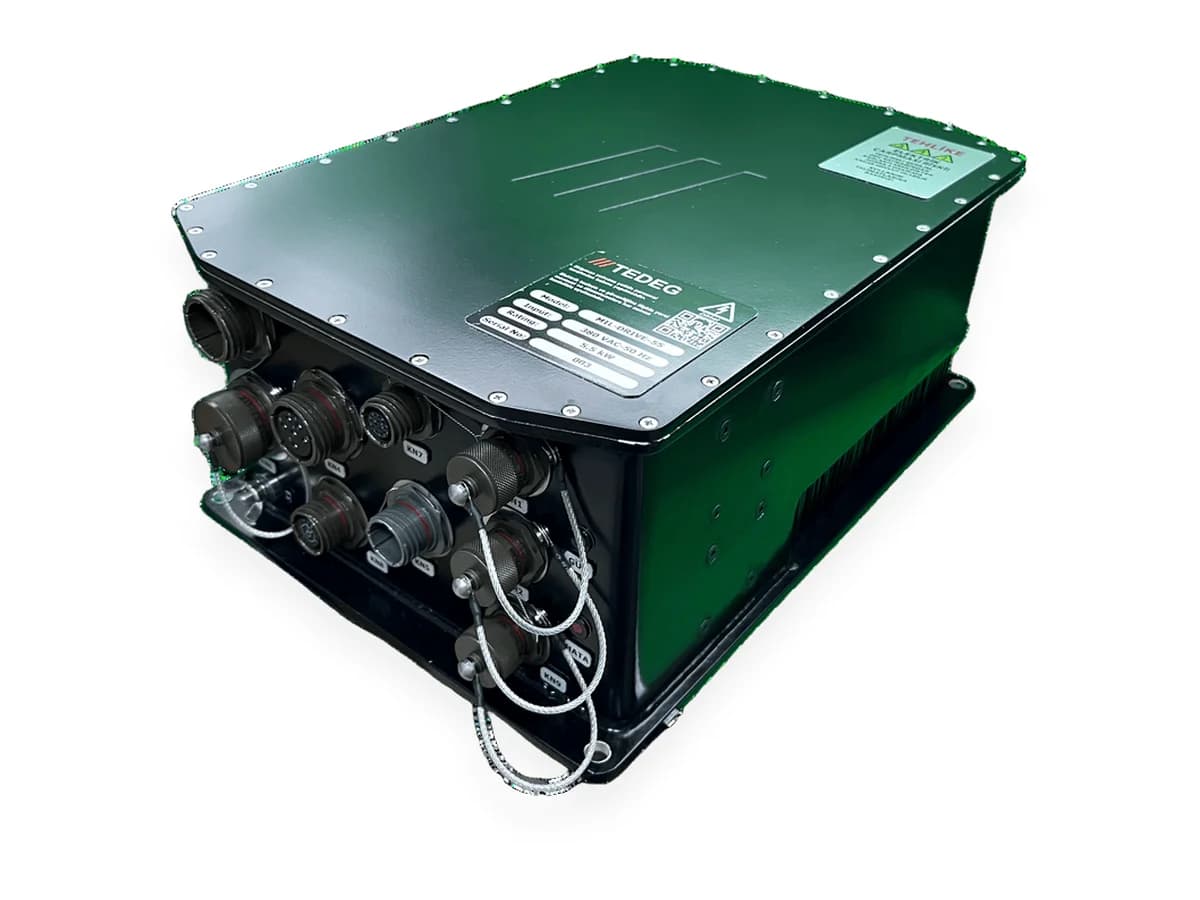
Mobile Air Defence Platform — Pedestal Motor Control & Radar Frequency Feed
A motor drive and a frequency converter sourced from separate foreign suppliers were replaced by a matched TEDEG pair, designed together so that neither interferes with the other.
Read case study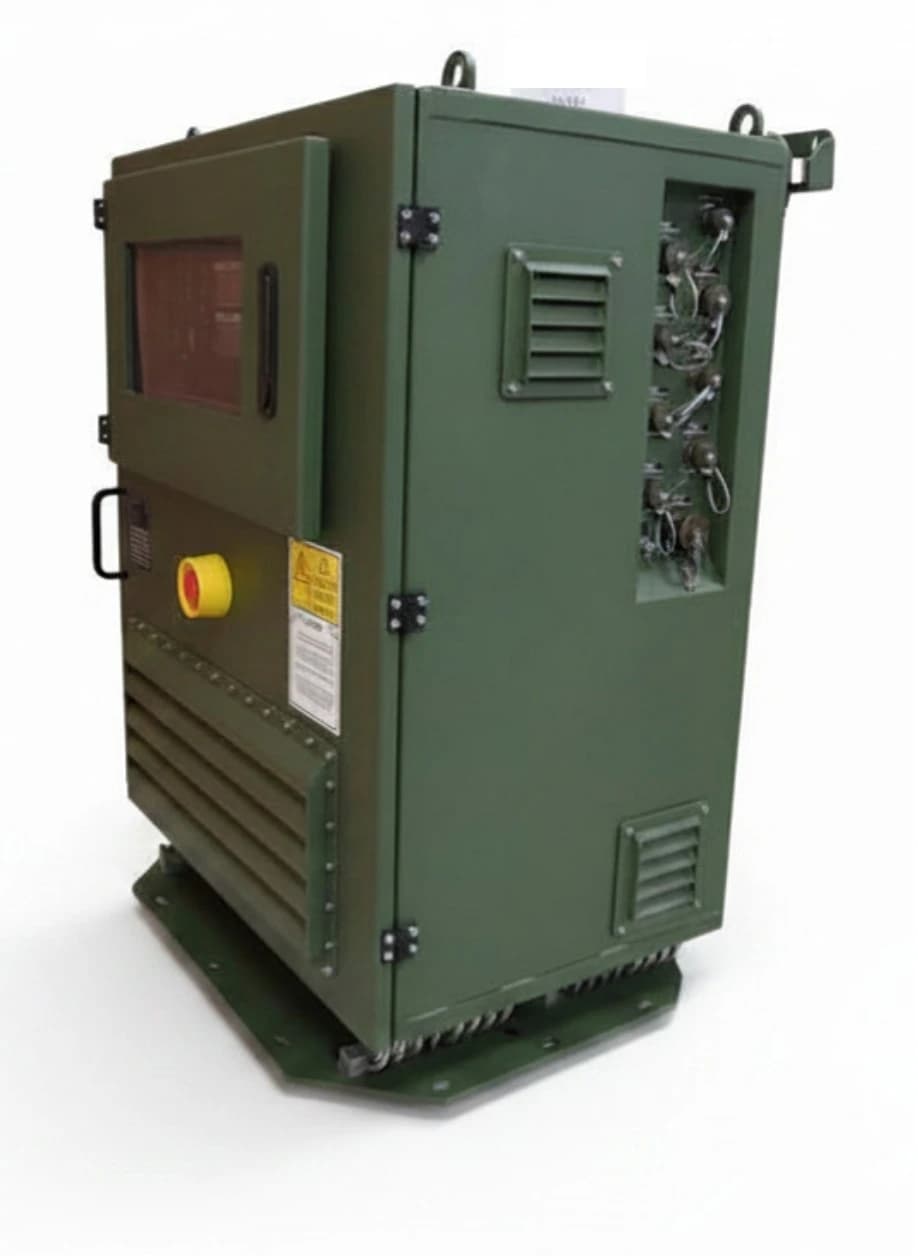
Land — Rocket / Missile Platforms · 2025
Land Rocket Platform — From Three Separate Systems to One Integrated Solution
The outdoor-rated military 60 Hz and 400 Hz solution the manufacturer could not find on the market: a single PowerGuard Outdoor replaced three systems combined in an industrial enclosure.
Read case study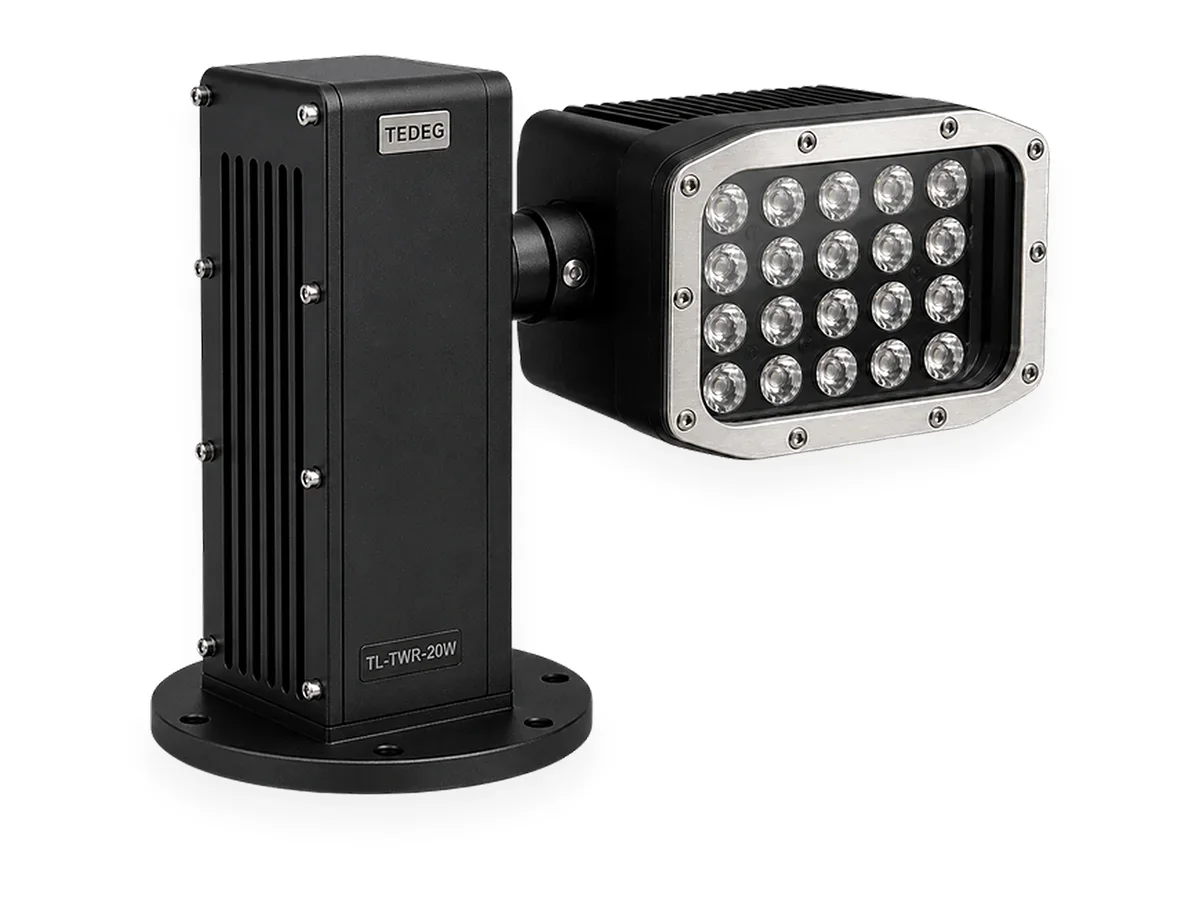
Lighting Systems · 2024
Supplier transitionMilitary Spotlight System — A Domestic LED Solution to Recurring Field Failures
A competitor's spotlight that kept failing in the field was replaced by a domestic design with a sealed enclosure, a reworked motion system and LED electronics.
Read case study