
SERVICE · TEST
Test & Validation
Reliability-Focused Test Processes
In defence electronics, reliability is achieved not only through design but through comprehensive test processes.
Test activities performed within TEDEG Defence include:
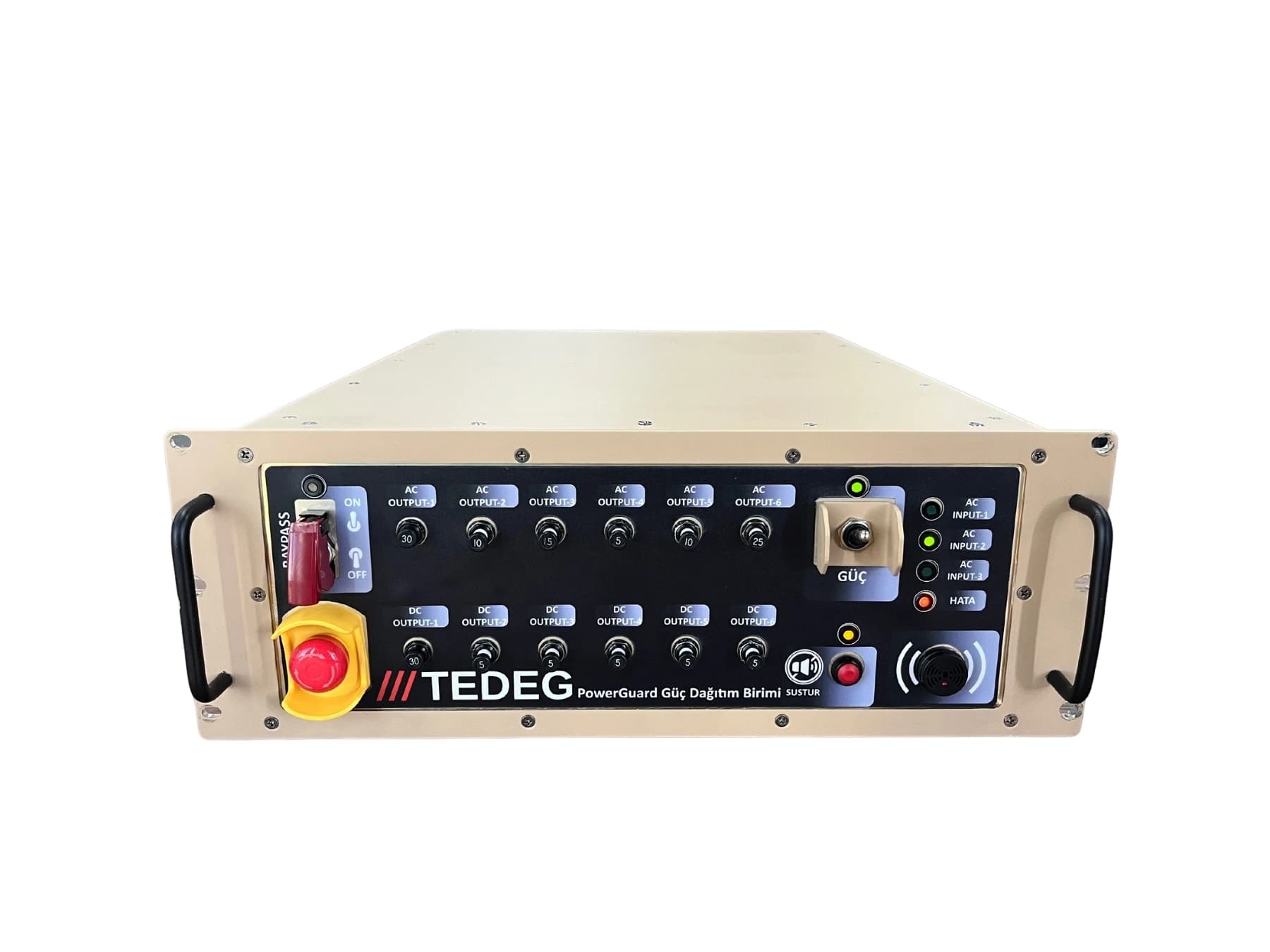
Test Services
Functional tests
Load tests
Environmental pre-compliance tests
EMI/EMC pre-tests
Thermal performance tests
Power quality analyses
Communication verification tests
Long-duration operation tests
System validation procedures
How we work
Testing is planned when the design starts, not when the prototype is finished. For each project we write a test plan that lists what will be verified at our own bench, what will be verified on your platform, and what has to be demonstrated at an accredited laboratory. The in-house part covers functional tests, load tests, thermal performance, power quality analysis, communication verification, long-duration operation and environmental stress, with EMI/EMC pre-compliance scans used to find problems while the design can still be changed.
Pre-compliance and qualification are kept apart. Our bench tells us where the margins are; it does not produce a qualification statement. Formal MIL-STD-810 and MIL-STD-461 testing is carried out at an ISO/IEC 17025 laboratory against the methods your programme calls for, and only a report from such a laboratory lets us say that a product has been tested to the standard. Every test, in-house or external, is recorded so that the result can be traced to the unit, the configuration and the procedure used.
What we deliver
For development work you receive the test plan, the written test procedures and the test records with the measured values, not only a pass or fail. EMI/EMC pre-compliance results are reported with the margins observed per method, so that your quality team can judge the risk before formal testing. Long-duration and load test records show the conditions, the duration and any event during the run.
For delivered products, every shipment carries a certificate of conformity and a serial-numbered final inspection and functional test form; repaired units pass the same final tests as new ones. The acceptance inspection and test procedure, test reports and MIL-STD test summaries are shared on request under a non-disclosure agreement. Laboratory reports are passed on in full and by report number, as the laboratory's terms require. Where a unit is qualified at the laboratory, the report number, the standard, the methods and the result are stated on the product page.
Standards and products we build on
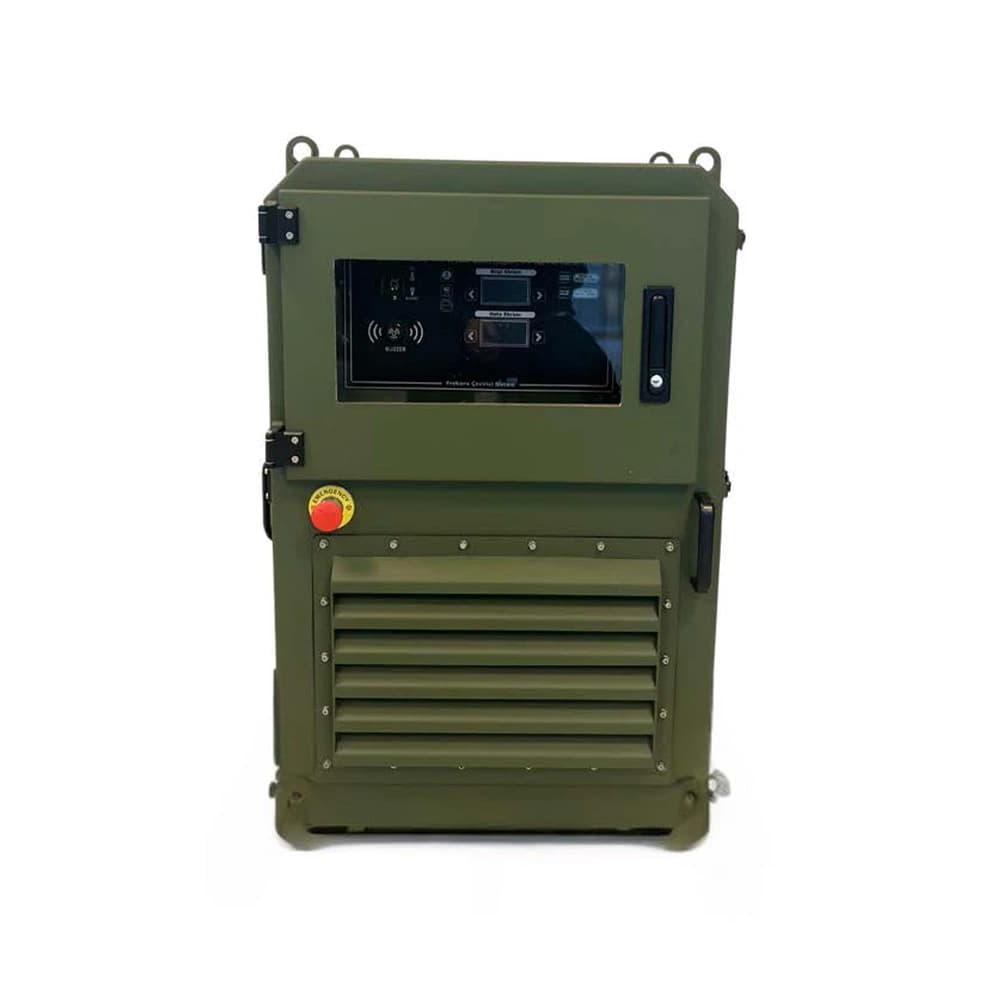
The reference standards are MIL-STD-810 for environmental ruggedness, MIL-STD-461 for EMI/EMC and MIL-STD-1399 for naval power interfaces, with IPC criteria for board assembly. Two of our frequency converters have been qualified at Consept Europe Kft., an ISO/IEC 17025 accredited laboratory. The PowerGuard Outdoor 115 VAC 60/400 Hz converter passed MIL-STD-810G CHG-1 / 810F temperature, vibration and shock tests (report V 1731 23228 00 00 BE) and MIL-STD-461E emission and susceptibility tests (report A 1731 23228 00 01 BE). The PowerGuard 115/200 VAC 400 Hz static frequency converter passed MIL-STD-810G CHG-1 tests covering temperature, solar radiation, rain, humidity, salt fog, vibration and shock (report V 1731 23268 00 01 BE) and MIL-STD-461G tests at Ground Army levels (report A 1731 23268 00 01 BE).
Other products, such as the PDU-RT5002, are designed to MIL-STD-461 and MIL-STD-810 and are described that way until a report exists. The same rule applies to custom work: a standard is named only where a datasheet or a test report supports it.
Engineering Approach
All validation processes are recorded with a traceable engineering approach.
FAQ
How is the test programme structured within a project?+
The test plan is written at the start and splits verification into bench tests at TEDEG, tests on your platform and formal qualification at an accredited laboratory. Bench verification runs alongside the design iterations; laboratory testing is scheduled once the design is frozen. Records are issued at the close of each stage.
Can we see the test reports, and who owns them?+
Test reports and MIL-STD test summaries are shared on request under a non-disclosure agreement. Laboratory reports are passed on in full and by report number under the laboratory's terms. Reports for customer-specific development belong to the project and are delivered as the contract defines.
What is the difference between pre-compliance and qualification?+
Pre-compliance is our own bench work: it shows margins and finds problems early, but it is not an accredited measurement. Qualification is a test campaign at an ISO/IEC 17025 laboratory against the standard's methods, closed with a report. We write "designed to" a standard until that report exists and "tested to" only afterwards.
Does a design change after qualification mean a full re-test?+
Not necessarily. Each change is classified for its effect on form, fit, function, interfaces and the qualification basis; changes that affect them are notified to you in writing and the need for delta testing is agreed with you. Document corrections and equivalent-part substitutions are recorded without re-test.