
SERVICE · MECHANICAL
Mechanical Design
Mechanical Systems for Harsh Environmental Conditions
In the defence industry, mechanical structure is not merely a carrier element but a fundamental part of system reliability.
TEDEG Defence develops durable mechanical structures compliant with military standards.
Our Services
3D mechanical design
Military-grade enclosure design
IP-rated structural designs
Machined aluminium enclosure designs
Thermal management solutions
Vibration-resistant mechanical architectures
Rack-type system designs
Vehicle integration mechanics
Heat sink block designs
Cable and connector layout optimisation
How we work
Mechanical design starts with the installation: where the unit sits on the vehicle, ship or shelter, which envelope and mounting interface it must respect, how it is cabled, and which environment it has to survive. Together with your platform team we fix the envelope, the connector positions and the maintenance access first, because these are the decisions that are hardest to change once the harness and the mounting points are frozen.
The enclosure is then designed around the electronics: heat paths from the components to the outer surfaces or a cold baseplate, the sealing concept, EMI gasketing, vibration isolation and the surface finish. Electronics and mechanical engineers work on the same model, so cable routing, connector layout and clearances are settled before manufacture. The first mechanical prototype is built in our own workshop, fitted with the electronics and taken through thermal, sealing and vibration checks on the bench before the design is released.
What we deliver
You receive the 3D model of the unit, the manufacturing drawings for machined, cast and sheet-metal parts, and the assembly drawings with fastener and torque information. The installation interface is documented as an envelope drawing with mounting points, connector positions, clearances for cable bend radii and the access needed for maintenance, so that your integration team can place the unit without the physical part.
Where the project includes thermal management, the delivery covers the cooling concept and the results of the thermal checks on the prototype. For rack-mounted equipment, the rail and fixing arrangement for 19-inch cabinets is included. Material and finish specifications state the alloy, coating and paint options, and the IP rating claimed for the enclosure is backed by the sealing design and the checks performed. Mechanical prototypes and low-volume series parts can be produced by us or by your own supplier from the same drawing set.
Standards and products we build on
Environmental robustness is designed to MIL-STD-810: rain, humidity, salt fog, sand and dust, vibration and shock define the sealing, the material choices and the mounting concept. Enclosures that contribute to shielding are designed with MIL-STD-461 in mind, and external interfaces use MIL-DTL-38999 connectors. Ingress protection is specified as an IP rating per product, from IP65 control units to IP69K projector heads.
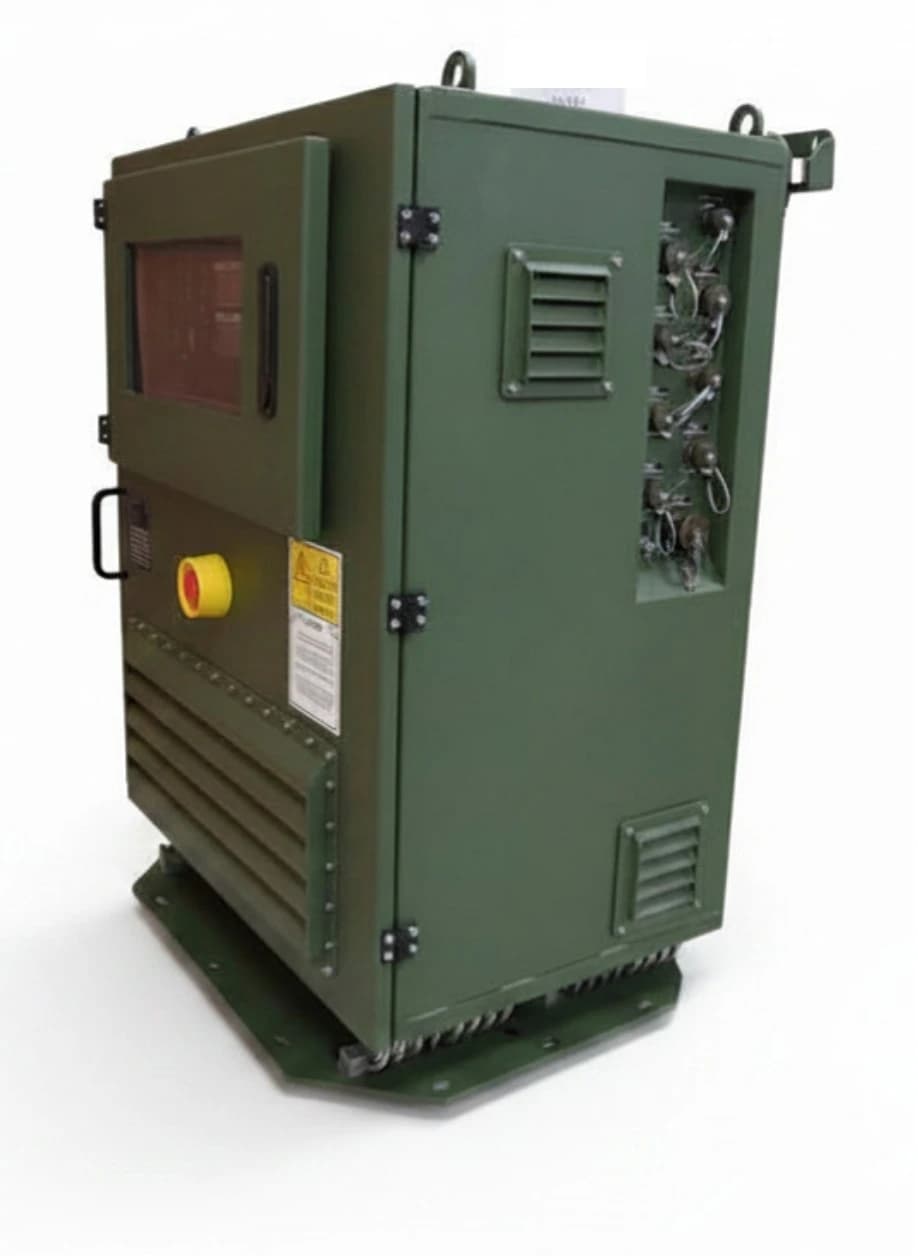
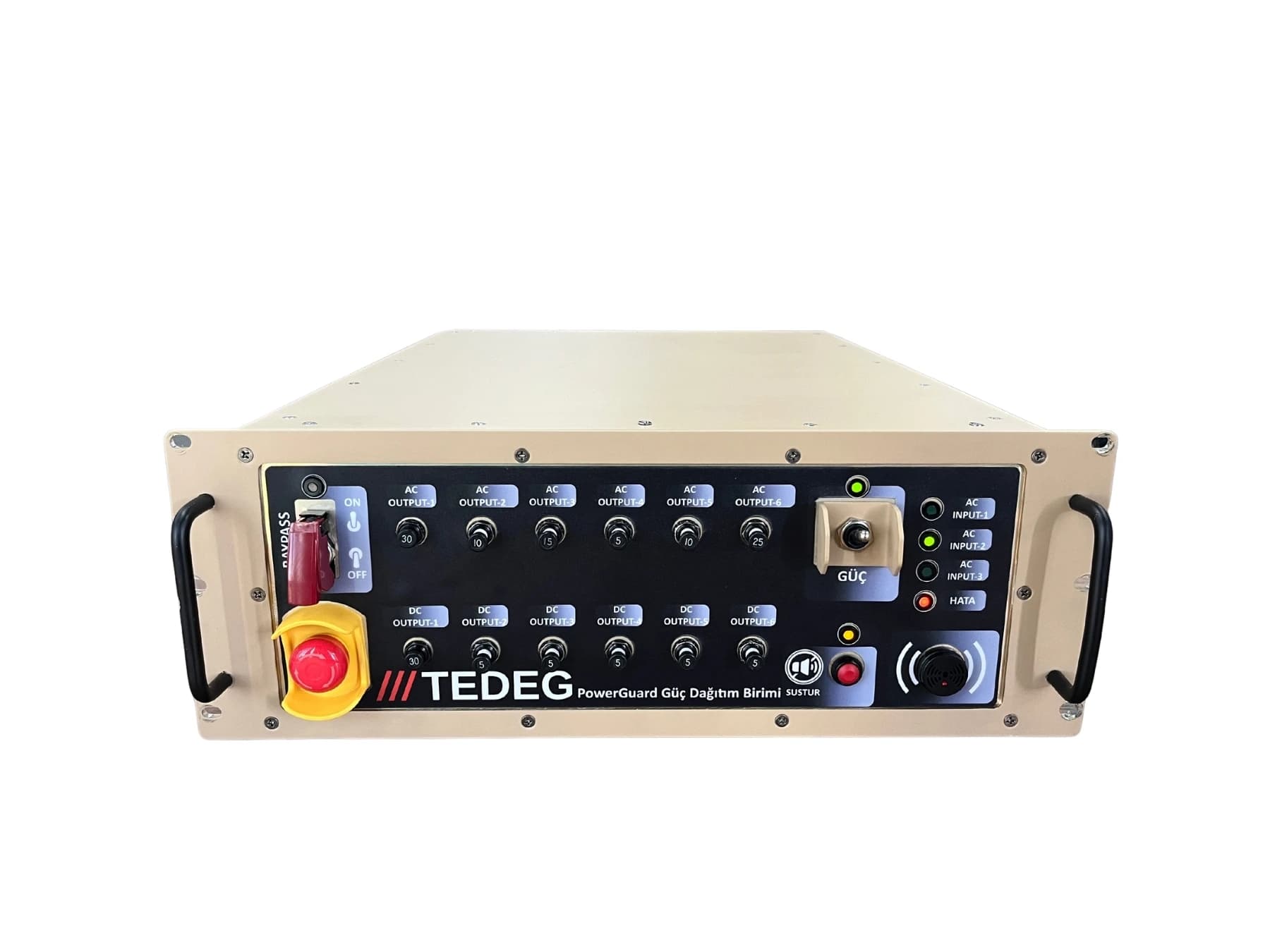
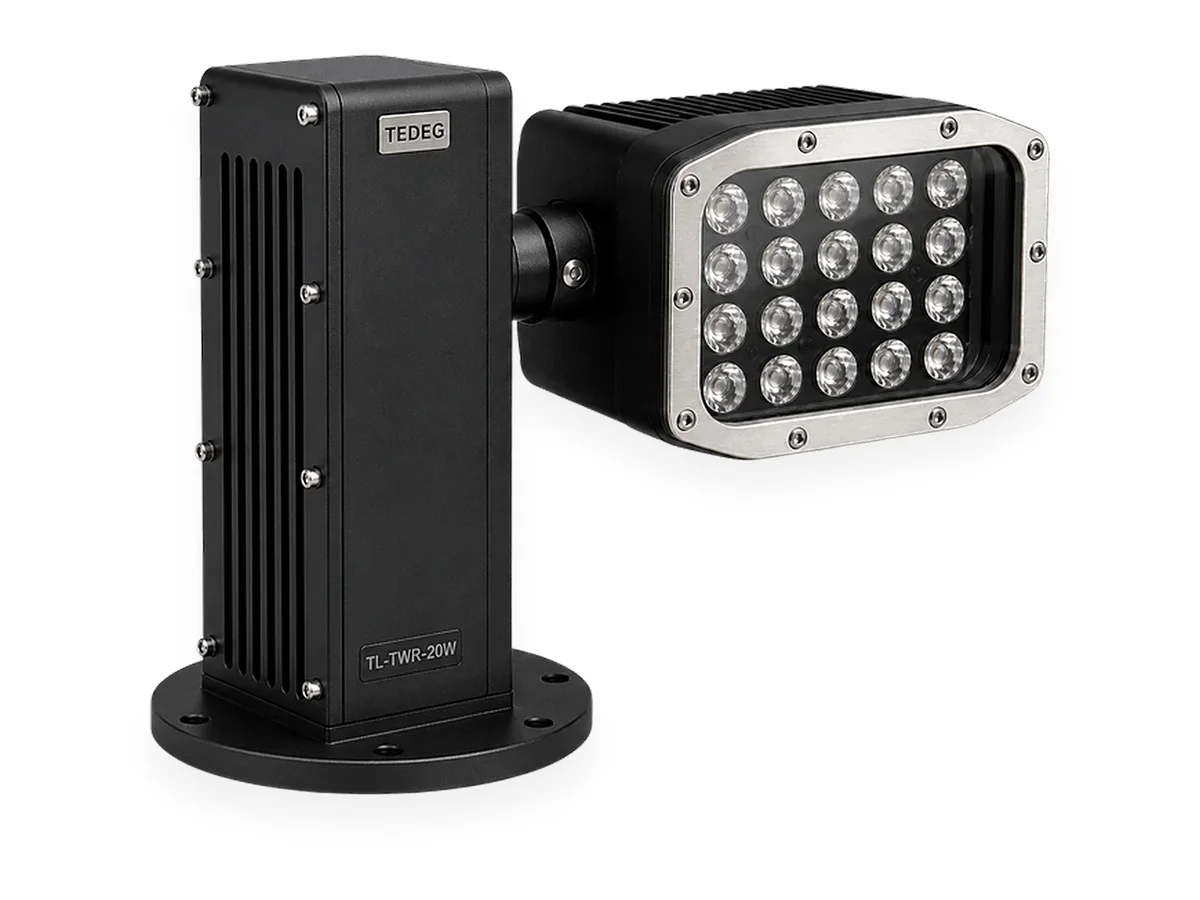
Our products show the solutions we reuse. The PowerGuard Outdoor frequency converter is an outdoor enclosure for field use, and its temperature, vibration and shock behaviour was tested at an ISO/IEC 17025 laboratory to MIL-STD-810G CHG-1 / 810F (report V 1731 23228 00 00 BE). The PDU-RT5002 is a 19-inch 4U rack unit with a built-in rail for mounting and maintenance in cabinets. The T-Light searchlight uses a sealed cast-aluminium housing with dual seals, a pressure-equalising breather filter and a field-replaceable gear cartridge. Fanless units such as the Mil-Drive-55 and the PowerGuard-D1000 rely on sealed aluminium enclosures and conduction cooling through a baseplate.
Engineering Approach
Manufacturability, ease of maintenance and field durability are prioritised in design processes.
Related Products
FAQ
At what point should mechanical design start in our programme?+
As early as the envelope and the mounting interface are being negotiated, because those decisions set the thermal and sealing options for the whole unit. We work in stages: interface definition, concept, detailed design, prototype and release, each closed with a review. If the electronics are ours as well, both disciplines run on the same model from the first stage.
Can our own supplier manufacture from your drawings?+
Yes. The drawing set is complete enough for machined, cast and sheet-metal parts to be made by a third party, and ownership of the files is set in the contract. We can also produce the mechanical prototypes and low-volume series parts ourselves and run the fit checks with the electronics.
How do you validate sealing, thermal and vibration performance?+
Sealing, thermal and vibration behaviour are checked on the prototype in our own environment and bench tests before release. Formal MIL-STD-810 qualification is run at an accredited laboratory against the methods your programme requires. On product pages we name a standard only where the datasheet or a test report supports it.
What happens when the platform interface changes during the project?+
Interface changes are handled as formal revisions: the envelope drawing, the 3D model and the affected manufacturing drawings are updated together and reissued under a new revision. Changes that affect interchangeability or interfaces are notified to you in writing and submitted for approval before they are applied. Earlier revisions are retained so that units already built remain traceable.