
Power Systems · 2 products
New Product LineMilitary Motor Drives & Motor Control Units
FOC vector-control drives for three-phase induction motors
Three-phase induction motors move the turrets, radar antennas, launcher pedestals and hydraulic pumps of military systems. The drives in this category run those motors with FOC (field oriented) vector control: speed and torque are set through the variable frequency and voltage applied to the motor, starts and stops are ramped, and motor and drive stop safely on a fault. Both products are designed and manufactured by TEDEG in Ankara.
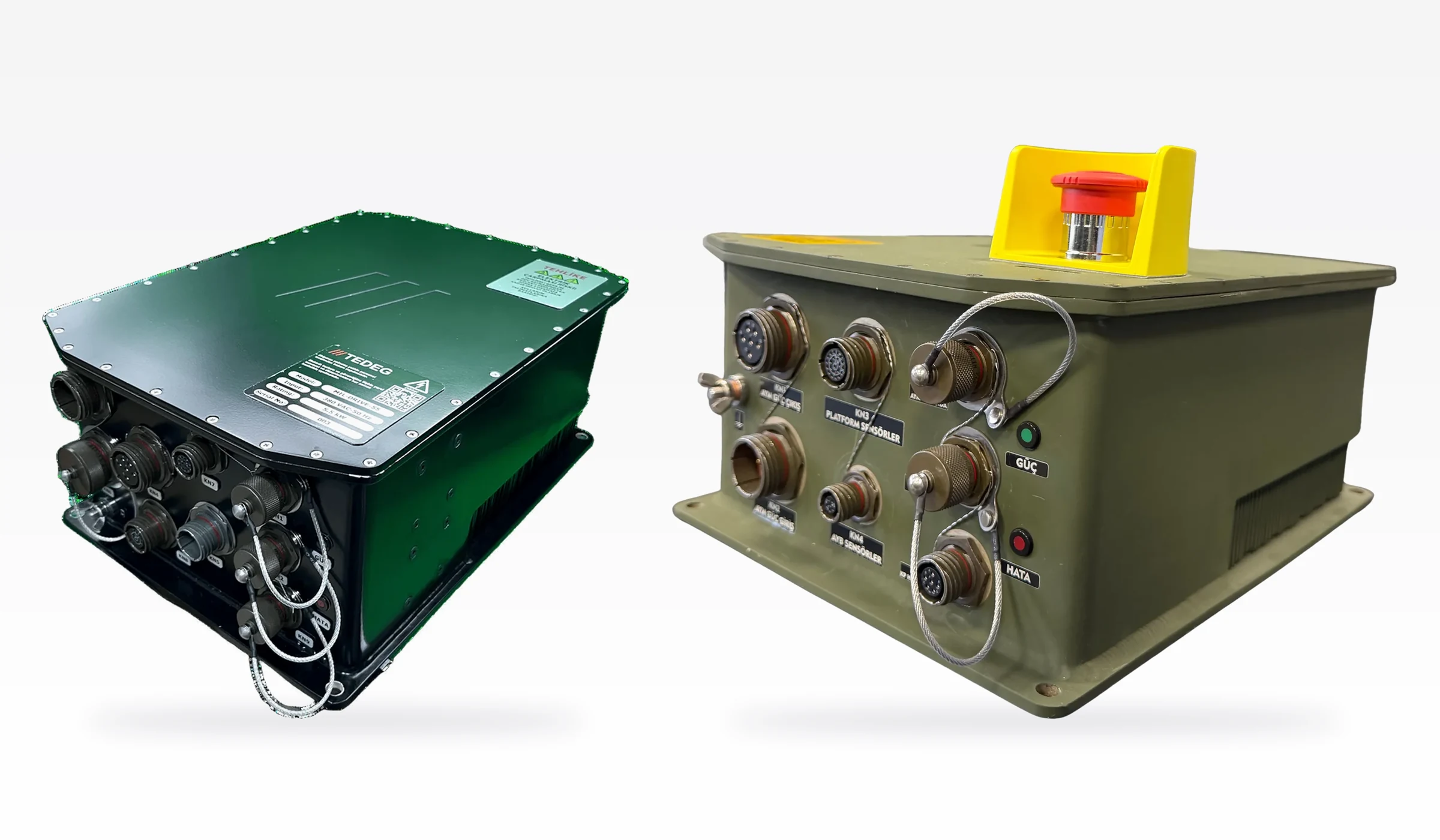
Military Motor Drives & Motor Control Units — products
TEDEG Defence is an Ankara-based Turkish defence manufacturer that designs and builds FOC vector-control motor drives and motor control units for the three-phase induction motors of military systems.
All products in this and the other six categories: Product Catalogue 2026 (PDF)
Model comparison
Key values from each model's specifications, side by side. Open a model for its full specifications.
Swipe sideways to see all columns.
| Model | Input | Output | Power / current | Ingress protection (IP) | Operating temperature | Weight |
|---|---|---|---|---|---|---|
400 VAC ±10%, 48–62 Hz | 3 × 400 VAC, 0–500 Hz |
| Not listed | −30 °C to +55 °C | 12 ± 0.5 kg | |
3-phase 400 VAC + N + PE, 50–60 Hz, 10 A rms | 3-phase induction motor; FOC vector control; 0–50.0 Hz, ±1500 rpm | 10 A rms continuous (≈ 6.9 kVA); induction motors up to 4 kW (400 V, 4-pole) | IP67 | −35 °C … +50 °C | 9.25 kg |
— = not listed in the model's key specifications; see the product page for full details.
About Military Motor Drives & Motor Control Units
Which product for which need?
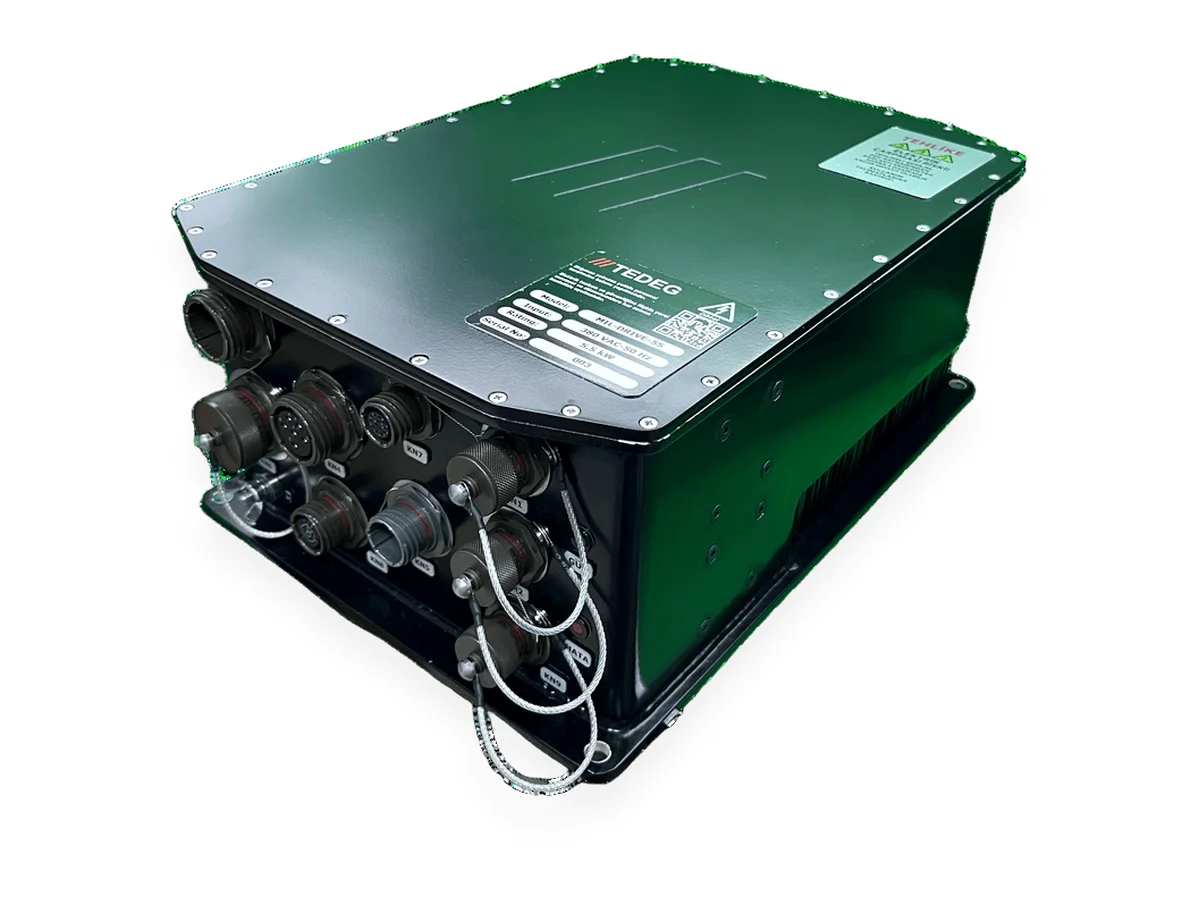
- Induction motors up to 5.5 kW, a wide frequency range and functional safety: Mil-Drive-55 Military Induction Motor Drive — 3 × 400 VAC, 0–500 Hz output, 14 A motor current, dual-channel STO, resolver and encoder inputs, RS-485 and CAN-Bus; optionally up to 18 kW
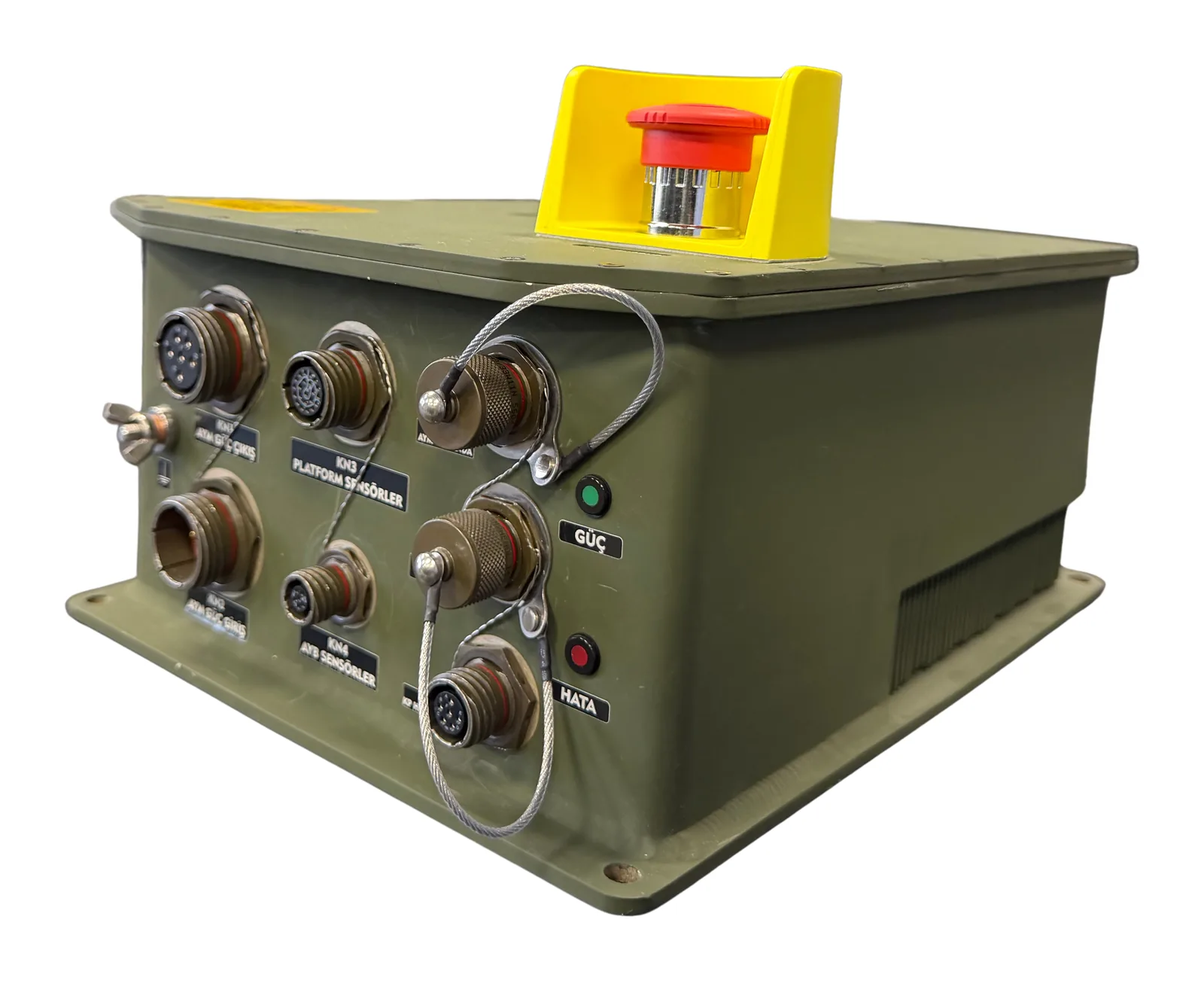
- Motors up to 4 kW in a sealed enclosure, with interlock and limit inputs and a web interface: Mil-Drive MCU-400 Military Motor Control Unit — 3-phase 400 VAC, 10 A rms (≈ 6.9 kVA), 0–50 Hz, 1024 PPR encoder feedback, RS-485 + Ethernet, 7 × MIL-DTL-38999 connectors, IP67
- Manual control of the MCU-400 in the field: the Mil-Drive HCU-400 pendant control unit is in the control panels and operator units category
What to check when choosing a motor drive: motor power and current, the required speed range (motor frequency), the type of speed feedback (encoder or resolver), safe-stop requirements (STO, emergency stop), the communication interface, enclosure protection and operating temperature. The drive input must match the platform's grid or generator; both products run from 3-phase 400 VAC.
| Product | Input | Motor output | Power | Communication | Protection / temperature | Standards |
|---|---|---|---|---|---|---|
| Mil-Drive-55 | 400 VAC ±10%, 48–62 Hz | 3 × 400 VAC, 0–500 Hz, 14 A | 5.5 kW (optionally up to 18 kW) | RS-485 · CAN-Bus | Sealed aluminium, fanless · −32 °C to +55 °C | MIL-STD-810G · 461F |
| Mil-Drive MCU-400 | 3-phase 400 VAC + N + PE, 50–60 Hz | 0–50 Hz, ±1500 rpm, 10 A rms | Motors up to 4 kW | RS-485 · Ethernet, web interface | IP67, fanless · −35 °C to +50 °C | MIL-STD-810H · 461F |
Standards are as stated in the product datasheets; both products are designed to these standards.
For 400 Hz and 60 Hz supply see military frequency converters; for the distribution that feeds the drive see military power distribution units. Send your motor and load data through the quote form.
FAQ
How do I choose between Mil-Drive-55 and MCU-400?+
If the motor is above 4 kW, needs a motor frequency above 50 Hz, or your specification calls for dual-channel Safe Torque Off (STO) and a resolver input, choose the Mil-Drive-55: 5.5 kW, 0–500 Hz, RS-485 and CAN-Bus. For motors up to 4 kW that work with interlock and limit inputs, need monitoring over Ethernet and a web interface and sit in an IP67 sealed enclosure, choose the MCU-400; it is used with the HCU-400 pendant control unit for control in the field.
Which motors do they work with?+
Both drives are designed for three-phase asynchronous (induction) motors. The Mil-Drive-55 supports resolver, incremental and absolute encoder and NTC temperature sensor inputs; the MCU-400 runs closed-loop speed control with a 1024 PPR incremental encoder. Motor power, pole count and feedback type are confirmed against the motor nameplate at quotation stage.
How does the drive stop the motor safely?+
The Mil-Drive-55 has dual-channel Safe Torque Off (STO) and an emergency input: STO removes the energy that produces torque in the motor. On the MCU-400, interlock and limit inputs restrict movement, and the emergency stop and fault reset controls on the HCU-400 pendant connect to the unit.
Is a motor drive the same as a frequency converter?+
They are built in a similar way: both produce frequency and voltage with power electronics. The difference is in use. A motor drive changes the frequency continuously to suit the motor's speed and load; a 400 Hz frequency converter gives equipment a fixed 400 Hz or 60 Hz supply. For a 400 Hz supply see military frequency converters.
What can be adapted to the project?+
Power level, additional I/O channels, communication protocol, connector type and cable lengths are set per project. Thanks to its modular design, the Mil-Drive-55 can optionally be configured up to 18 kW.
Engineering Support
Our engineering services can adapt the products in this category to your platform, integrate them or test them against your programme requirements.
Related Guides
Other product categories
Looking for the full range?
Contact our engineering team for datasheets and quotations.