
PowerGuard EBB Auxiliary Battery Unit — 3600 F Supercapacitor Power Backup
Model
EBB
Energy storage
3600 F supercapacitor
Operating voltage
16–32 VDC
Additional power
At least 10 minutes
Post-ignition supply
3 hours
Charge time
0% → 90% in 30 min (22 ± 5 °C)
Communication
CAN-Bus, 500 kbps and selectable rates
Operating temperature
-40 °C to +60 °C
Dimensions
185 × 180 × 120 ± 10 mm
Weight
Max. 1 kg
Company:ITAR-FreeNCAGE: TM885
Overview
Product and Purpose
PowerGuard EBB (Auxiliary Battery Unit) is a supercapacitor-based power backup solution for tactical wheeled vehicles and platforms. It keeps mission-critical systems running without interruption and steps in as a backup power source in emergencies.
The unit is intended for battery failures and special missions that need additional power. It stores the energy needed to activate and control the vehicle in supercapacitor cells and delivers it quickly. It continues to supply power for 3 hours after the ignition is switched off, so mission equipment can run with the engine off (silent watch).
Engineering Capability
Power and charging:
| Feature | Value |
|---|---|
| Energy storage cell | Supercapacitor, 3600 F |
| Operating voltage | 16–32 VDC |
| Additional power | At least 10 minutes |
| Post-ignition supply | 3 hours |
| Charge time | 0% to 90% in 30 minutes (22 ± 5 °C) |
| Protection | Overcharge, over-discharge, overcurrent, short-circuit and temperature protection |
| Fuses | 2 × automotive 30 A blade fuses (covered holder) |
Monitoring and control:
- CAN-Bus reporting: Voltage, state of charge (SoC), state of health (SoH) and capacity; 500 kbps and selectable rates
- BIT (Built-In Test): Diagnoses faults in at least 4 different groups
- Operational / maintenance mode: Mode selection via a front-panel switch
- Authorised cut-off: Power can only be cut with a digital key available to authorised users
- LED indicators: Charge, discharge and fault status
- Programming socket: Circular connector
Mechanical and environmental:
| Feature | Value |
|---|---|
| Dimensions | 185 × 180 × 120 ± 10 mm |
| Weight | 1 kg maximum |
| Material | Aluminium 5754-H0/111 or equivalent |
| Mounting | 4-point mounting via side flanges |
| Power / CAN connector | DT04-12PB-L012 or equivalent (12-pin) |
| Cables | IPC/WHMA-A-620 compliant |
| Mechanical interface | MIL-STD-810G compliant |
| Operating temperature | −40 °C … +60 °C |
| Storage temperature | −55 °C … +70 °C |
Typical Applications
- Backup for mission-critical systems: Uninterrupted supply on tactical wheeled vehicles
- Battery failure: Energy for system activation and control
- Silent watch: Supplying mission equipment for up to 3 hours with the ignition off
- Special missions: At least 10 minutes of additional power when needed
The TEDEG Advantage
Thanks to supercapacitor technology, EBB reaches 90% charge in 30 minutes, and its compact enclosure of no more than 1 kg takes up very little space in the vehicle. Reporting SoC and SoH over CAN-Bus lets the vehicle's mission computer know the backup power status in real time, and BIT helps maintenance crews group faults quickly.
For long-duration, higher-power supply with the main engine off see Auxiliary Power Units (APU); for battery connection protection see the TPB-01 Reverse Polarity Unit.
Corporate assurance: TEDEG Defence is an approved supplier of ASELSAN, Roketsan and the Turkish Ministry of National Defence (MSB), with NATO supplier registration under NCAGE: TM885.
Images: The images on this page show the validation unit.
Specifications
| Model | EBB |
| Energy storage | 3600 F supercapacitor |
| Operating voltage | 16–32 VDC |
| Additional power | At least 10 minutes |
| Post-ignition supply | 3 hours |
| Charge time | 0% → 90% in 30 min (22 ± 5 °C) |
| Communication | CAN-Bus, 500 kbps and selectable rates |
| Operating temperature | -40 °C to +60 °C |
| Dimensions | 185 × 180 × 120 ± 10 mm |
| Weight | Max. 1 kg |
MIL-STD Compliance
MIL-STD-810G
EnvironmentalSee Certifications & Quality for our test and validation approach, and our Test & Validation service for programme-specific testing.
Datasheet
Related Products
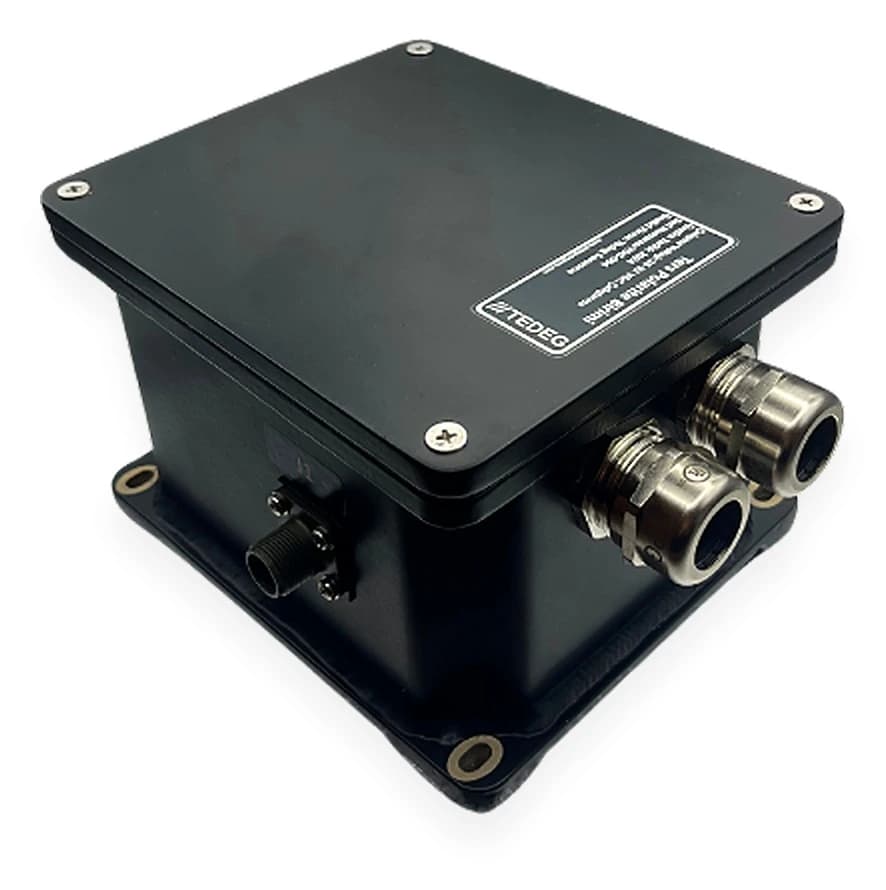
Power Management & Protection
PowerGuard TPB-01 Reverse Polarity Protection Unit (500 A)
Details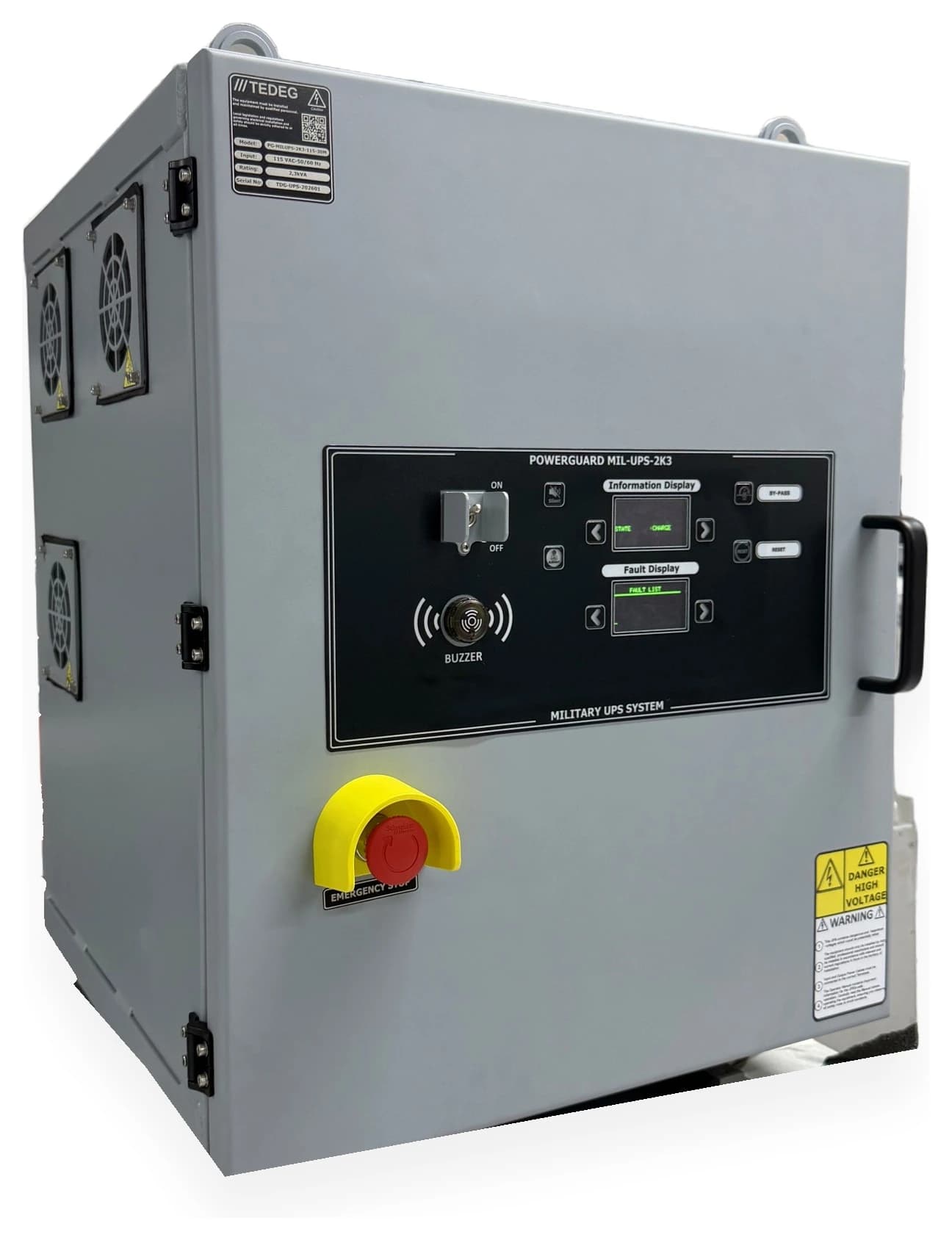
Frequency Converters, Motor Drives & Military UPS Systems
PowerGuard MIL-UPS-2K3 Mil-Spec Military UPS System — 2.3 kVA Online
Details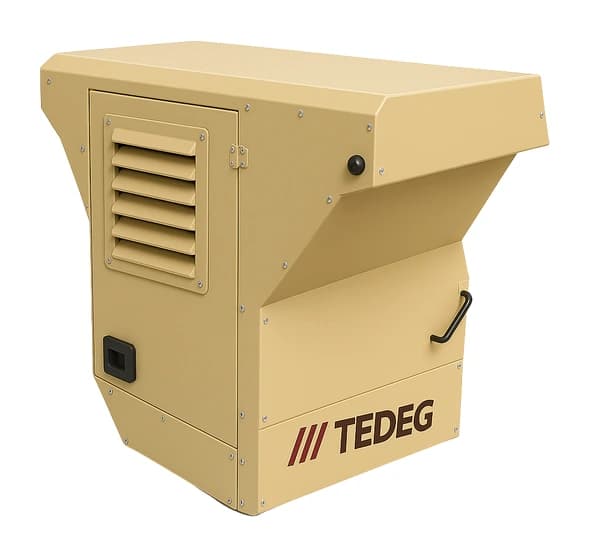
Auxiliary Power Units (APU)
PowerGuard YGG-DS11 Military APU — 28 VDC / 10 kW for Tanks and Armoured Vehicles
DetailsFull category: military power management and protection units
Engineering Support
Our engineering services can adapt this product to your platform, integrate it or test it against your programme requirements.
Quality and Testing
Related Guides
FAQ
How long does EBB supply power?+
It provides the additional power the system needs for at least 10 minutes, and keeps supplying power for 3 hours after the vehicle ignition is switched off.
How long does it take to charge?+
At 22 ± 5 °C it charges from 0% to 90% in 30 minutes. Supercapacitor cells charge and discharge far faster than chemical batteries.
How does it communicate with vehicle systems?+
It reports voltage, state of charge (SoC), state of health (SoH) and capacity over CAN-Bus. The default rate is 500 kbps, and other rates can be selected. BIT diagnoses faults in at least 4 groups.
Who can cut the supply?+
Power can only be cut with a digital key that only authorised users can access. A front-panel switch changes between operational and maintenance modes.
What environmental conditions does it operate in?+
It is designed for −40 °C … +60 °C operation and −55 °C … +70 °C storage. The mechanical interfaces of its aluminium enclosure are MIL-STD-810G compliant.