
Armoured Land Platforms
Main Battle Tank — Main Engine Off, Systems On During Silent Watch
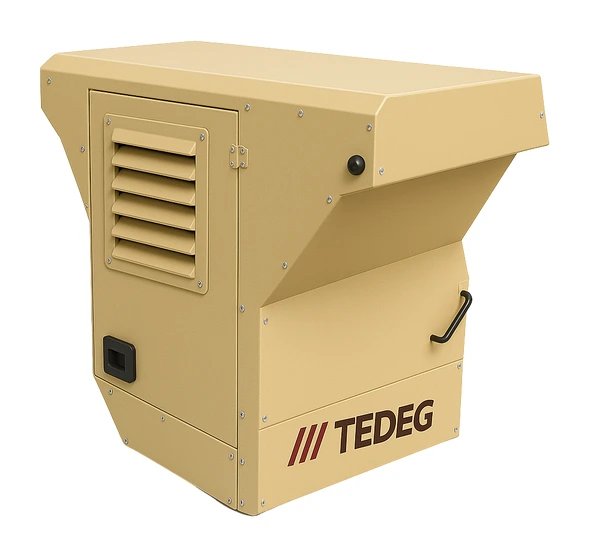
For a tank modernisation programme that ran the main engine at idle on watch just to power weapon systems, communications and climate control, a 28 VDC / 10 kW APU integrated into the vehicle: the PowerGuard YGG-DS11.
- Platform
- Main battle tank modernisation programme — 28 VDC weapon systems, communications equipment and climate control
- Customer
- Leading Turkish Main Battle Tank Modernisation Contractor
- Sector
- Land · armoured platforms
- Year
- 2025
Customer & Context
A leading Turkish main battle tank modernisation contractor approached TEDEG Defence for an auxiliary power unit (APU) for the tanks in its modernisation programme. The modernisation package added new weapon system electronics, communications equipment and climate control to the vehicle, all of it supplied from the 28 VDC vehicle bus.
On watch and standby missions the only way to keep these systems running was to leave the main engine at idle. The contractor passed TEDEG the field feedback from the units together with the electrical requirements of the modernisation programme. The request was for an APU integrated into the hull, needing no separate fuel tank or batteries, with a low acoustic signature, 10 kW at 28 VDC and a fault log for the maintenance crew. The imported APUs evaluated earlier did not connect to the vehicle's control architecture or climate control management, and they added a new external dependency for supply and spare parts.
Challenge
The field feedback and the contractor's integration team's assessment made the cost of an engine-based watch routine plain:
- Fuel and engine wear: the main engine idled for hours just to supply auxiliary loads. Fuel was burnt for that alone, and engine hours and service intervals accumulated on a vehicle that was not moving.
- Acoustic and thermal signature: the idling main engine was the vehicle's most obvious source of noise and heat at the watch position, which was unacceptable on missions that call for discretion.
- An external generator was no answer: a portable generator cannot move with the vehicle, needs its own set-up and its own refuelling, and creates a second signature at the position.
- Loss of power during maintenance and refuelling: throughout engine maintenance or refuelling the weapon systems and communications went dark and had to be brought back up every time.
- Imported APU integration: the imported units evaluated needed a separate fuel tank and batteries and did not fit the limited volume in the hull or the control architecture.
- No diagnostics: the maintenance crew had no recorded data to point to the source of a fault.
The contractor decided to have TEDEG build an APU that met these requirements.
TEDEG Solution
TEDEG Defence brought the contractor's requirements together in the PowerGuard YGG-DS11 Military APU: 10 kW at 28 VDC from a water-cooled diesel power unit, an IP67 control panel next to the APU and a remote controller that also manages the air conditioning. The unit was laid out for integration into the vehicle design, with no separate batteries or fuel tank.
28 VDC / 10 kW, Integrated into the Vehicle
The YGG-DS11 delivers 10 kW at a 28 VDC output and powers the weapon systems, communications equipment and climate control while the main engine is off. The power unit is a water-cooled, vertical, turbocharged diesel engine, started by a starter motor and fitted with an integrated water-cooling system. Unlike bulky generators, the unit is integrated directly into the vehicle design and needs no separate batteries or fuel tank. It measures 435 × 1000 × 591 mm (height × length × width) and the system weighs 375 ± 10 kg; operating temperature is −32 °C to +49 °C and storage temperature −40 °C to +60 °C. The APU also keeps critical systems powered during engine maintenance and refuelling.
Control Panel and 500-Record Diagnostics
The control panel is mounted close to the APU for easy access during maintenance and is designed to IP67. LED indicators show APU status (on / off / fault), fuel level, pressure, DC current and battery voltage, and current fault states are monitored in real time. Start/Stop, Auto/Manual and a Reset button that clears the fault indicators let the operator intervene immediately if a problem arises during automatic start. A fault code indicator shows the source of a fault, and the latest 500 detailed log records, accessible from the panel, give the maintenance crew recorded data for assessing system health. An adjustable alarm volume and a night mode that dims the display reduce the panel’s light and sound signature on night watch.
Remote Controller and Climate Control Management
The remote controller switches the APU and the air-conditioning system on and off from a single handset, and APU data is monitored on its information screen. Its buttons cover APU power, air conditioning, CIT test, cancel, menu up/down and emergency shutdown; its indicators show APU on/off, CIT test, faults and air conditioning on/off. The controller is supplied at 12–24 VDC, measures 120 × 110 × 60 mm and weighs 630 g; it has IP67 dust and water protection and operates from −40 °C to +85 °C. The control panel and the remote controller are compliant with MIL-STD-810G and MIL-STD-461E/F. The same APU architecture can be adapted to the platform’s needs from 2 kW to 100 kW.
Outcome
The YGG-DS11 was delivered to the contractor's tank modernisation programme, and on watch missions the auxiliary loads moved from the main engine to the APU.
- Main engine off on silent watch, with weapon systems, communications and climate control kept running on 28 VDC / 10 kW.
- The APU instead of idling: fuel savings, less engine wear and a low acoustic signature.
- Continuous power to critical systems during engine maintenance and refuelling.
- No separate fuel tank or batteries; the unit is integrated into the vehicle design.
- With the fault code indicator and the latest 500 log records the maintenance crew finds the source of a fault quickly.
- The same architecture, adaptable from 2 to 100 kW, is open to the programme's other platforms.
Technical Scope
Values are taken from each product's own technical data; full specifications are on the product page.
- Output
- 28 VDC, 10 kW
- Power options
- Customisable from 2 to 100 kW
- Engine
- Water-cooled vertical turbo diesel
- Cooling
- Integrated water-cooling system
- System weight
- 375 ± 10 kg
- Dimensions (H × L × W)
- 435 × 1000 × 591 mm
StandardsMIL-STD-461EMIL-STD-810GView product: PowerGuard YGG-DS11 Military APU — 28 VDC / 10 kW for Tanks and Armoured Vehicles- Energy storage
- 3600 F supercapacitor
- Operating voltage
- 16–32 VDC
- Additional power
- At least 10 minutes
- Post-ignition supply
- 3 hours
- Charge time
- 0% → 90% in 30 min (22 ± 5 °C)
- Communication
- CAN-Bus, 500 kbps and selectable rates
StandardsMIL-STD-810GView product: PowerGuard EBB Auxiliary Battery Unit — Supercapacitor Backup- Inputs
- 4 (Battery 1, Battery 2, Alternator, Battery charger)
- Busbar
- (+) and (−) 400 A
- Output fuses
- MIDI type, 30 / 60 / 100 A @28 VDC
- DC-DC converter
- 12 VDC → 28 VDC, 500 W
- Sealing
- MIL-STD-810G, Method 506.5, Procedure I
- Cable entries
- IP67 PG cable glands
More case studies
Land Platforms · 2025
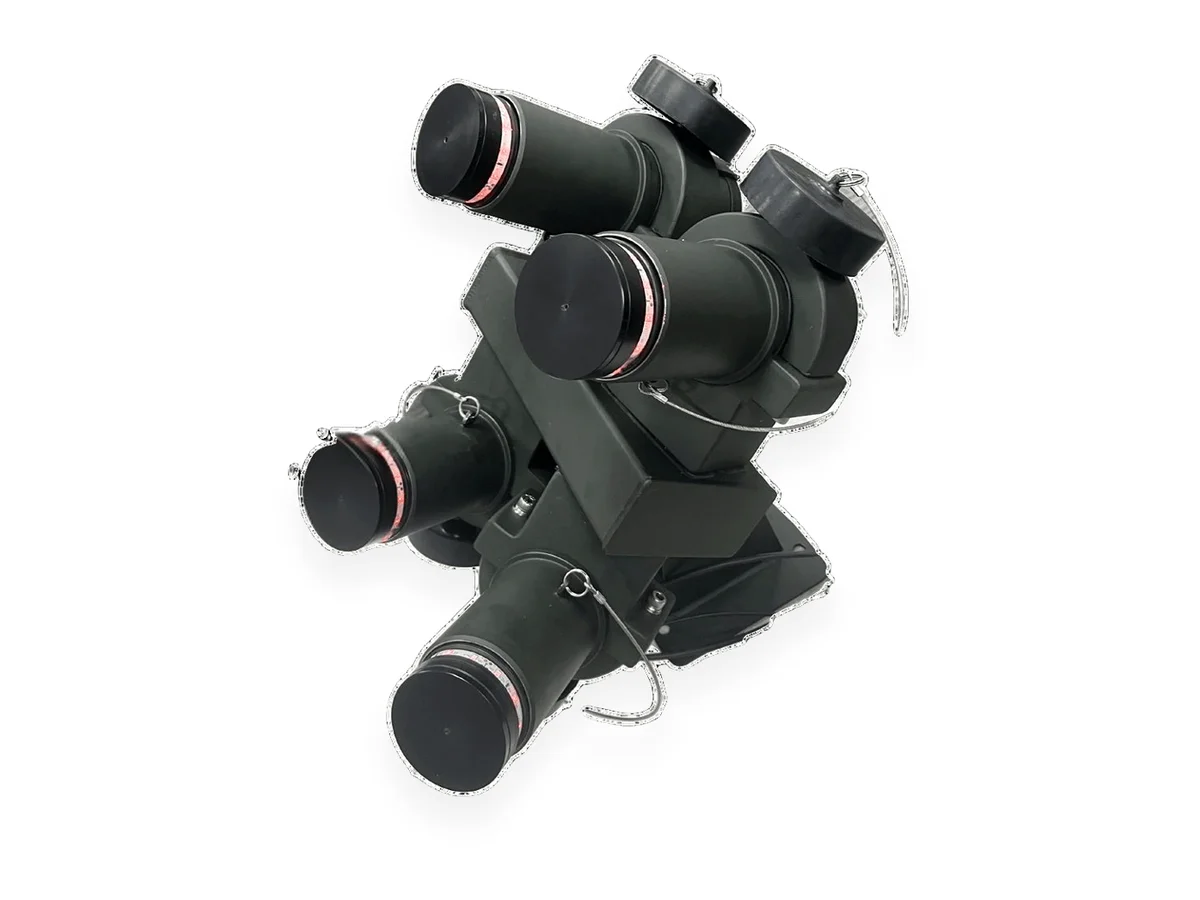
Armoured Vehicle Family — One Smoke Launcher Architecture, 4 to 16 Launchers
Instead of a separate imported smoke system for every vehicle variant, one domestic system whose launcher count and coverage are chosen per variant and which joins the vehicle data bus over J1939.
Read case study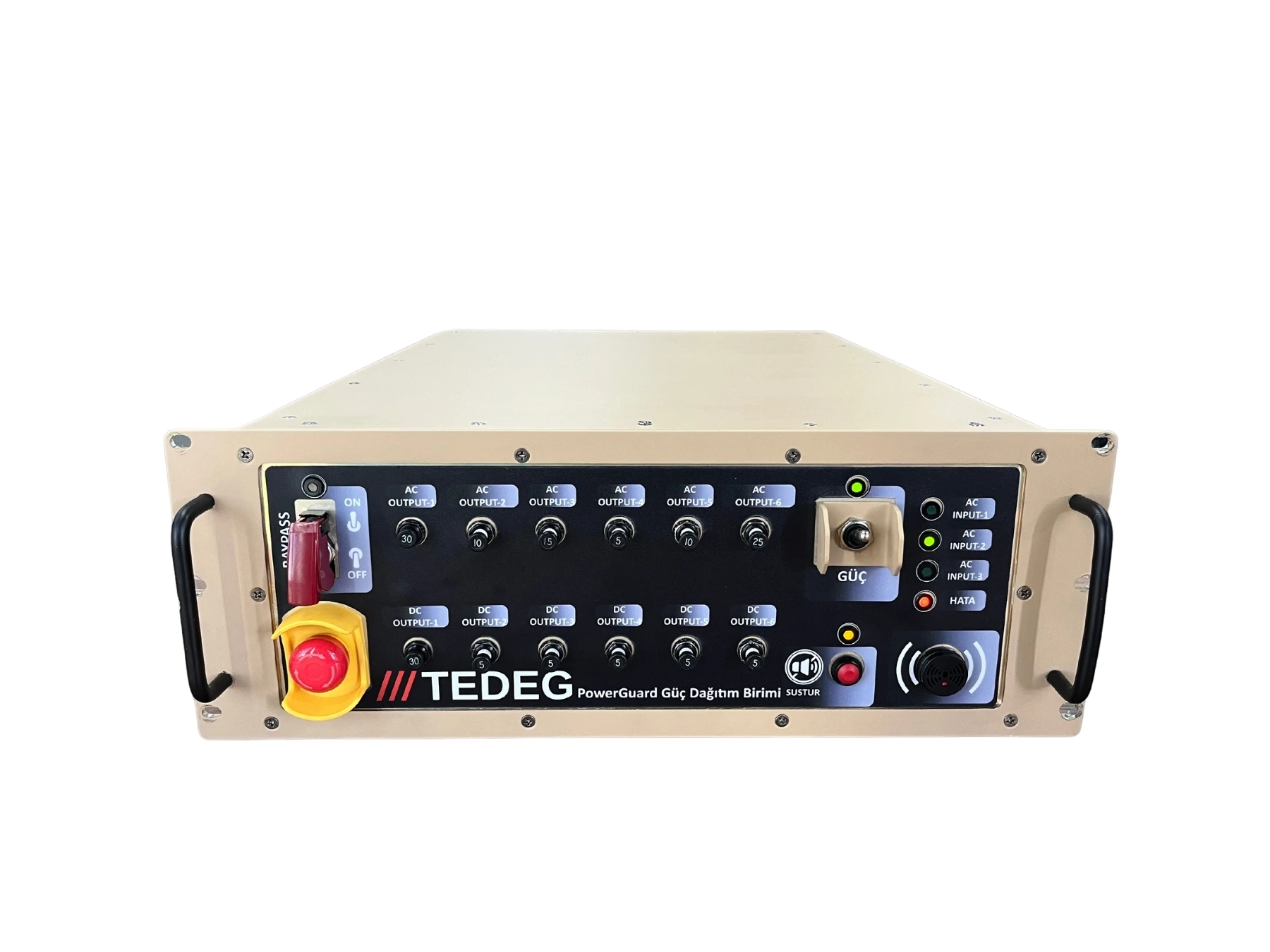
Land Platforms · 2024
Tactical Truck Power Architecture Modernisation
An ageing PDU that could no longer keep pace with growing mission loads was replaced by a remotely monitored power distribution architecture built on the PDU-RT5002 and designed to MIL-STD requirements.
Read case study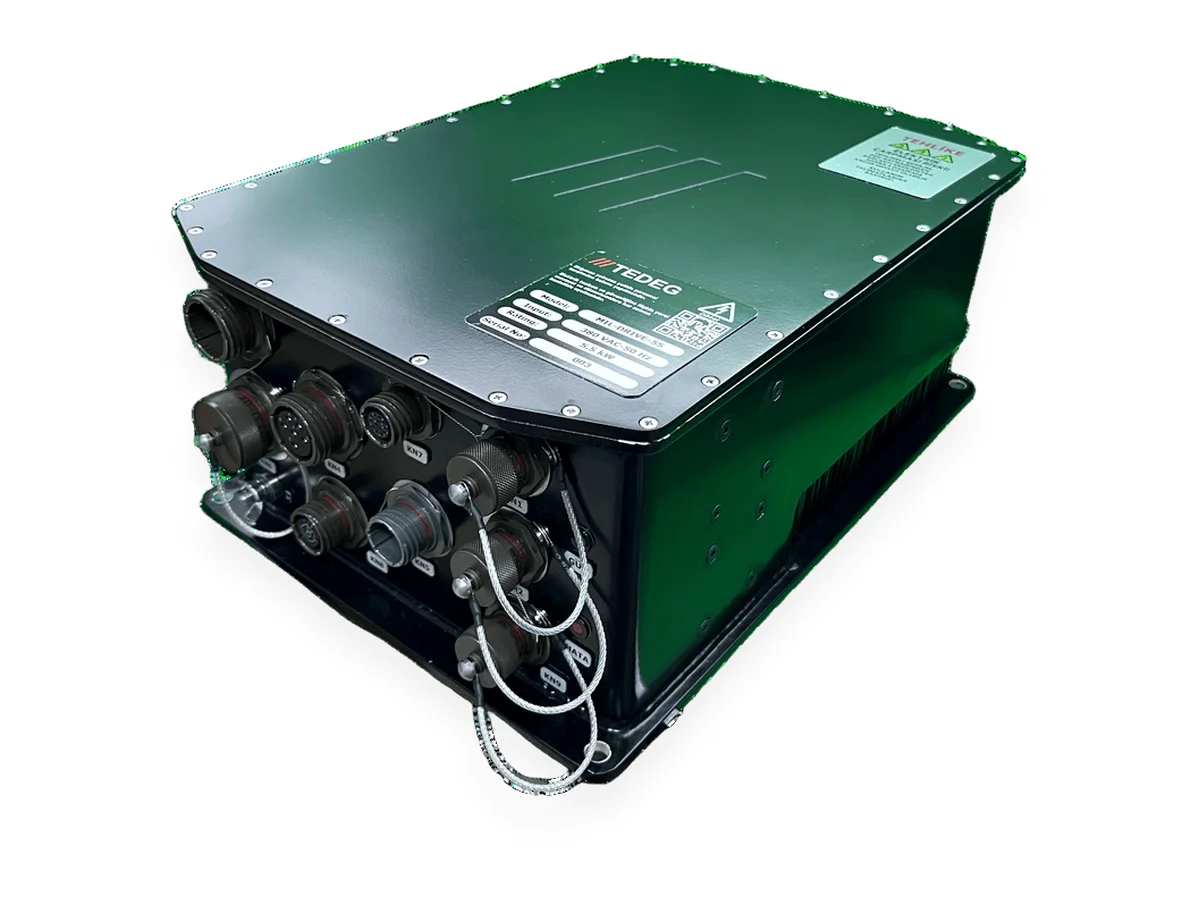
Air Defence · 2025
Mobile Air Defence Platform — Pedestal Motor Control & Radar Frequency Feed
A motor drive and a frequency converter sourced from separate foreign suppliers were replaced by a matched TEDEG pair, designed together so that neither interferes with the other.
Read case study