
PowerGuard-A 380 VAC–28 VDC Military AC-DC Converter & Distribution System — 1–4 kW
Part number (P/N)
3PAC-DC-1000-28
Input
360–440 VAC, 3-phase (L-L), 47–63 Hz
Nominal input
380 / 400 VAC
Output
28 VDC, ±1% typ. (±2% max.)
Power options
1 / 2 / 3 / 4 kW
Efficiency
92–95% (model-dependent)
Power factor
≥ 0.95 (typ.)
Enclosure
IP67 sealed aluminium, fanless, conduction-cooled
Communication
Ethernet · RS-485 · CAN-Bus (optional)
Output channels
4 DC outputs (KN2–KN5), D38999 connectors
Company:ITAR-FreeNCAGE: TM885
Overview
Product and Purpose
The PowerGuard-A 380 VAC–28 VDC Military AC-DC Converter & Distribution System (product code 3PAC-DC-1000-28) is a three-phase power conversion and intelligent power management system developed by TEDEG Defence for demanding field, vehicle and outdoor operations.
It works in two stages. First, it rectifies a 360–440 VAC three-phase input into a stable high-voltage DC bus of 500–800 VDC. It then converts that bus into a regulated low-voltage output. On this model the nominal output is 28 VDC, with power classes of 1, 2, 3 or 4 kW. The wider PowerGuard-A Series also supports 12 / 24 / 28 / 36 / 48 VDC output configurations on the same hardware platform.
PowerGuard-A is not only a converter but also a power distribution and control hub. Each output channel can be monitored and controlled through optional Ethernet, RS-485 or CAN-Bus interfaces, with real-time reporting of voltage, current, temperature and system health.
Engineering Capability
AC input (three-phase):
| Feature | Value |
|---|---|
| Input voltage range | 360–440 VAC, 3-phase (line-to-line) |
| Nominal input voltage | 380 / 400 VAC |
| Input frequency | 47–63 Hz |
| Full-load input current | Model-dependent (1–4 kW versions) |
| Power factor | ≥ 0.95 (typ.) |
| Inrush current | Soft-start controlled |
| Input protection | Overcurrent, undervoltage lockout (UVLO), phase-loss detection |
| EMI/EMC | Designed according to MIL-STD-461 principles |
28 VDC output stage:
| Feature | Value |
|---|---|
| Nominal output voltage | 28 VDC |
| Voltage accuracy | ±1% typ. (±2% max.) |
| Power options | 1 kW / 2 kW / 3 kW / 4 kW |
| Rated output current | Model-dependent (e.g. 1 kW ≈ 35 A) |
| Transient response | < 5% deviation, 2 ms recovery |
| Efficiency | 92–95%, depending on model |
| Isolation | Reinforced isolation between input, bus and output |
| Short-circuit protection | Electronic current limit, auto-recovery |
| Overvoltage protection | Programmable OVP |
| Overcurrent protection | Constant-current limit + shutdown |
| Overtemperature protection | Thermal shutdown + telemetry reporting |
| Soft-start | Controlled, programmable rise time |
Programmable output behaviour: Outputs can be sequenced, current-limited, soft-started, time-delayed and protected against over- and undervoltage. Every programmable parameter is accessible through the communication interfaces.
Remote monitoring and control (optional):
- Ethernet: TCP/UDP-based protocol
- RS-485: Modbus or custom protocol
- CAN-Bus: J1939 / CANopen-style messaging
- Telemetry: Voltage, current, temperature, DC bus and system faults
- Remote functions: Output ON/OFF, fault reset, sequencing, channel enable/disable
Electrical interface (MIL-DTL-38999 connectors):
| Channel | Function | Connector |
|---|---|---|
| KN1 | Power input | D38999/24WD5PN |
| KN2 | Output 1 | D38999/24WE8SN |
| KN3 | Output 2 | D38999/24WE8SA |
| KN4 | Output 3 | D38999/24WC35SN |
| KN5 | Output 4 | D38999/24WD5SN |
| KN6 | Communication (RS-485) | D38999/24WB35SN |
Mechanical and environmental design:
- IP67 sealed aluminium enclosure: Monolithic chassis with no air or moisture ingress, protected against mud, dust, rain and salt fog.
- Fanless, conduction-cooled: No fans, vents or moving parts. Heat passes through the enclosure directly into the host platform structure, giving silent operation.
- Shock and vibration: Designed to MIL-STD-810H shock and vibration profiles for armoured vehicles, naval systems and field equipment.
- Main dimensions (mechanical drawing): 205 × 440 × 109 mm
Typical Applications
- Military and tactical vehicles: Stable DC from onboard three-phase AC sources for communication electronics, weapon systems, mission computers, EO/IR payloads and auxiliary subsystems
- Mobile command, radar and communication nodes: Radio transceivers, radar processors, network routers, surveillance suites and tactical communication shelters
- Field power distribution and energy modules: Integration into outdoor enclosures or modular power cabinets to supply sensors, surveillance networks and distributed electronic loads
- Naval, marine and offshore platforms: Sealed power conversion for shipboard electronics, surface vessels, unmanned surface vehicles (USV) and dockside support units
- Rugged industrial and emergency power systems: Remote monitoring stations, shelters and industrial automation that need sealed, silent, maintenance-free conversion
The TEDEG Advantage
PowerGuard-A combines three-phase AC-DC conversion, multi-channel DC distribution and remote management in a single IP67 enclosure. The fanless, fully sealed design removes maintenance jobs such as filter cleaning and fan replacement in dusty, humid field conditions. Redundant components, a wide thermal margin and a rugged mechanical structure are designed around a 24/7 duty profile. Programmable sequencing and time delays mean loads with high inrush currents do not all switch on at once.
For 24 VDC / 1 kW from a single-phase AC source, see the PowerGuard-A1000 AC-DC converter; for multi-output 28 VDC distribution from 230 VAC, see the PowerGuard TPS-28 Power Management Unit.
Corporate assurance: TEDEG Defence is an approved supplier of ASELSAN, Roketsan and the Turkish Ministry of National Defence (MSB), with NATO supplier registration under NCAGE: TM885.
Specifications
| Part number (P/N) | 3PAC-DC-1000-28 |
| Input | 360–440 VAC, 3-phase (L-L), 47–63 Hz |
| Nominal input | 380 / 400 VAC |
| Output | 28 VDC, ±1% typ. (±2% max.) |
| Power options | 1 / 2 / 3 / 4 kW |
| Efficiency | 92–95% (model-dependent) |
| Power factor | ≥ 0.95 (typ.) |
| Enclosure | IP67 sealed aluminium, fanless, conduction-cooled |
| Communication | Ethernet · RS-485 · CAN-Bus (optional) |
| Output channels | 4 DC outputs (KN2–KN5), D38999 connectors |
| Standards | MIL-STD-810H shock/vibration · MIL-STD-461 principles |
MIL-STD Compliance
MIL-STD-461
EMI/EMCMIL-STD-810H
EnvironmentalSee Certifications & Quality for our test and validation approach, and our Test & Validation service for programme-specific testing.
Datasheet
Related Products
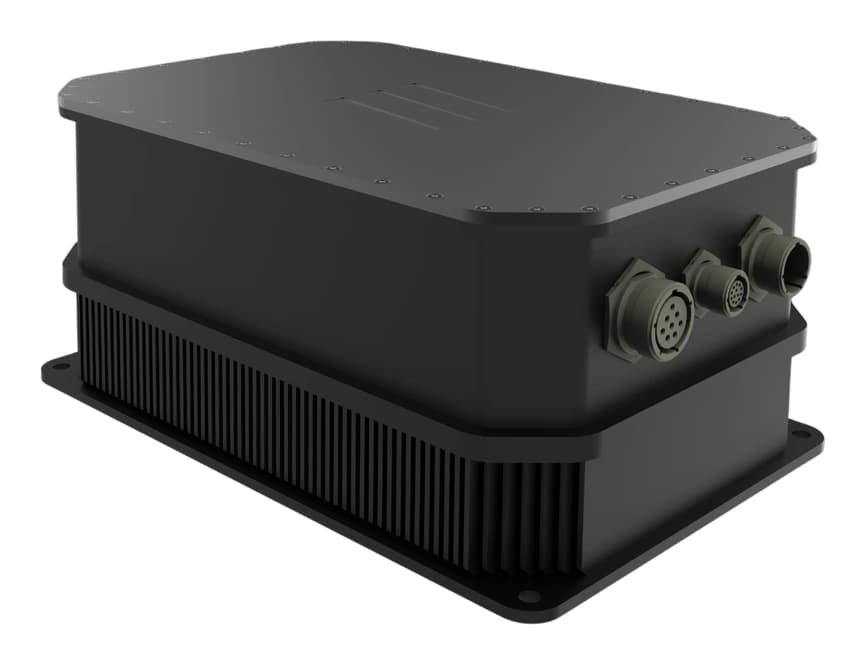
AC-DC & DC-DC Power Converters
PowerGuard-A1000 Mil-Spec AC-DC Converter — 1 kW Fanless
Details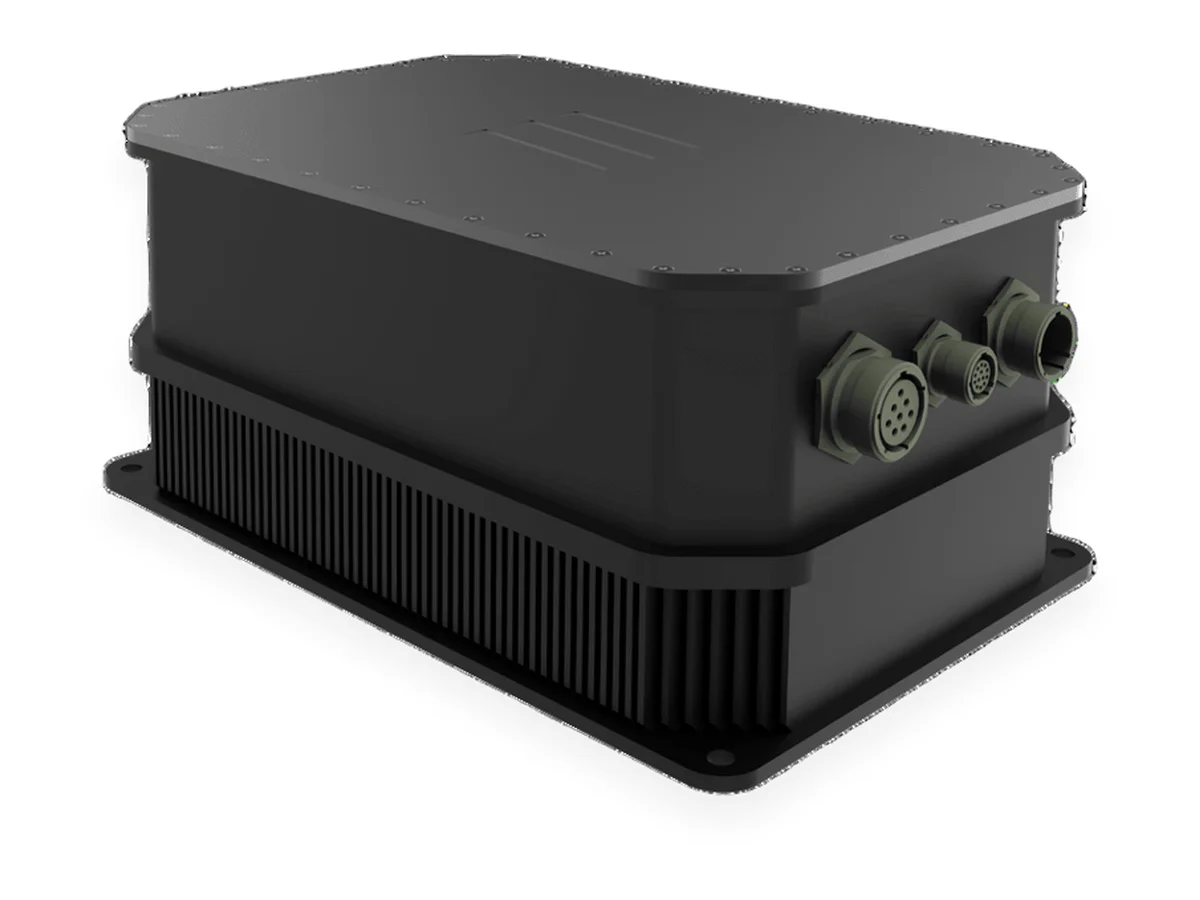
AC-DC & DC-DC Power Converters
Mil-Spec AC/DC Converter — Defense-Grade Power Supply
Details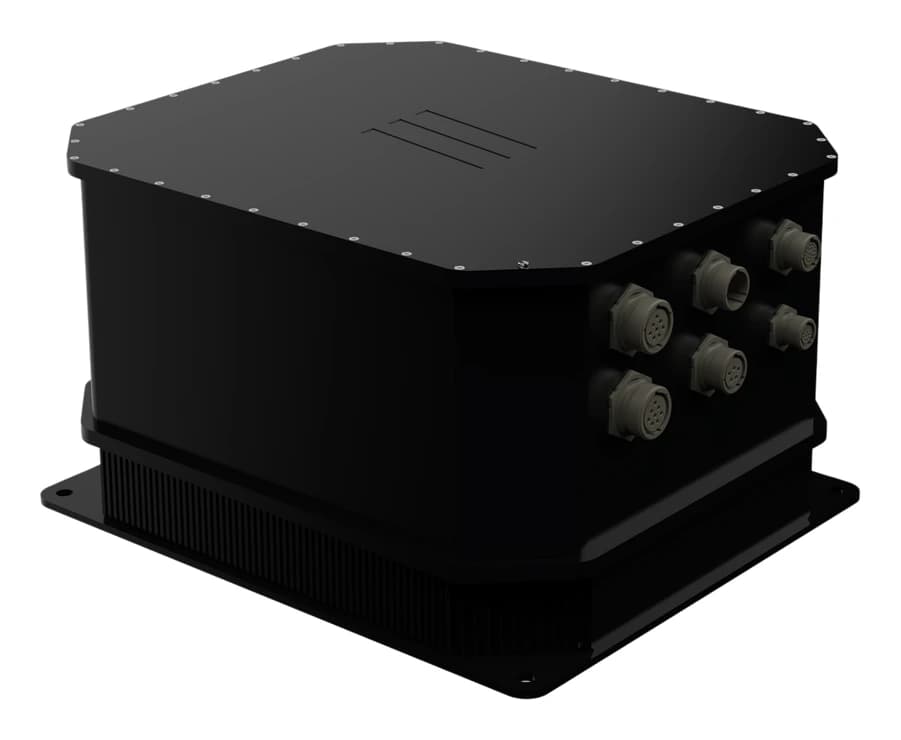
AC-DC & DC-DC Power Converters
PowerGuard TPS-28 Military Power Management Module (28 VDC Output)
DetailsFull category: mil-spec AC-DC and DC-DC converters
Engineering Support
Our engineering services can adapt this product to your platform, integrate it or test it against your programme requirements.
Quality and Testing
FAQ
What mains input does PowerGuard-A accept?+
It runs from a 360–440 VAC three-phase (line-to-line) input at 47–63 Hz, with a nominal input voltage of 380 / 400 VAC. The input stage includes overcurrent protection, undervoltage lockout (UVLO) and phase-loss detection.
What power options are available?+
The 28 VDC output stage is offered in 1, 2, 3 and 4 kW versions. Rated output current depends on the model; the 1 kW model delivers about 35 A. Efficiency is 92–95%, depending on the model.
Can the output voltage be something other than 28 VDC?+
The PowerGuard-A Series supports 12 / 24 / 28 / 36 / 48 VDC output configurations on the same hardware platform. The 3PAC-DC-1000-28 model on this page has a nominal 28 VDC output; other voltages can be configured within the series.
How is it monitored and controlled remotely?+
Optional Ethernet (TCP/UDP), RS-485 (Modbus) or CAN-Bus (J1939 / CANopen-style) interfaces report voltage, current, temperature, DC bus and fault data. Output ON/OFF, fault reset, sequencing and channel enable/disable can all be carried out remotely.
How does it cope with harsh field conditions?+
The enclosure is IP67 rated and made from monolithic aluminium, sealed against air and moisture and protected against mud, dust, rain and salt fog. Cooling is fanless and conduction-based. Shock and vibration design follows MIL-STD-810H profiles, and EMI/EMC design follows MIL-STD-461 principles.