115 VAC 400 Hz Power Supply Selection: Where to Start
Choosing a 115 VAC 400 Hz power supply usually starts with "we need a 400 Hz converter" and skips the questions that decide the outcome. Does the load expect wye or delta? How many kVA, at what power factor? Which mains or generator feeds the converter? Will it run in a land vehicle, on a ship or in a radar workshop?
This article works through 115 VAC 400 Hz power supply selection for land, naval and radar systems, starting from the load and ending with a decision table. For what happens inside the converter (rectifier, DC link, PWM inverter), see What Is a Static Frequency Converter?; here the subject is selection.
Start With the Load
Start from the load's interface control document (ICD). The four topics below form the skeleton of the specification.
Wye or delta?
Three-phase 400 Hz systems come in two common connections:
- Wye (with neutral): 115 VAC is measured line-to-neutral. Line-to-line voltage is √3 times higher, roughly 200 VAC. This is what "115/200 VAC 400 Hz" describes.
- Delta (no neutral): 115 VAC is measured line-to-line and there is no neutral conductor.
The wrong connection shifts the voltage by a factor of √3: a delta load connected line-to-line on a wye source sees about 200 VAC. So "115 VAC 400 Hz" is not enough; state the measurement point (line-to-neutral or line-to-line).
Number of phases and the neutral
Some loads need single-phase 115 VAC 400 Hz, others three-phase. If single-phase loads share a three-phase source, plan phase balance early; uneven loading causes voltage differences between phases.
Power: kVA, power factor and inrush
A power supply is rated in kVA, while load lists often arrive in watts. Rectifier-fed electronics and motors lower the power factor, so the same kW needs more kVA. Motor starting and input capacitor charging draw inrush current, and the source's short-term overload capability has to cover that peak. The usual approach: add margin to the total of simultaneous loads, then check short peaks separately. A worked kVA sizing example will follow in a separate article.
Output quality
Ask for measurable values: total harmonic distortion (THD), frequency modulation, voltage modulation, time to steady state, and output shutdown time on over- or under-voltage. Frequency-sensitive components such as synchros and resolvers care about frequency modulation; radar and communications power supplies care about THD.
Input Source: Mains, Generator or Single-Phase 230 VAC
The converter's input shapes the choice as much as its output:
- Three-phase 400 VAC class mains: Common in facilities, workshops, camps and shipboard distribution. For 400 Hz power at kilovolt-ampere level, a three-phase input is the better fit.
- Generator: In the field the converter is often fed by a generator. The generator's voltage and frequency tolerance must fall inside the converter's input range.
- Single-phase 230 VAC: Enough for laboratories, test benches or low-power mission electronics.
For example, the PowerGuard 115/200 VAC 400 Hz Static Frequency Converter runs from a 3-phase 360–440 VAC, 50–60 Hz input, while PowerGuard TPS-115 takes 200–240 VAC, 50 Hz mains and uses an AFE (Active Front End) topology.
Selection by Application
Land vehicles and field systems
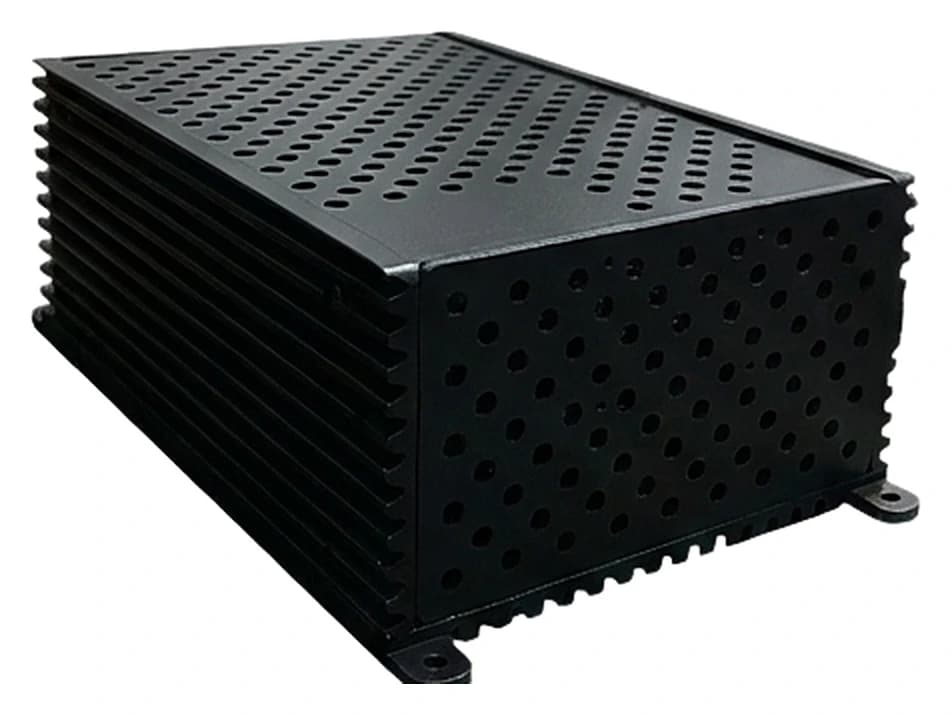
In vehicles the deciding factors are volume, weight, cooling and ambient temperature. Mission electronics may need 400 Hz and 28 VDC together; one source for both reduces wiring and mounting work. TPS-115 is built for this case: alongside a 3-phase 115 VAC L–N, 400 Hz, 600 VA AC output it provides 3 × isolated 28 VDC (600 W total). It is passively cooled (fanless), operates from −40 to +55 °C and fits in a 215 × 340 × 123 mm enclosure. For the wider picture of the vehicle's 28 VDC architecture, see Military Vehicle Electrical Architecture.
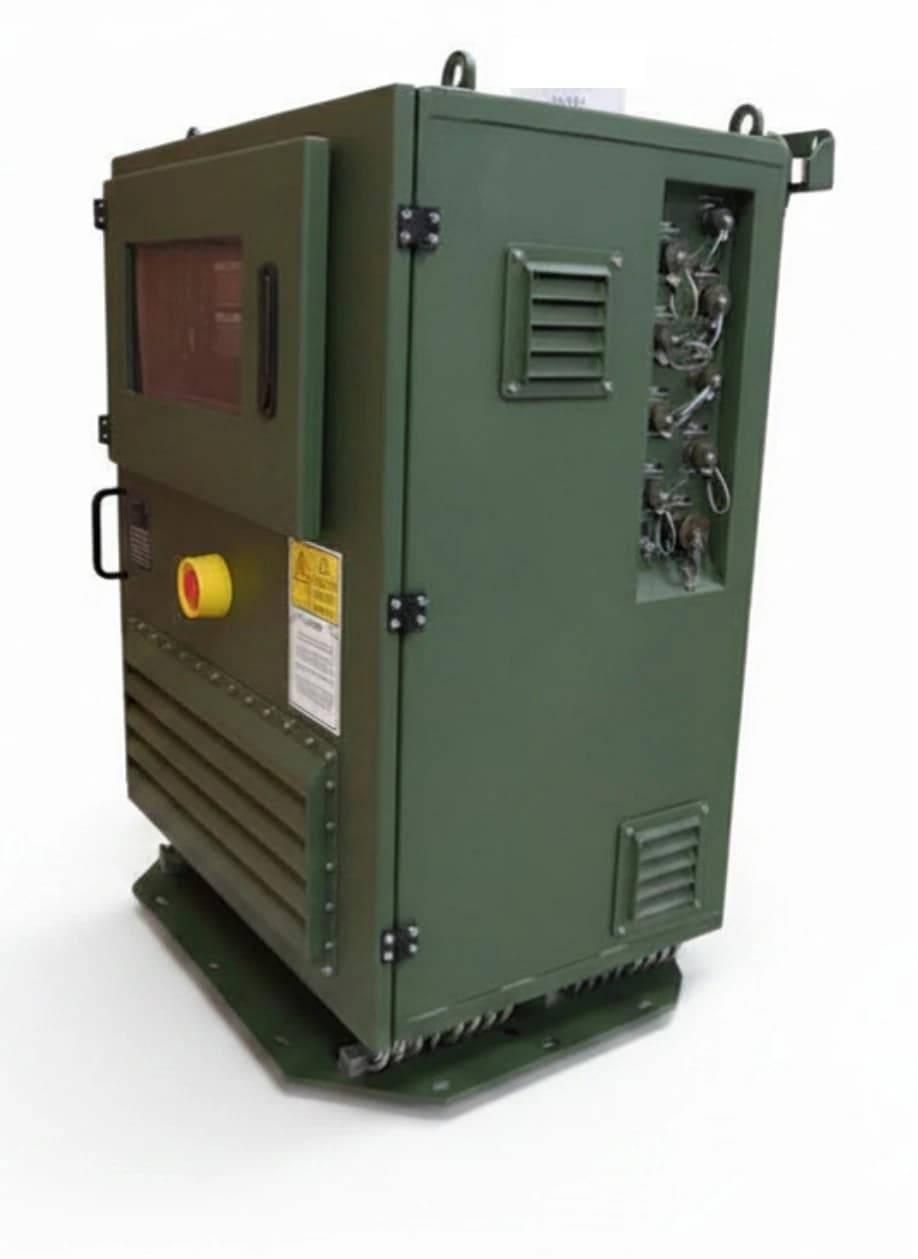
Field command-and-control and communications systems often mix 60 Hz and 400 Hz loads outdoors. PowerGuard Outdoor distributes 12 kVA (0.8 PF) across 7 isolated outputs: 5 × 60 Hz and 2 × 3-phase 115 VAC 400 Hz outputs of 4 kVA each. It operates from −32 to +55 °C. Dual-frequency mobile systems are covered in detail in the Mobile Military Frequency Converter Guide.
Naval platforms
On ships, 400 Hz power is described according to Section 300 of the MIL-STD-1399 series, which defines the platform's electric power interface. Alongside 60 Hz, it defines separate power types for 400 Hz (Type II and the precision Type III); the specification should state which type is required. Salt fog, humidity, vibration and shock also matter at sea.
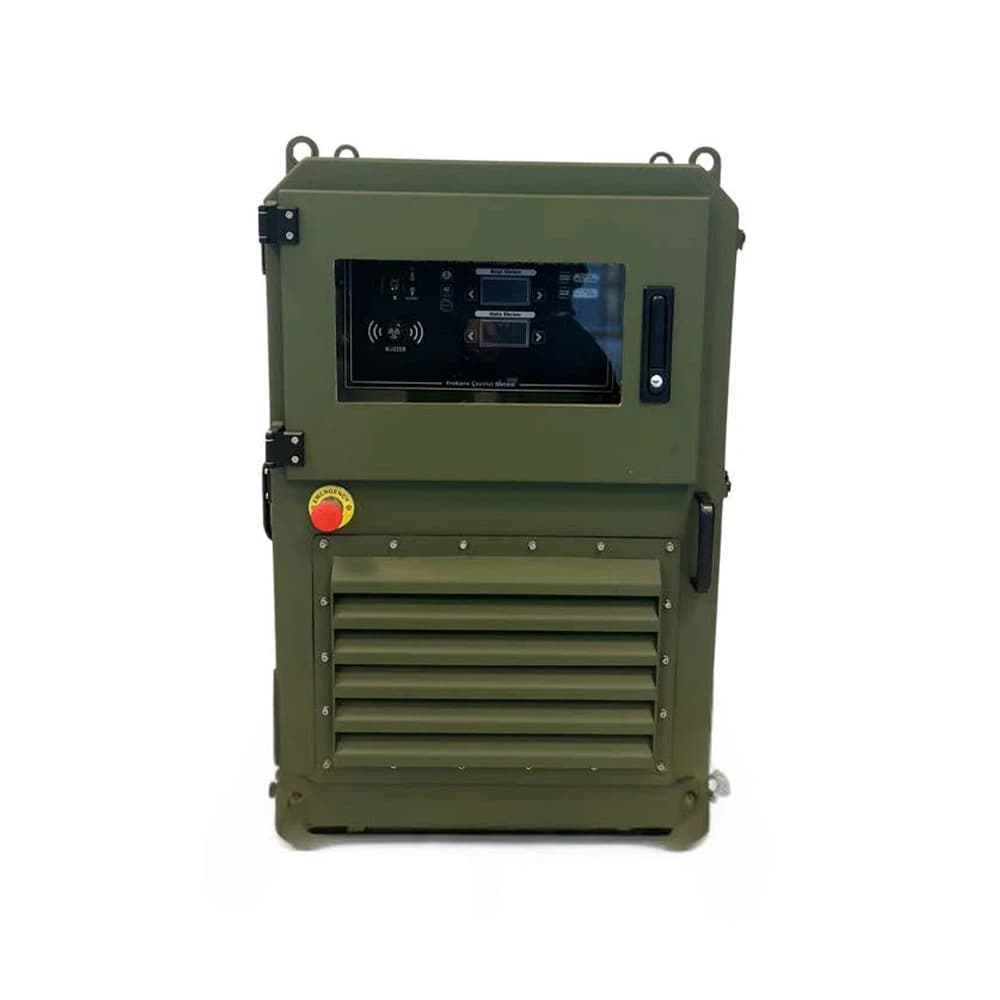
The output voltage and frequency requirements of the PowerGuard 115/200 VAC Static Frequency Converter are defined to MIL-STD-1399-300B; output power factor is at least 0.85 in wye (star) and at least 0.80 in delta. An optional power distribution unit can be added at the output.
Radar and fire-control systems
Radar and fire-control subsystems need 400 Hz power during maintenance, integration and testing too, where the output should be adjustable and remotely monitored. The static converter provides a variable 115–220 VAC, 60–400 Hz output, with THD below 5%, frequency modulation of 4 Hz maximum and voltage modulation of 2.5 Vrms maximum. Monitoring runs over RS-422 and Ethernet-based desktop software. For field-deployed, low-power radar and sensor systems that also need 28 VDC, TPS-115 is worth considering.
A Common Mistake: Confusing 400 VAC With 400 Hz
In product names and quotations the number "400" can mean two different things: input voltage (400 VAC) or output frequency (400 Hz). The PowerGuard 400/115 VAC AC-AC Military Inverter is a good example: it takes 3-phase 400 VAC, 50/60 Hz and delivers 115 VAC, 50 Hz, and it does not produce 400 Hz. If your load needs 115 VAC 50 Hz, it is the right device; if it needs 115 VAC 400 Hz, you need a frequency converter. The difference is explained in the Military AC-AC Inverter Guide.
Evidence: "Tested" and "Compliant" Are Not the Same
When comparing quotations, ask what evidence sits behind each MIL-STD line: an accredited laboratory test report or a design compliance statement? For example:
- PowerGuard 115/200 VAC Static: passed MIL-STD-810G CHG-1 and MIL-STD-461G testing at an ISO/IEC 17025 accredited laboratory; MIL-STD-1399B compliance.
- PowerGuard Outdoor: passed MIL-STD-810G CHG-1 and MIL-STD-461E testing at an accredited laboratory; MIL-STD-1399B compliance.
The MIL-STD-461 and MIL-STD-810 guide summarises which tests the standards cover.
Decision Table
| Scenario | Key requirement | Suitable product | Datasheet values |
|---|---|---|---|
| In-vehicle mission electronics, 400 Hz + 28 VDC | Small volume, fanless, single-phase input | TPS-115 | 200–240 VAC input; 3-phase 115 VAC 400 Hz, 600 VA + 3 × 28 VDC, 600 W; −40 to +55 °C |
| Field C2 / communications, 60 Hz + 400 Hz together | Outdoor use, isolated multiple outputs | PowerGuard Outdoor | 12 kVA; 5 × 60 Hz + 2 × 400 Hz (4 kVA each); −32 to +55 °C |
| Shipboard 400 Hz equipment | MIL-STD-1399-300B output, wye/delta | 115/200 VAC Static | 3-phase 360–440 VAC input; 115 VAC 400 Hz in wye or delta |
| Radar maintenance, integration, test | Adjustable frequency, remote monitoring | 115/200 VAC Static | 60–400 Hz variable; THD < 5%; RS-422 + Ethernet |
| 115 VAC 50 Hz load, 400 VAC mains | Voltage, not frequency, conversion | 400/115 VAC Inverter | 3-phase 400 VAC input; 115 VAC 50 Hz; 10 kVA |
All options are listed under Frequency Converters, Motor Drives & Military UPS Systems.
400 Hz Power Supply Manufacturer in Turkey: TEDEG Defence
TEDEG Defence is an Ankara-based defence manufacturer that designs and builds frequency converters and power conversion products for the 400 Hz and 115 VAC supply needs of land, naval and radar systems.
| Company profile | Details |
|---|---|
| Company | TEDEG Defence Industry A.Ş. |
| Headquarters | Ankara |
| Founded | 2023 |
| Registrations and certificates | NCAGE TM885, ISO 9001, EYDEP |
| Cluster memberships | OSSA, SAHA İstanbul |
400 Hz products in this article:
- PowerGuard 115/200 VAC 400 Hz Static Frequency Converter: variable 115–220 VAC, 60–400 Hz from a 3-phase 360–440 VAC input; −30 to +50 °C, 3000 m.
- PowerGuard Outdoor: 12 kVA, 7 isolated outputs; overload at 0.8 PF of 125% → 5 min, 200% → 5 s, 250% → 1 s; MIL-DTL-38999 connectors.
- PowerGuard TPS-115: 400 Hz AC and isolated 28 VDC in one enclosure; RS-485 monitoring.
See Certifications & Quality for documents and the product catalogue for the full range.
Frequently Asked Questions
Is 115 VAC 400 Hz the same as 115/200 VAC 400 Hz?
They can describe the same wye system: 115/200 VAC means 115 VAC line-to-neutral and about 200 VAC line-to-line. However, "115 VAC 400 Hz" can also mean 115 VAC line-to-line in a delta connection. State the measurement point and the neutral requirement in the specification.
How many kVA should a 400 Hz power supply be?
Convert the watt load list to kVA using power factor, total the simultaneous loads, add margin, and compare starting peaks with the source's overload capability.
Can 400 Hz equipment run directly on 50 Hz mains?
No. Transformers and motors designed for 400 Hz draw much higher magnetising current at 50 Hz, overheat and can be damaged. A frequency converter is needed in between.
Can one unit supply both 60 Hz and 400 Hz?
Yes. PowerGuard Outdoor delivers 60 Hz and 400 Hz from separate isolated outputs in the same chassis, while the PowerGuard 115/200 VAC Static offers an output frequency adjustable from 60 to 400 Hz.
Conclusion
The right 115 VAC 400 Hz power supply follows from a specification that states, in numbers, the connection (wye or delta), kVA with power factor, input source, output quality, environment and level of evidence. A small fanless source suits the vehicle, a dual-frequency outdoor unit suits the field, and a static converter with MIL-STD-1399-300B output suits ships and radar workshops.
Send your load list and interface requirements through the quote form, or reach our engineering team via the contact page.
Field example: For an application where 60 Hz and 400 Hz needs were combined in a single outdoor converter, see the Land Rocket Platform case study.