
TDG-FCP-101 Weapon System Firing Control Panel — Guarded Emergency Stop, Mode Selector and Safe/Arm Switch, 18–32 VDC
Model
TDG-FCP-101
Input
18–32 VDC · designed to MIL-STD-1275E
Controls
Guarded emergency stop (push–pull) · 3-position rotary mode selector · covered safe/arm toggle switch
Outputs
Switch states as discrete signals
Connector
1 × MIL-DTL-38999 Series III circular, rear face
Enclosure
Aluminium, powder coated; colour on request
Mounting
Flush console mount, flanged front panel; 4 × Ø6.5 mm holes, 270 × 50 mm pitch
Dimensions
290 × 90 × 124 mm (W × H × D), excluding emergency-stop guard and connector
Weight
700 ± 60 g
Part number (P/N)
TDG-074-A0000
Company:ITAR-FreeNCAGE: TM885
Overview
Product and Purpose
TDG-FCP-101 is a weapon system firing control panel: a compact control box that mounts flush in the operator console and puts the three controls a firing sequence needs onto one front face. The operator has a guarded emergency stop, a three-position mode selector and a covered safe/arm switch within one hand's reach, below the console displays.
Each switch state leaves the panel as a discrete signal through a single MIL-DTL-38999 connector on the rear face, so the panel connects to the system computer with one cable. The panel is designed and manufactured by TEDEG in Ankara. The photos show a unit built for a customer programme; the front-face legends follow that order.
Engineering Capability
The layout is built around deliberate action. The emergency stop sits inside a fixed mechanical guard that prevents accidental actuation but leaves the button reachable with a palm. The mode selector is a three-position rotary switch (OFF / STANDBY / FIRE on the unit shown). The safe/arm switch is a toggle under a hinged cover: the cover has to be lifted before the switch can be moved to the armed position.
The enclosure is aluminium with a flanged front panel and four mounting holes; the panel operates from 18–32 VDC and is designed to MIL-STD-1275E vehicle power.
Specifications:
| Parameter | Value |
|---|---|
| Operating voltage | 18–32 VDC |
| Power standard | Designed to MIL-STD-1275E |
| Emergency stop | Push–pull button with fixed mechanical guard |
| Mode selector | 3-position rotary switch |
| Safe/arm switch | Toggle switch with hinged cover |
| Outputs | Switch states as discrete signals |
| Connector | 1 × MIL-DTL-38999 Series III circular, rear face |
| Enclosure | Aluminium, powder coated; colour on request |
| Mounting | Flush console mount, flanged front panel; 4 × Ø6.5 mm holes, 270 × 50 mm pitch |
| Dimensions (W × H × D) | 290 × 90 × 124 mm (front panel 290 × 90 × 4 mm; body behind panel 230 × 78 × 120 mm), excluding the emergency-stop guard (29 mm at front) and connector |
| Weight | 700 ± 60 g |
| Part number (P/N) | TDG-074-A0000 |
| Marking | Legend for each switch on the front face; wording and language to order |
Customisation
The panel is a platform-specific build. These are set per project:
- Number and type of switches, and their positions on the front face
- Legend wording and language
- Connector type, contact arrangement and orientation
- Enclosure colour and mounting hole pattern
Typical Applications
- Weapon system operator consoles on land and naval platforms
- Ground control stations, below the operator displays
- Training and test consoles that need the same switch layout as the operational system
The TEDEG Advantage
TEDEG builds the enclosure, front panel, wiring harness and marking in-house, so a panel can be matched to an existing console cut-out and connector plan instead of the console being adapted to a catalogue part. The same team builds the Mil-Drive HCU-400 pendant control unit and the PowerGuard RCU-01 remote control unit. All vehicle electronics are in the Vetronics category; use the quote form to send your switch list and console drawing.
Specifications
| Model | TDG-FCP-101 |
| Input | 18–32 VDC · designed to MIL-STD-1275E |
| Controls | Guarded emergency stop (push–pull) · 3-position rotary mode selector · covered safe/arm toggle switch |
| Outputs | Switch states as discrete signals |
| Connector | 1 × MIL-DTL-38999 Series III circular, rear face |
| Enclosure | Aluminium, powder coated; colour on request |
| Mounting | Flush console mount, flanged front panel; 4 × Ø6.5 mm holes, 270 × 50 mm pitch |
| Dimensions | 290 × 90 × 124 mm (W × H × D), excluding emergency-stop guard and connector |
| Weight | 700 ± 60 g |
| Part number (P/N) | TDG-074-A0000 |
MIL-STD Compliance
MIL-STD-1275E
28 VDC Vehicle Electrical SystemsSee Certifications & Quality for our test and validation approach, and our Test & Validation service for programme-specific testing.
Datasheet
Related Products
Frequency Converters, Motor Drives & Military UPS Systems
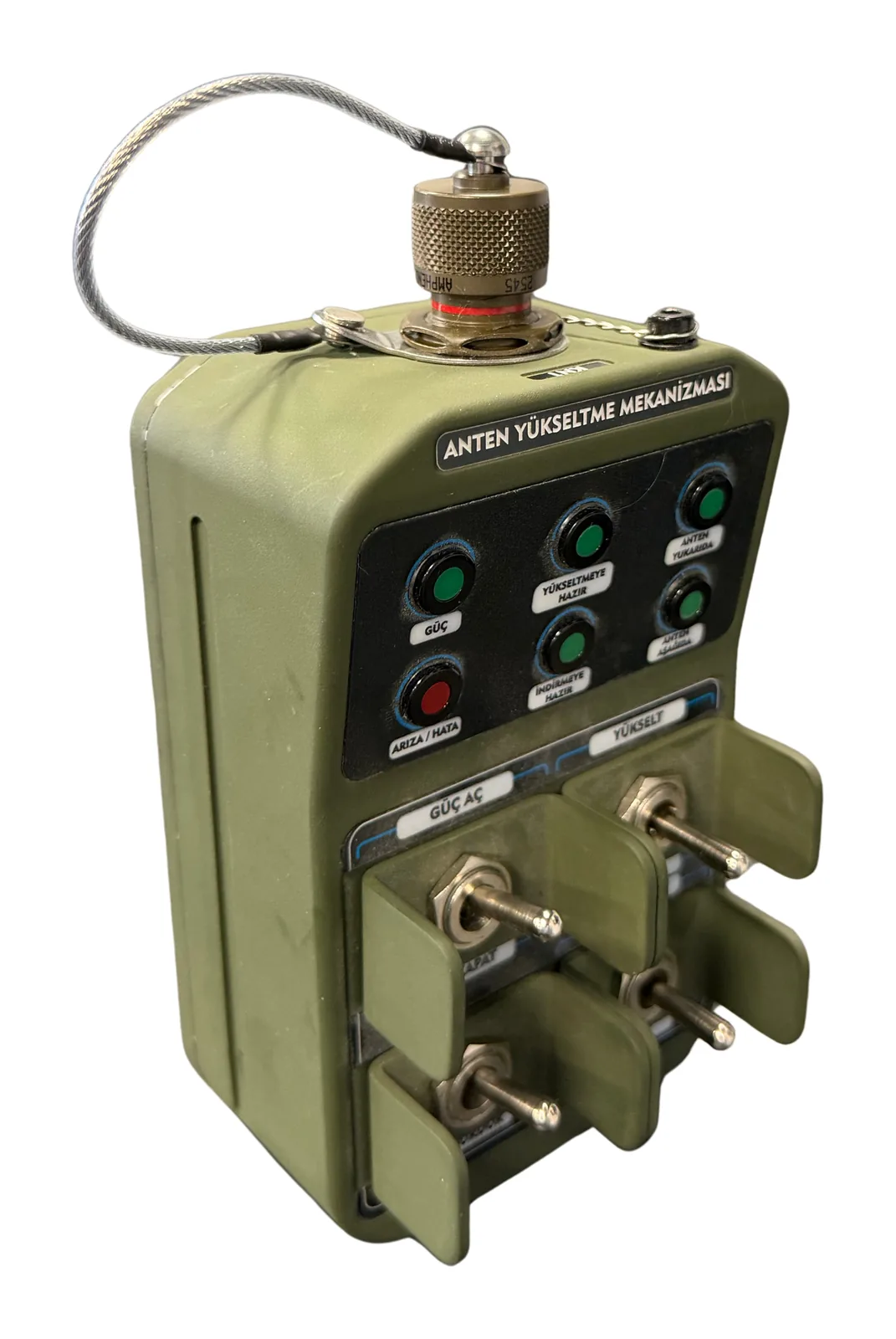
Mil-Drive HCU-400 Military Pendant Control Unit
Details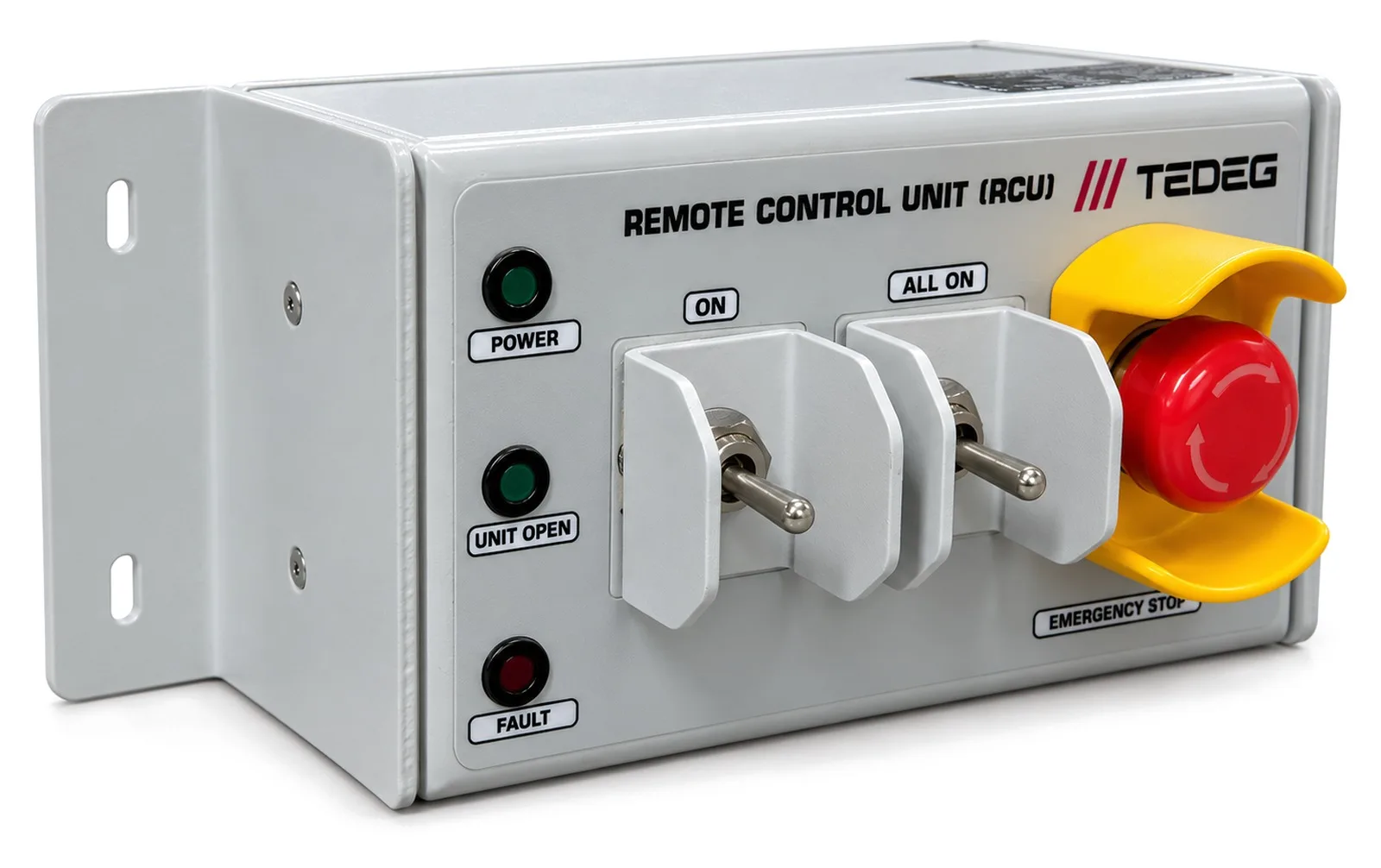
Power Distribution Units (PDU)
PowerGuard RCU-01 Remote Control Unit for Military PDUs
Details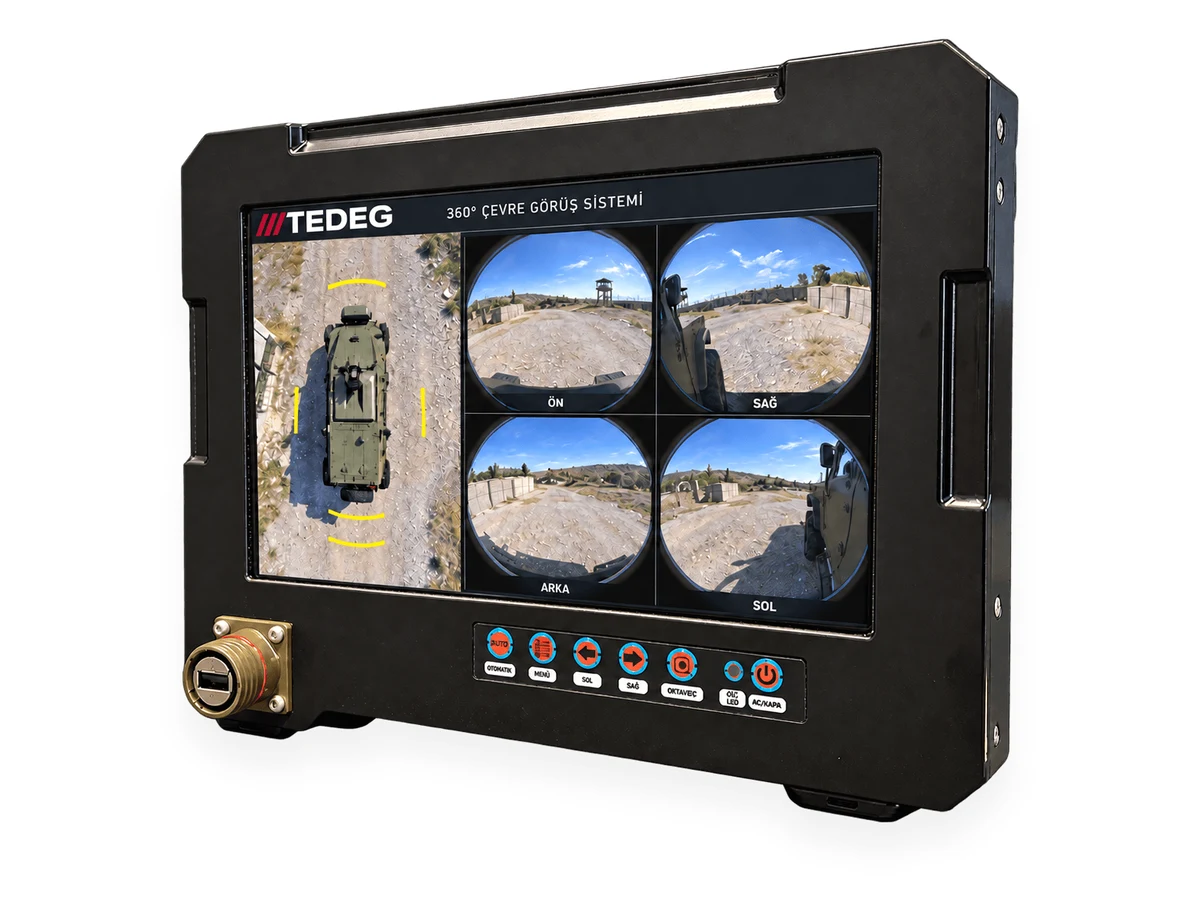
Vetronics (Vehicle Electronics)
TDG-DSP-101 10.1" Rugged Vehicle Display
DetailsFull category: military vetronics
Engineering Support
Our engineering services can adapt this product to your platform, integrate it or test it against your programme requirements.
Quality and Testing
FAQ
What is a firing control panel?+
It is the operator's hardware panel for a weapon system: the physical switches that select the system mode, arm it and stop it in an emergency. It works alongside the console software and gives the operator controls that cannot be actuated by accident.
How is accidental actuation prevented?+
The emergency stop sits inside a fixed mechanical guard, and the safe/arm toggle is under a hinged cover that has to be lifted before the switch can be moved to the armed position.
How does the panel connect to the system?+
Through one MIL-DTL-38999 Series III circular connector on the rear face. Each switch state is available on it as a discrete signal.
What supply voltage does it need?+
18–32 VDC. The panel is designed to MIL-STD-1275E vehicle power.
Can the switches and legends be changed?+
Yes. Switch count and type, legend wording and language, connector and enclosure colour are set per project.
Is "firing control panel" the same as a fire alarm control panel?+
No. A fire alarm control panel belongs to a building fire detection system. TDG-FCP-101 is an operator control panel for a weapon system.