
Armoured Land Vehicles
Armoured Personnel Carrier — 16 Seats and 16 Belts on the Commander’s Screen
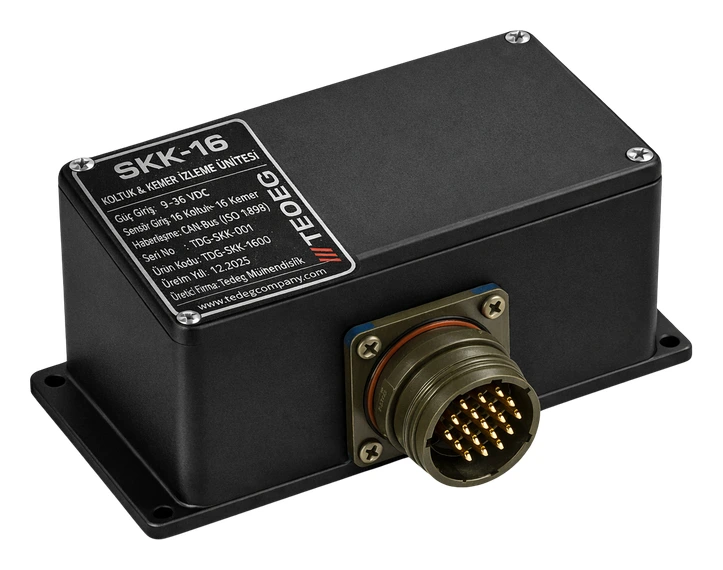
For an armoured personnel carrier programme that needed the mission computer to show which seats are occupied and which belts are fastened before the vehicle moves, a 32-channel, CAN-Bus based monitoring unit: the SENTRA-16.
- Platform
- Armoured personnel carrier — 16 crew seats, CAN-Bus mission computer (development programme)
- Customer
- Leading Turkish Armoured Personnel Carrier Manufacturer
- Sector
- Land · armoured personnel carrier
- Year
- 2026
Customer & Context
A leading Turkish armoured personnel carrier manufacturer is in the development phase of a new vehicle programme. The vehicle carries 16 crew seats, and one of the programme requirements concerns crew safety directly: before the vehicle moves, the commander must be able to see on the mission computer screen which seats are occupied and which seat belts are fastened.
On the manufacturer's existing vehicles, that check relied on the commander's eyes and a verbal confirmation; the belt status of troops in the rear compartment could not be seen from the commander's position. The commercial automotive belt monitoring solutions that were evaluated had not been designed for the electrical architecture or the environmental conditions of a military vehicle.
The manufacturer sent TEDEG Defence its technical requirements for a monitoring unit that would match the vehicle's chassis-referenced sensor architecture, read all 16 seats and 16 belts from a single unit and talk to the mission computer over CAN-Bus. The work started as a development and qualification programme.
Challenge
The manufacturer's requirements document listed the points to be solved:
- Moving off with belts unfastened: the belt status of the 16 seats in the rear compartment was not visible from the commander's position, so the vehicle could move off with troops who were not belted in.
- Commercial sensor electronics: automotive belt monitoring modules were not designed for the electrical noise and EMI effects found on a military vehicle. A false "fastened" or "unfastened" reading caused by noise would make the safety information unreliable.
- Chassis-referenced architecture: the vehicle's seat and belt sensors were wired chassis-referenced, and the monitoring unit's inputs had to suit that architecture.
- No link to the mission computer: commercial solutions did not connect to the vehicle's CAN-Bus, so seat and belt data could not reach the mission computer or the safety and warning systems.
- Wiring and environment: the 32 sensor lines from 16 seats and 16 belts had to be brought together in one unit, and that unit had to withstand dust, water, vibration and a wide temperature range.
The manufacturer wanted all of these requirements met in a single military unit.
TEDEG Solution
Against these requirements, TEDEG Defence configured the SENTRA-16 Military Seat & Seat Belt Monitoring System for the programme. The unit combines 32-channel sensor reading, signal conditioning and CAN-Bus communication in a single IP65 enclosure.
Chassis-Referenced 32 Channels, Read Simultaneously
SENTRA-16 reads 16 seat occupancy sensors and 16 seat-belt sensors continuously and simultaneously over a total of 32 channels. Its input stage was designed for the vehicle's chassis-referenced sensor architecture. Analogue signals from the sensors are conditioned through RC filtering, op-amp buffering and a multiplexer structure, then converted into reliable digital data. The circuit design is optimised for high noise immunity against EMI effects, so noise on the vehicle's electrical system does not turn into false seat or belt readings. Because occupancy and belt status are read together for every seat, the total crew status is derived from the same data.
Into the Mission Computer over CAN-Bus
The unit sends its data to the vehicle mission computer over CAN-Bus, to ISO 11898 at 500 kbps. Seat and belt status is shown on the commander's screen, and the same data can also be passed to the vehicle's safety and warning systems. The unit integrates directly into the manufacturer's existing electronic architecture over CAN-Bus. For configurations that do not use the manufacturer's own display infrastructure, SENTRA-16 can also be supplied as a single package with an optional TEDEG military monitor that provides the visual monitoring interface.
An Enclosure Built for the Military Vehicle Environment
The unit operates from 18–32 VDC with a nominal 24 VDC, and maximum power consumption is below 15 W. The enclosure is rated IP65, and the physical connection uses a MIL-DTL-38999 connector. Its flanged base bolts to the vehicle chassis, and its mechanical design suits the vibrating military vehicle environment. Operating temperature is −32 °C … +55 °C and storage temperature is −40 °C … +70 °C.
Outcome
The development unit has been delivered to the manufacturer; integration testing on the prototype vehicle and the qualification process are under way.
- Before the vehicle moves, the commander sees on the mission computer screen whether each of the 16 seats is occupied and whether each of the 16 belts is fastened.
- Seat and belt data sit on the vehicle's CAN-Bus, where the safety and warning systems can use the same data.
- All 32 sensor channels are brought together in a single military unit.
- Together with the SENTRA KBM, the vehicle's crew and vision systems can be sourced from one supplier.
- The modular architecture is open to adaptation for the manufacturer's other platforms.
Technical Scope
Values are taken from each product's own technical data; full specifications are on the product page.
- Channels
- 32 (16 seats + 16 belts)
- Communication
- CAN-Bus · ISO 11898 · 500 kbps
- Supply
- 18–32 VDC (24 VDC nominal)
- Power consumption
- < 15 W
- Sensor architecture
- Chassis-referenced
- Ingress protection
- IP65
- Input
- 28 VDC · MIL-STD-1275E
- Camera outputs
- Min. 11 × 12 VDC, isolated
- Computer output
- 24 VDC ±0.2 V · min. 200 W
- Display output
- 24 VDC ±0.2 V · isolated · min. 25 W
- Seat module output
- 24 VDC ±0.2 V · isolated
- Video lines
- Single harness · min. 12 × 75 Ω
StandardsMIL-STD-810GMIL-STD-461GMIL-STD-464CView product: SENTRA KBM Military Camera Power Distribution Module
More case studies
Tactical Wheeled Vehicles · 2026
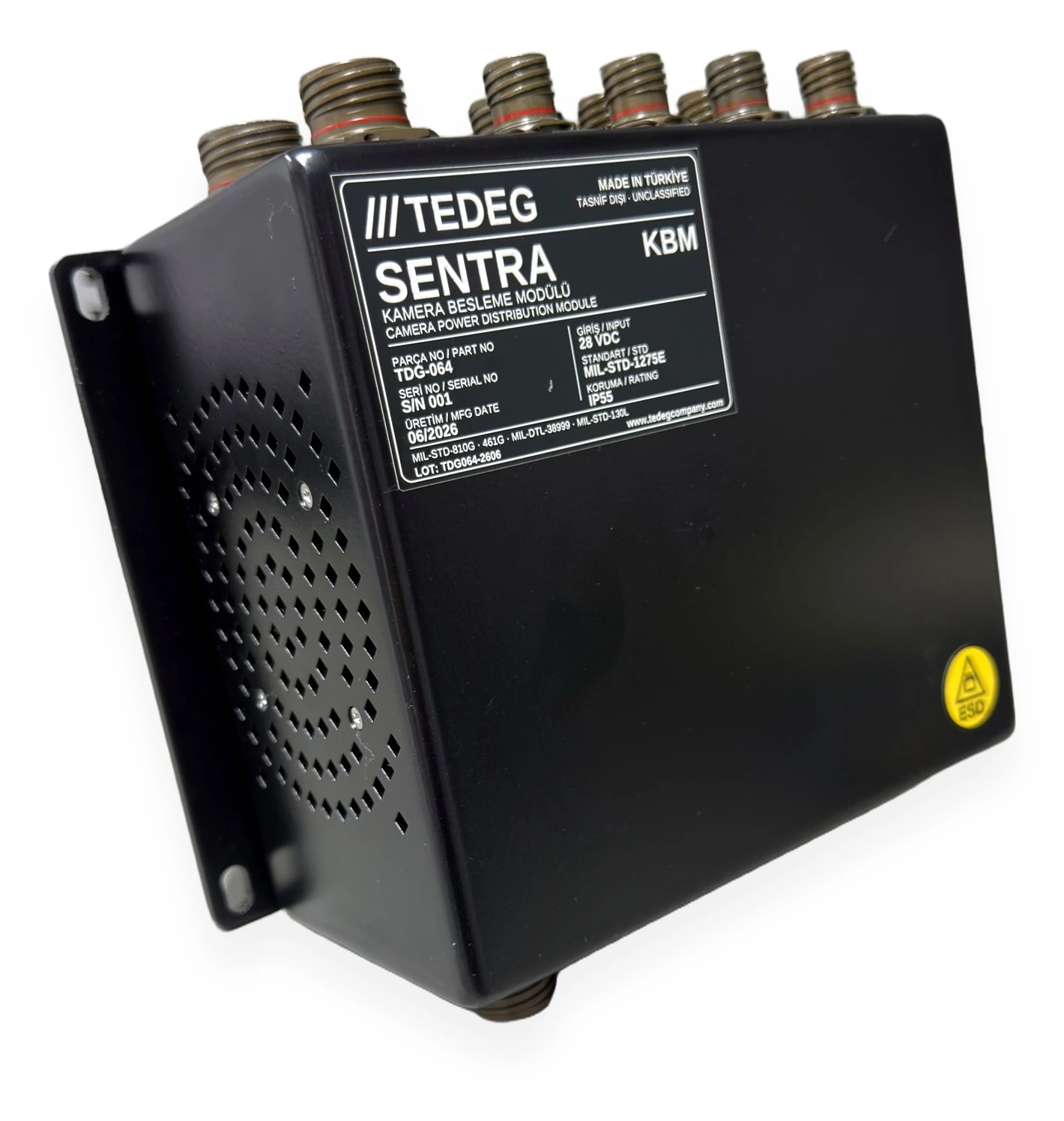
Tactical Vehicle 360° Camera Suite — From 11 Separate Power Supplies to One Power Module
For a situational awareness suite that fed its cameras, mission computer, operator display and seat module from separate supplies, the SENTRA KBM camera power distribution module, built around the customer’s Technical Requirements Document and ICD.
Read case study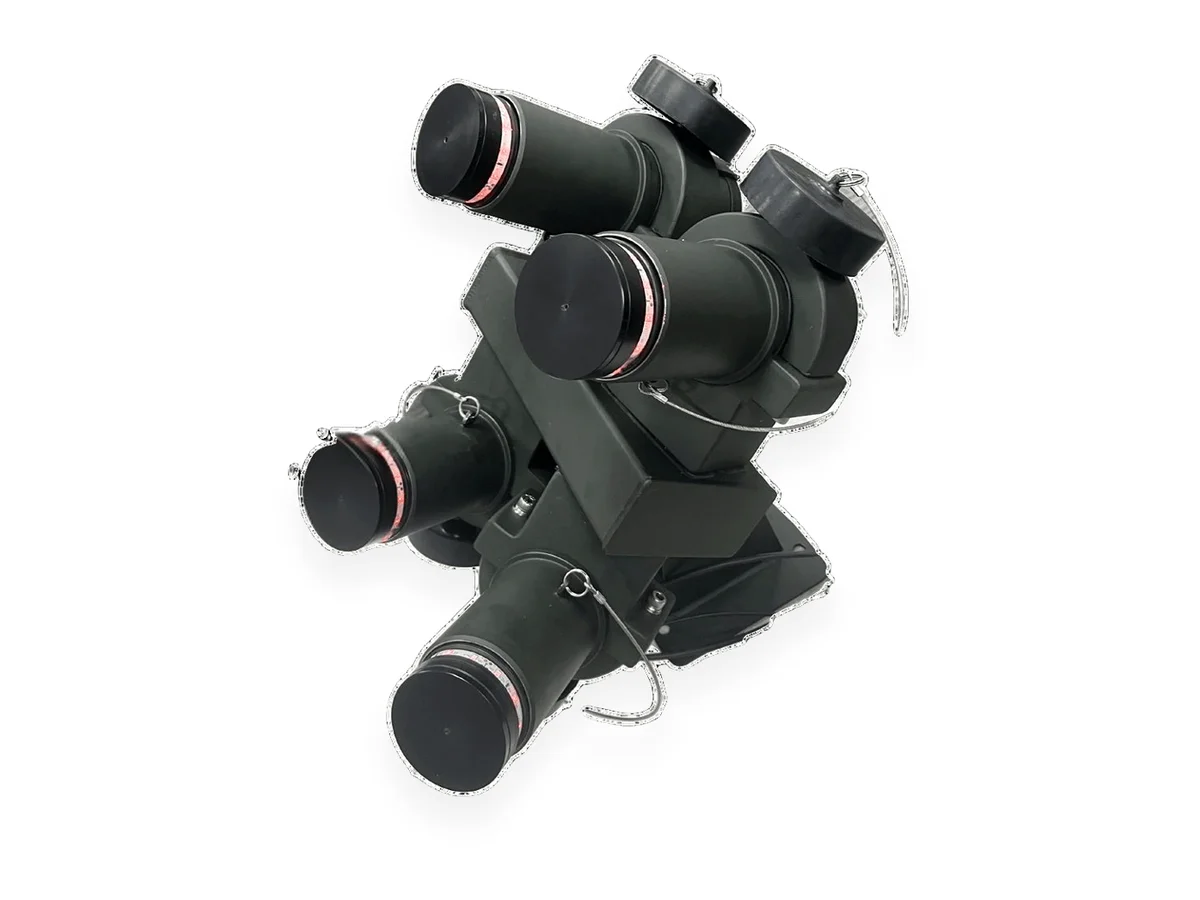
Land Platforms · 2025
Armoured Vehicle Family — One Smoke Launcher Architecture, 4 to 16 Launchers
Instead of a separate imported smoke system for every vehicle variant, one domestic system whose launcher count and coverage are chosen per variant and which joins the vehicle data bus over J1939.
Read case study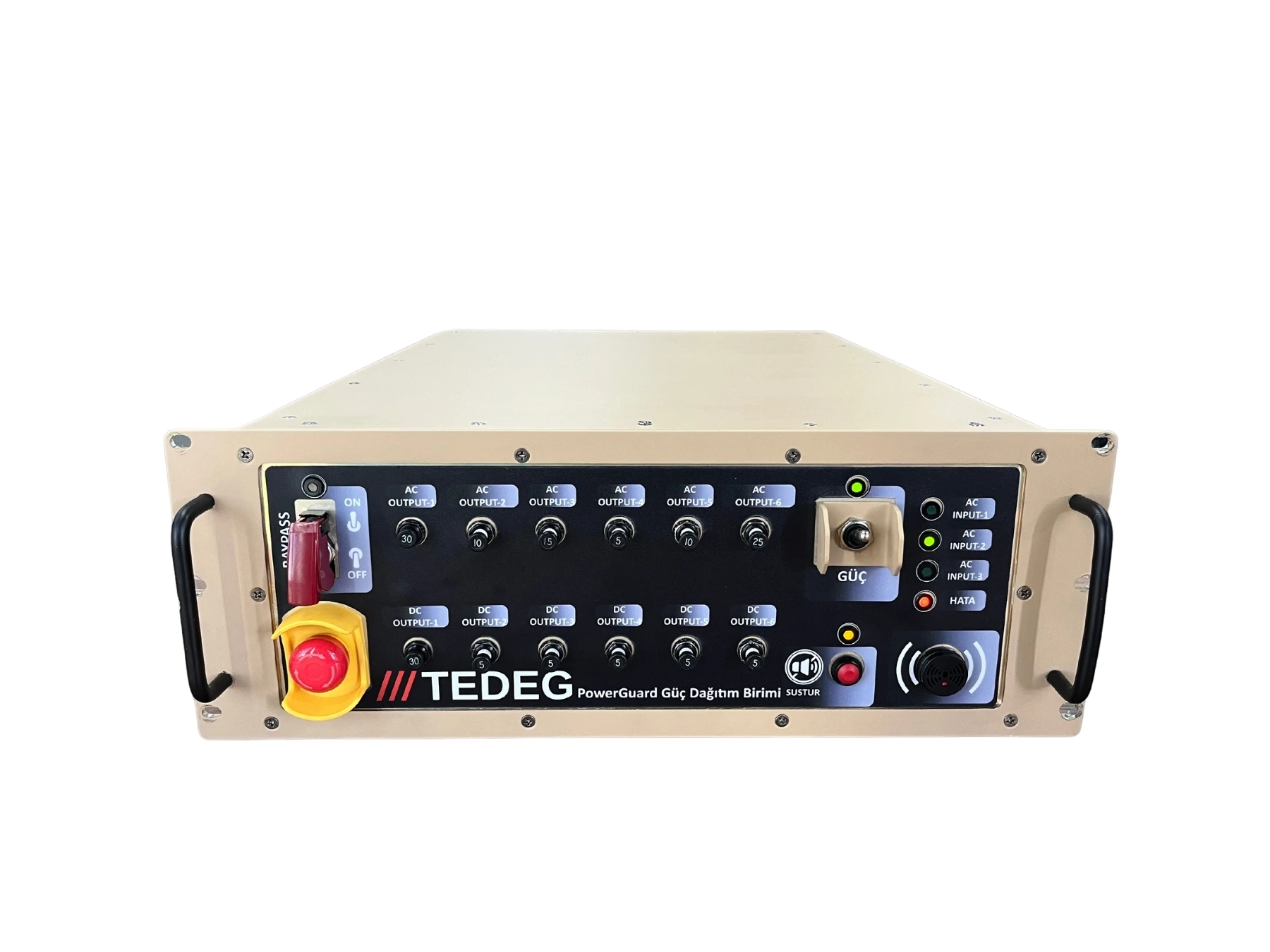
Land Platforms · 2024
Tactical Truck Power Architecture Modernisation
An ageing PDU that could no longer keep pace with growing mission loads was replaced by a remotely monitored power distribution architecture built on the PDU-RT5002 and designed to MIL-STD requirements.
Read case study