
Armoured Land Vehicles
Vehicle Fire Suppression System — Supercapacitor Backup Power Instead of a Lithium-Ion Battery
For a specification that called for a lithium-ion battery to back up pyrotechnically actuated fire extinguisher bottles, a supercapacitor-based solution that charges in the cold and delivers high momentary current: the PowerGuard EBB.
- Platform
- Armoured 4×4 vehicle — automatic fire suppression system with pyrotechnic actuation and its backup power unit
- Customer
- Leading Turkish Military and Armoured Vehicle Manufacturer
- Sector
- Land · armoured vehicles
- Year
- 2026
Customer & Context
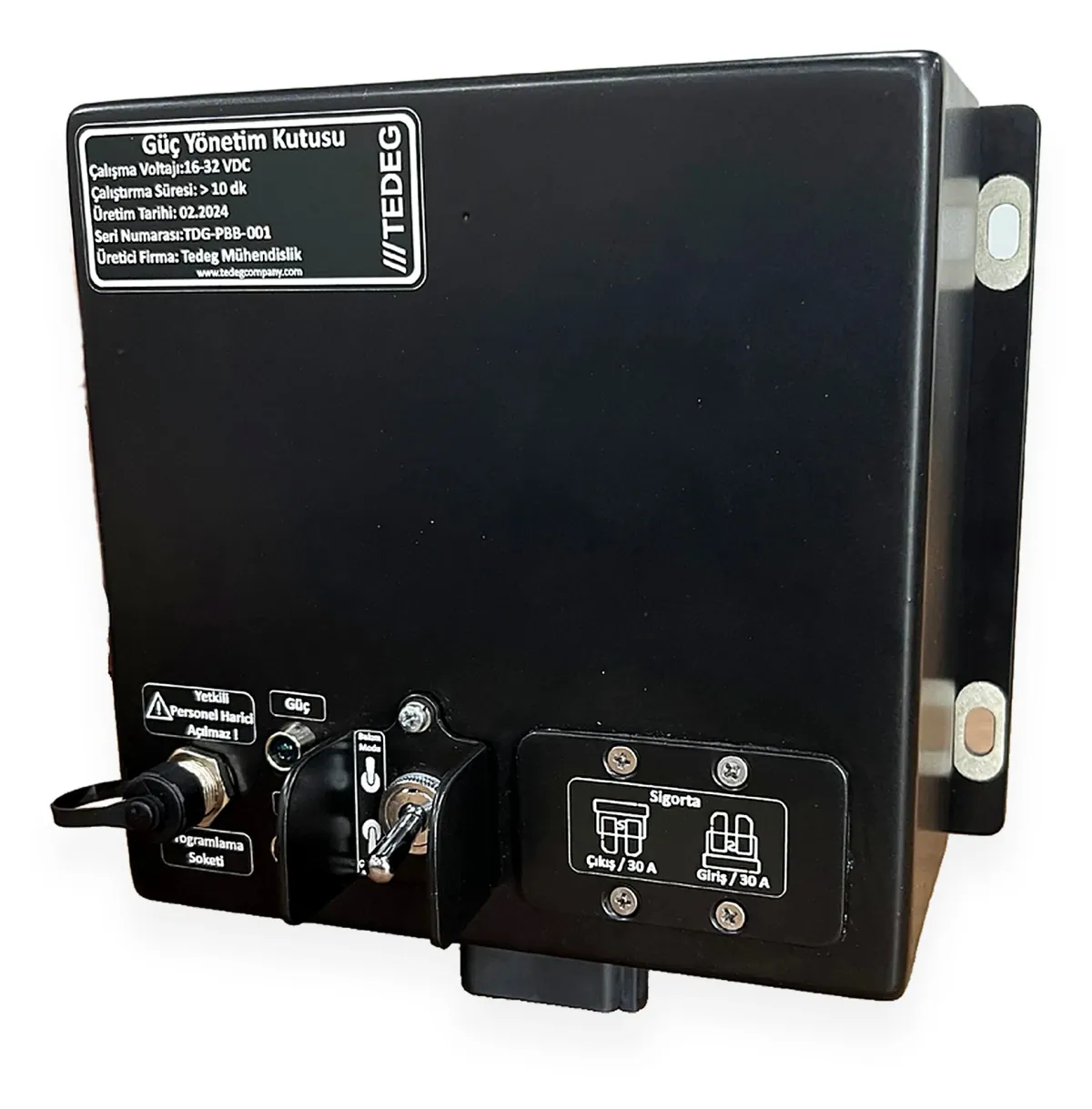
A leading Turkish manufacturer of military and armoured vehicles sent TEDEG Defence its technical specification for the backup power unit of the automatic fire suppression system on its armoured 4×4 vehicles and asked for a quotation. The job of the unit was clear: when the vehicle battery is out of circuit or the ignition is off, the fire suppression system must stay energised and the extinguisher bottles must fire the moment they are needed.
The specification defined the unit as a lithium-ion battery solution. While reviewing it, TEDEG's engineers focused on the critical detail of the system: the actuators of the extinguisher bottles were pyrotechnic. A pyrotechnic actuator draws a very short but high current at the instant it fires. The task of the backup source is not to supply energy for hours but to deliver that current in full, at that one moment, after a long time on standby. TEDEG proposed a supercapacitor-based backup power unit in place of the specified battery and set out its reasoning for the customer in a technical comparison table.
Challenge
TEDEG's review of the specification listed where a lithium-ion battery falls short in this role:
- Charging in the cold: lithium-ion cells cannot be charged below 0 °C; doing so can damage the cell permanently. On a military vehicle that stands for days in winter conditions, the backup source risked being left uncharged.
- High momentary current: a pyrotechnic actuator needs a high momentary current when it fires. The pulse current capability of a lithium-ion battery is limited, and its performance drops sharply at low temperature.
- Standby life: a fire suppression system spends most of its life waiting without being used. A lithium-ion battery loses capacity over time even when it is not used, so on a system that waits for a long time the battery may fall short exactly when it is needed.
- Periodic replacement: because of capacity loss the battery has to be replaced at intervals, which means maintenance tracking and a recurring cost across the fleet.
- Safety: placing an energy source with a thermal runaway and fire risk inside a system that protects against fire was a contradiction in design terms.
- Status information: when the charge and health of the backup source are not reported to the vehicle electronics, whether the unit is ready only becomes clear during maintenance.
Following this review the customer decided that the backup power unit would be built on supercapacitor technology.
TEDEG Solution
TEDEG Defence delivered the backup power unit as the supercapacitor-based PowerGuard EBB Auxiliary Battery Unit. A supercapacitor is an energy storage element developed for short bursts of high power, fast charging and long standby. That is also why automotive safety systems such as airbag control units hold their firing energy in capacitors.
A Supercapacitor for Pyrotechnic Actuation
The EBB stores energy in 3600 F supercapacitor cells and delivers it quickly; the high momentary current at the instant of actuation comes from these cells, not from a chemical battery. The unit connects to the 16–32 VDC vehicle electrical system. In a battery failure it provides the additional power the system needs for at least 10 minutes, and it keeps supplying power for 3 hours after the vehicle ignition is switched off. The fire suppression system therefore stays energised both when the vehicle battery is out of circuit and when the ignition is off. Charging from 0% to 90% takes 30 minutes (22 ± 5 °C), so the backup source is ready again shortly after the vehicle starts.
Cold-Weather Operation, Protection and Authorised Cut-Off
The EBB is designed for −40 °C to +60 °C operation and −55 °C to +70 °C storage; the 0 °C charging limit of a lithium-ion battery does not apply to it. Supercapacitor cells charge and discharge far faster than chemical batteries. Overcharge, over-discharge, overcurrent, short-circuit and temperature protection are built into the unit, and the line is protected by 2 automotive 30 A blade fuses in a covered holder. Power can only be cut with a digital key available to authorised users, so the supply of a safety system cannot be switched off by mistake. A front-panel switch changes between operational and maintenance modes.
Reporting to the Vehicle Electronics and Mechanical Design
The unit reports voltage, state of charge (SoC), state of health (SoH) and capacity over CAN-Bus; the default rate is 500 kbps and other rates can be selected. The vehicle electronics know in real time whether the backup source is ready. BIT diagnoses faults in at least 4 different groups, and LED indicators show charge, discharge and fault status. The aluminium enclosure measures 185 × 180 × 120 mm and weighs 1 kg at most; it is fixed at 4 points through its side flanges and takes up very little space in the vehicle. Power and CAN share a single 12-pin connector; the mechanical interface is MIL-STD-810G compliant and the cables are IPC/WHMA-A-620 compliant.
Outcome
The backup power unit of the customer's fire suppression system was met with the supercapacitor-based PowerGuard EBB instead of the lithium-ion battery defined in the specification.
- The backup source also charges in the cold; the 0 °C charging limit is gone.
- The momentary current for pyrotechnic actuation comes from supercapacitor cells developed for high pulse power.
- No periodic battery replacement because of capacity loss.
- No battery with a thermal runaway risk inside the safety system.
- Charge and health status are reported to the vehicle electronics in real time over CAN-Bus.
- At 1 kg maximum, the unit takes up very little space in the vehicle.
Technical Scope
Values are taken from each product's own technical data; full specifications are on the product page.
- Energy storage
- 3600 F supercapacitor
- Operating voltage
- 16–32 VDC
- Additional power
- At least 10 minutes
- Post-ignition supply
- 3 hours
- Charge time
- 0% → 90% in 30 min (22 ± 5 °C)
- Communication
- CAN-Bus, 500 kbps and selectable rates
StandardsMIL-STD-810GView product: PowerGuard EBB Auxiliary Battery Unit — Supercapacitor Backup- Operating voltage
- 12 V / 24 V DC
- Maximum current
- Up to 500 A
- Time control
- Alternator shut-off 8 s after excite drops
- Protection technology
- Internal diode
- Ingress protection
- IP67
- Operating temperature
- -40 °C to +120 °C
- Output
- 28 VDC, 10 kW
- Power options
- Customisable from 2 to 100 kW
- Engine
- Water-cooled vertical turbo diesel
- Cooling
- Integrated water-cooling system
- System weight
- 375 ± 10 kg
- Dimensions (H × L × W)
- 435 × 1000 × 591 mm
StandardsMIL-STD-461EMIL-STD-810GView product: PowerGuard YGG-DS11 Military APU — 28 VDC / 10 kW for Tanks and Armoured Vehicles
More case studies
Armoured Land Platforms · 2025
Main Battle Tank — Main Engine Off, Systems On During Silent Watch
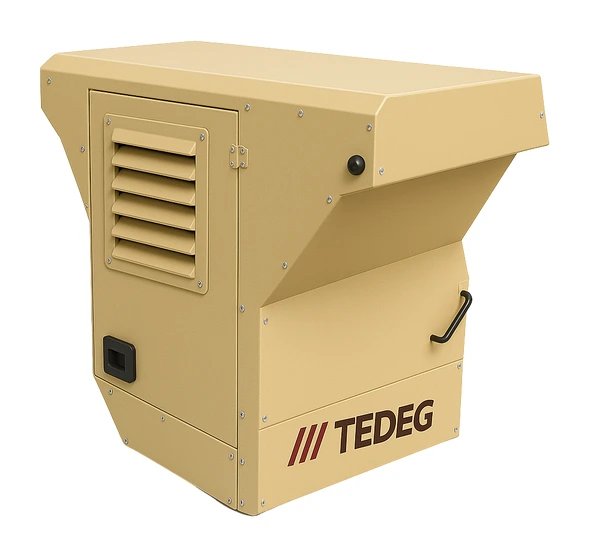
For a tank modernisation programme that ran the main engine at idle on watch just to power weapon systems, communications and climate control, a 28 VDC / 10 kW APU integrated into the vehicle: the PowerGuard YGG-DS11.
Read case study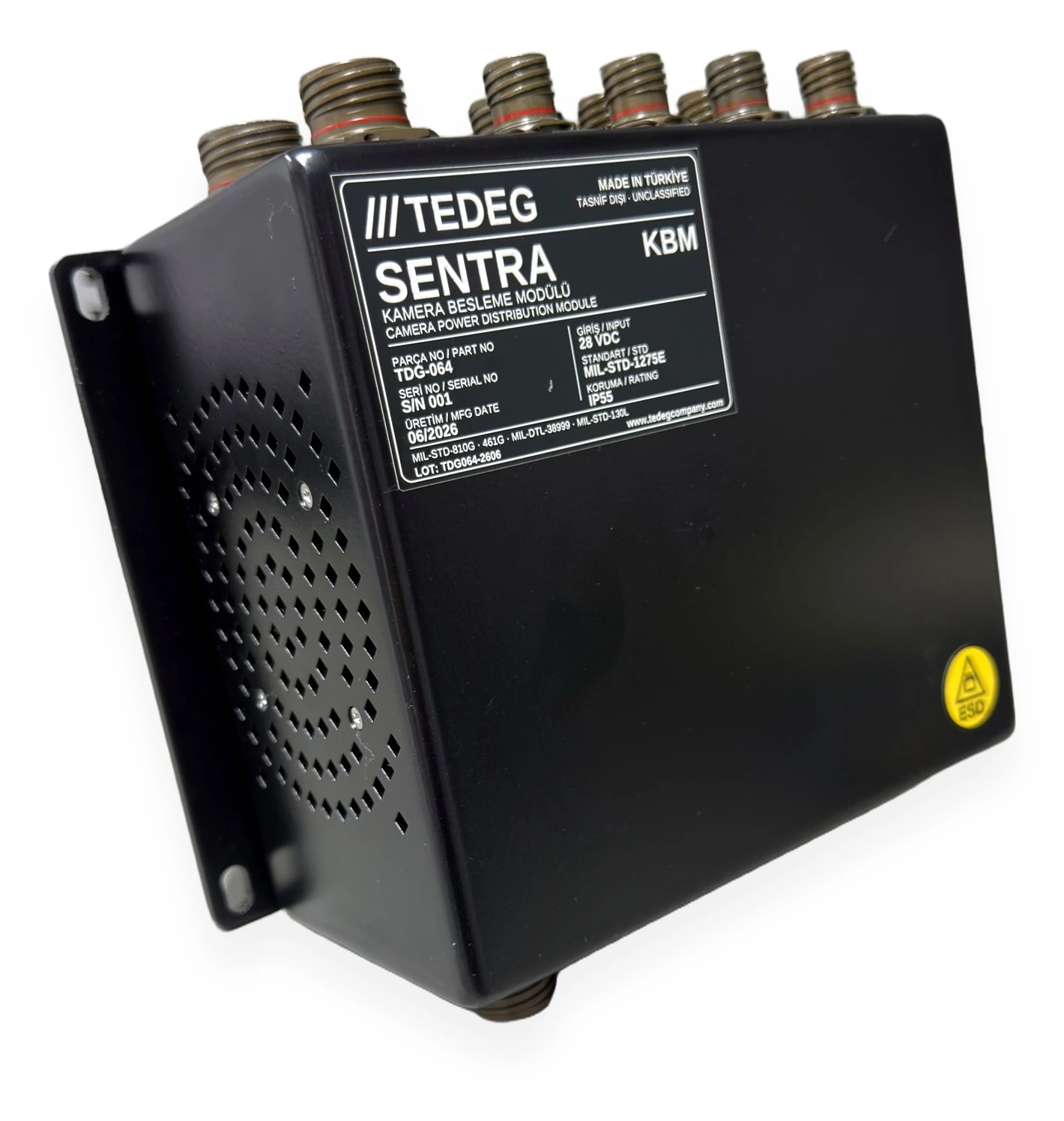
Tactical Wheeled Vehicles · 2026
Tactical Vehicle 360° Camera Suite — From 11 Separate Power Supplies to One Power Module
For a situational awareness suite that fed its cameras, mission computer, operator display and seat module from separate supplies, the SENTRA KBM camera power distribution module, built around the customer’s Technical Requirements Document and ICD.
Read case study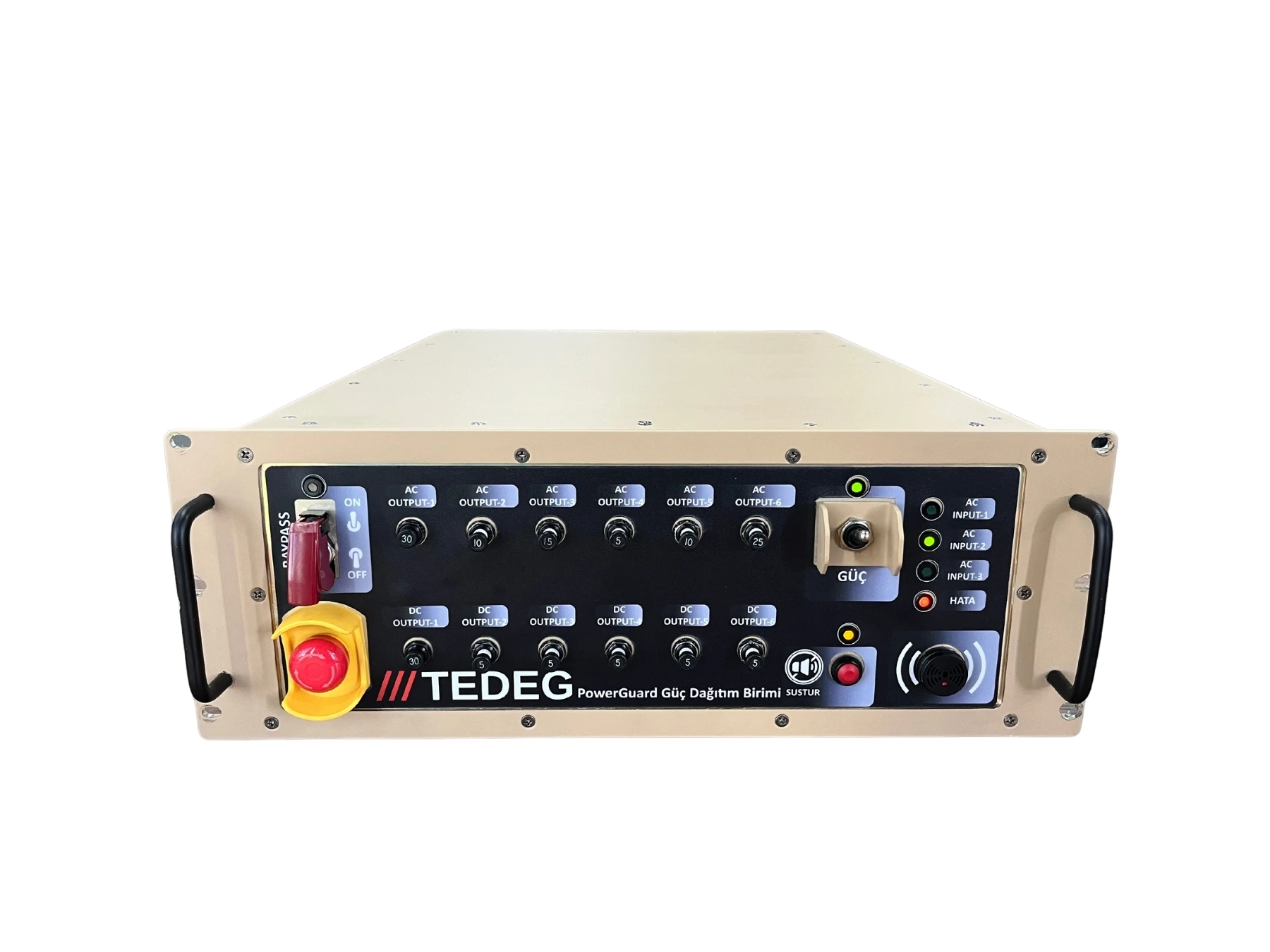
Land Platforms · 2024
Tactical Truck Power Architecture Modernisation
An ageing PDU that could no longer keep pace with growing mission loads was replaced by a remotely monitored power distribution architecture built on the PDU-RT5002 and designed to MIL-STD requirements.
Read case study