The Energy Storage Question in Silent Watch
Running mission electronics with the main engine off, known as silent watch, depends on energy stored in the vehicle. The same question comes up at the start of every design: in a supercapacitor vs battery comparison, which technology fits? The short answer is that they are not rivals; they do different jobs. A battery carries low-power loads for hours. A supercapacitor covers high-power pulses lasting seconds and short hold-up periods.
This article covers storage only. Engine-driven auxiliary power and signature reduction are in our APU and Silent Watch guide, and the place of storage in the vehicle's overall power structure is in military vehicle electrical architecture.
Energy or Power? Two Different Needs
Most storage mistakes come from confusing energy with power.
- Energy (Wh, kWh) sets how long a load can run. Silent watch is an energy requirement.
- Power (W, kW) sets how fast energy can be delivered. Engine cranking is a power requirement.
A typical engine-off load profile has three parts:
- 1.Cranking pulse: very high current for a few seconds. Small energy, large power.
- 2.Short hold-up: keeping the mission computer and communications alive after ignition-off or during a source changeover. Minutes, at moderate power.
- 3.Long watch: feeding surveillance, communications and the mission computer for hours. Low power, large energy.
No single technology is expected to serve all three best.
Supercapacitor and Battery Compared
A supercapacitor stores energy electrostatically in an electric double layer rather than through a chemical reaction; the short definition is in our glossary. That difference explains the whole table below. The values are general engineering ranges, not those of any specific product.
| Property | Supercapacitor | Lead-acid battery | Lithium-based battery |
|---|---|---|---|
| Energy density | Low (typically a few Wh per kg) | Medium (typically 30–50 Wh/kg) | High (typically above 100 Wh/kg) |
| Power density | Very high | Medium | High |
| Cycle life | Hundreds of thousands | Hundreds in deep cycling | Thousands |
| Cold behaviour | Limited capacity loss | Capacity and cranking current drop markedly | Charging is restricted at low temperature |
| Charge time | Minutes | Hours | One to a few hours |
| Self-discharge | High | Low | Very low |
| Voltage curve | Falls linearly with state of charge | Fairly flat | Flat |
| Management | Cell balancing, voltage limit | Simple | Battery management system required |
Two rows decide most designs. Energy density shows why feeding a long watch from supercapacitors is impractical. The voltage curve explains why a supercapacitor is used with a power electronics stage: stored energy follows E = ½CV², so voltage falls as energy is drawn, and a converter is needed to hold the stable voltage the load expects.
Rough Sizing: A Worked Example
Suppose a mission load drawing 500 W must run for 4 hours with the engine off.
- Energy required: 500 W × 4 h = 2,000 Wh, or 2 kWh.
- On a 24 V nominal system that is about 83 Ah.
- If roughly half the capacity of a lead-acid battery is used to protect its life, installed capacity rises to around 170 Ah. Margin for cold weather and ageing is added on top.
- Energy to restart the engine must remain at the end of the watch, which is why starting and mission batteries are separate on most vehicles.
Storing the same 2 kWh in supercapacitors would, at the energy density in the table, mean hundreds of kilograms of cells. A supercapacitor is therefore positioned as the power source that complements the battery, not as the energy source for a long watch.
Which Job for Which Technology?
- A watch lasting hours: battery. Lithium-based chemistries where weight and volume are tight, deep-cycle lead-acid where cost and simplicity lead. When the duration exceeds battery capacity, engine-driven auxiliary power enters the picture.
- Cranking and voltage sag: supercapacitor. If the supercapacitor takes the cranking current, the mission battery can be discharged more deeply because starting power waits in a separate source. The benefit grows in cold weather.
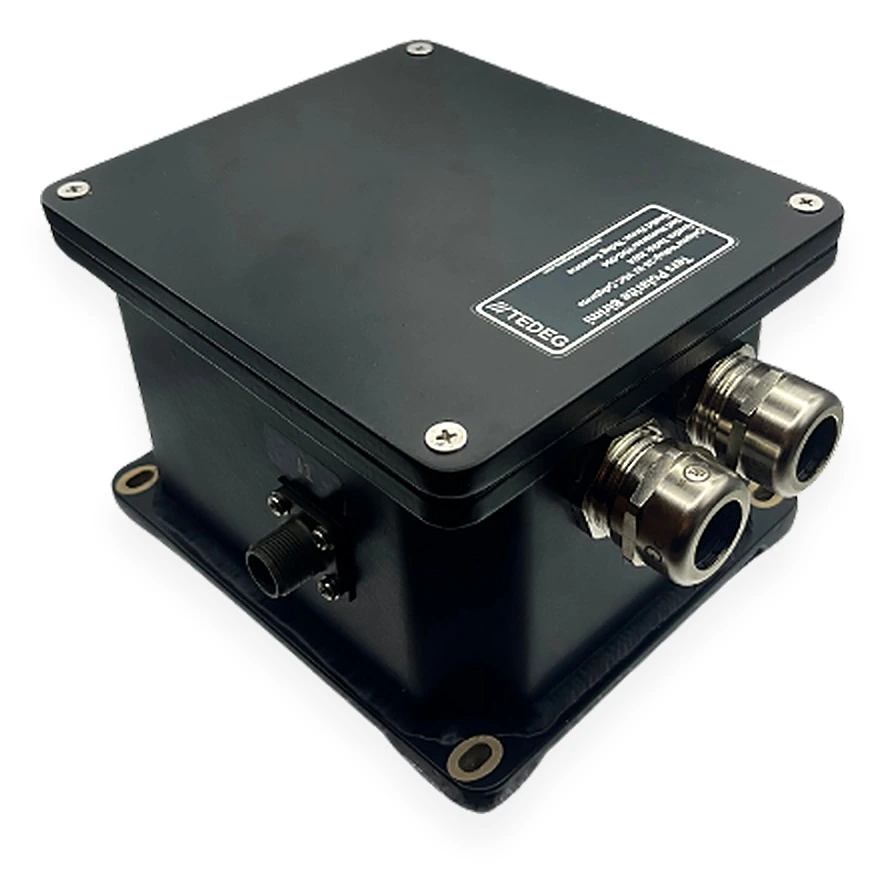
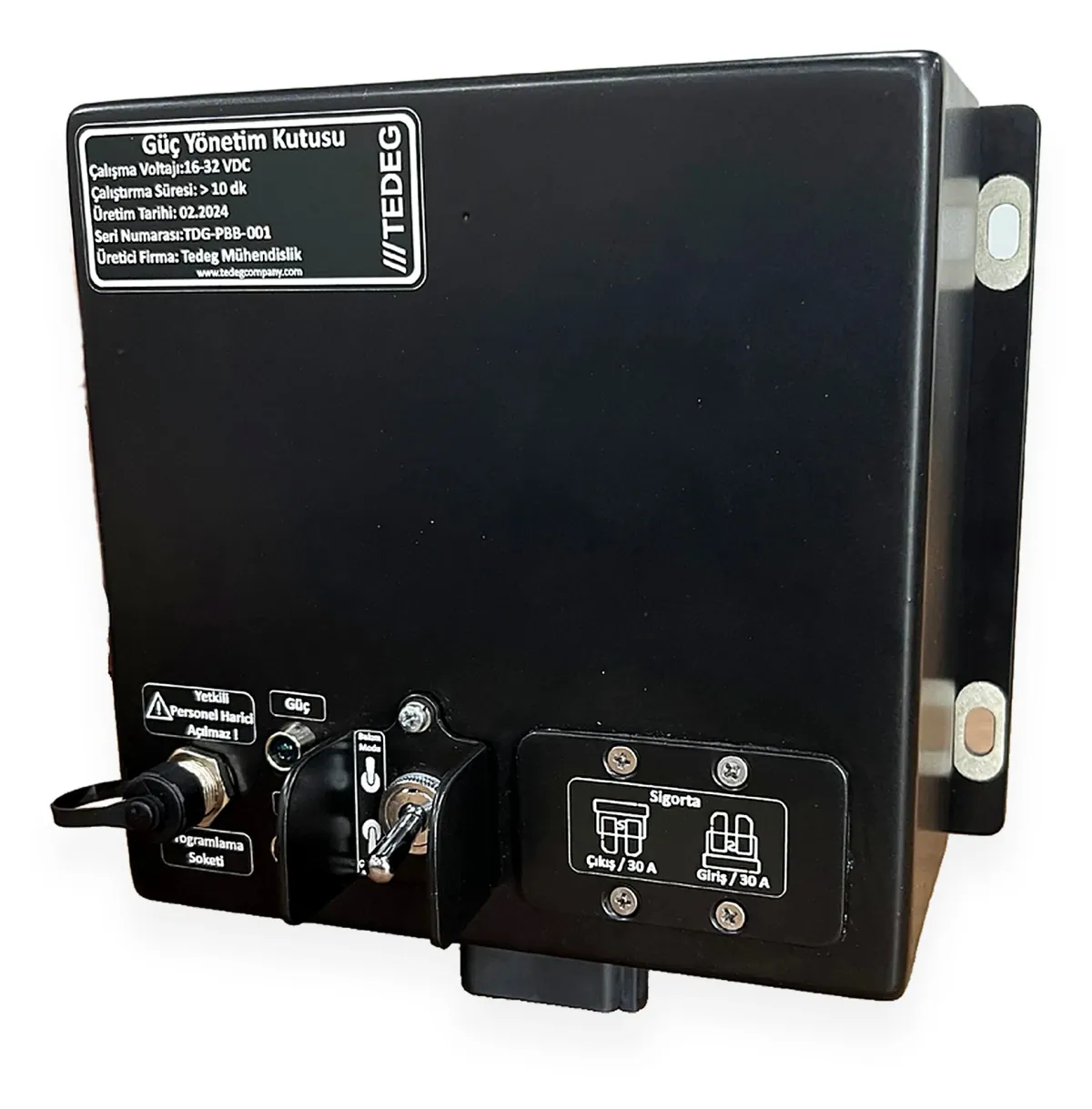
- Short hold-up and supply after ignition-off: a supercapacitor-based backup unit. It tolerates frequent charge-discharge cycles and refills in minutes. TEDEG's product in this class is the PowerGuard EBB; its values are in the datasheet on the supercapacitor backup power unit page.
- Hybrid: the most common solution in practice uses both: battery for energy, supercapacitor for power and hold-up.
Charging System and Protection
Storage is designed together with the charging system. The alternator charges while the engine runs; a mains-fed battery charger takes over when parked. Three points matter:
- 1.Charge current: an empty supercapacitor looks like a short circuit to the source; without current limiting, the alternator and fuses are stressed. A battery needs the charge voltage and temperature compensation suited to its chemistry.
- 2.Bus voltage events: bus voltage drops during cranking and rises on load dump. The tolerance of the storage unit and its loads is assessed against the limits described in our MIL-STD-1275 guide.
- 3.Wrong connection: battery replacement and jump-starting are when reversed connection is most likely. We explained the physics in reverse polarity protection; for a protection unit on the battery line, see the PowerGuard TPB-01 page.
All storage and protection units are listed under power management and protection.
Six Questions to Ask in the Specification
- 1.Which loads run with the engine off, at how many watts in total, for how many hours?
- 2.Where is the energy reserved for restarting the engine held at the end of the watch?
- 3.What is the usable capacity at the lowest operating temperature?
- 4.What are the full charge time and the maximum permitted charge current?
- 5.Are state of charge (SoC) and state of health (SoH) reported to the vehicle data bus?
- 6.How much capacity is guaranteed after how many cycles, and can cells be replaced in the field?
Frequently Asked Questions
Can a supercapacitor replace a battery?
Not for hours of supply; its energy density is too low. For cranking support, preventing voltage sag and hold-up lasting minutes, it can be the better choice.
Which battery chemistry suits silent watch?
Lithium-based chemistries where weight and duration come first, deep-cycle lead-acid where cost and simple maintenance come first. With lithium, the battery management system and the low-temperature charging limit are part of the design.
Why can't a supercapacitor hold energy for long?
Its self-discharge is high compared with a battery; a supercapacitor left charged loses a noticeable share of its energy within days. It therefore suits applications that recharge often.
Can a supercapacitor and a battery be connected in parallel on the same bus?
Direct parallel connection is possible but needs voltage matching and charge current limiting. In most systems the supercapacitor sits behind a power electronics stage that manages current and voltage.
Conclusion
Choosing energy storage for silent watch is not an either-or decision. Long-duration energy comes from the battery, high-power pulses and short hold-up from the supercapacitor, and the charging system and protection layer tie them together. If your load list and watch duration are known, we can work out the right combination together: request a quote or contact our engineering team.
Field example: read why supercapacitor backup was chosen over a lithium-ion battery for a vehicle subsystem in the supercapacitor backup case study.