What Is Blackout Mode?
Blackout mode is the operating state in which a military vehicle, or a device fitted to it, removes its detectable light and sound signature on a single command. It is the electronic form of light discipline. In older vehicles the job was done by hooded blackout lamps that replaced the headlights. On a modern armoured vehicle, displays, power panels, warning units and converters all emit light through their own indicators, so military vehicle blackout is no longer one lamp switch but a shared behaviour of the whole electronic system.
This guide explains why "blackout" differs between devices and how to design it at system level. For its place in the wider architecture, see what is vetronics; a short definition is in the glossary.
What Does Light Discipline Cover?
Light discipline is more than switching off headlights. Sources that can give a vehicle away at night typically fall into four groups:
- External lighting: headlights, stop and indicator lamps, searchlights, warning beacons.
- Light leaking from inside: display backlights, panel LEDs and cabin lighting seen through an open hatch or a vision block.
- Sound: sirens, audible alerts and the warning tones of individual devices.
- Unintended light: a stop lamp that comes on when the brake pedal is pressed, or a warning LED that lights by itself when a fault occurs.
The last group is the most often missed: blackout must also define what each device does when something unexpected happens.
One Word, Three Different Behaviours
The feature called "blackout" on a datasheet does not do the same thing on every product. Three TEDEG products show the difference clearly:
| Behaviour | What goes dark? | Power outputs | Example |
|---|---|---|---|
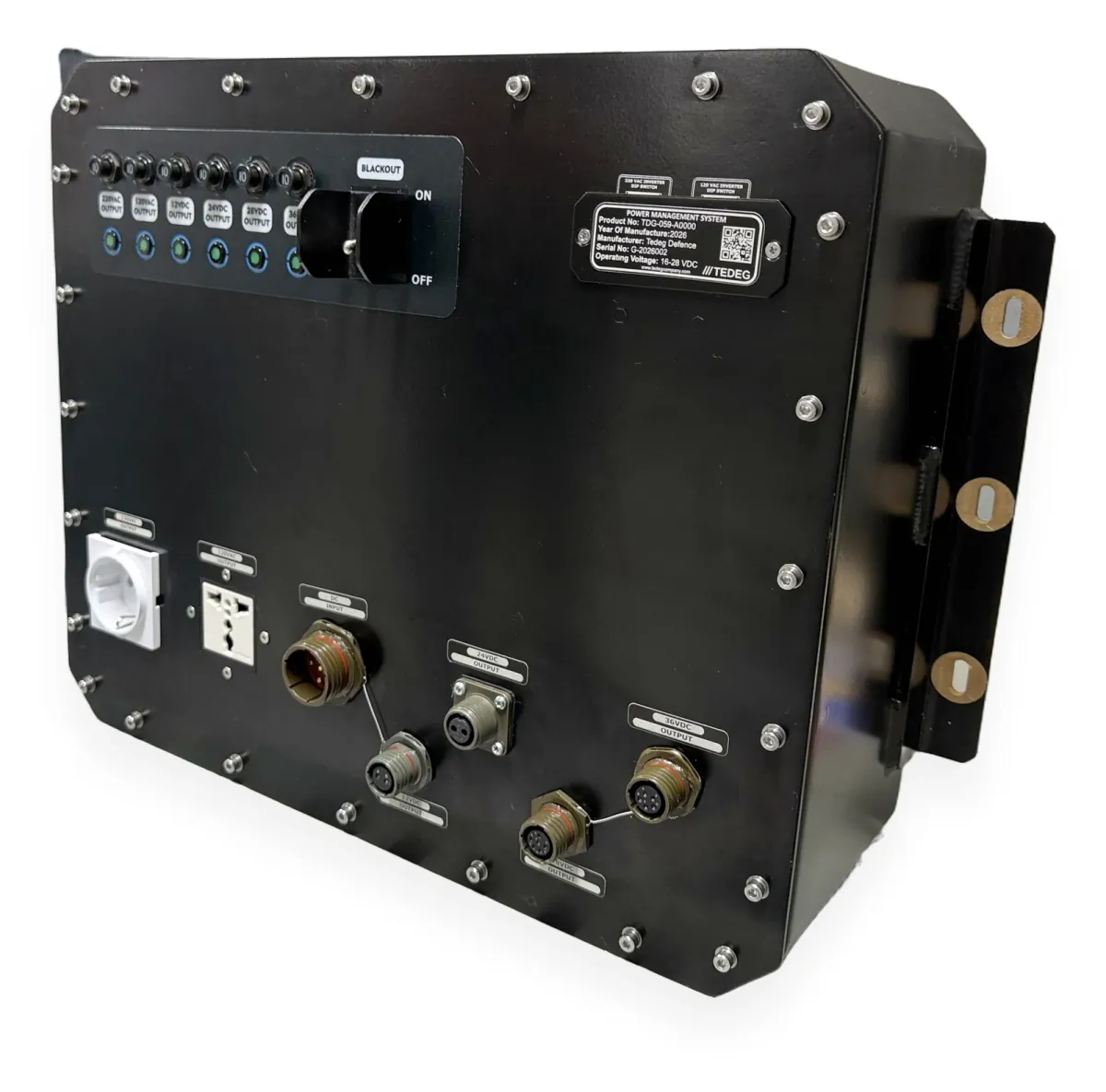
| Indicators off | Panel LEDs | Stay live | TPS-24DCAC front-panel BLACKOUT switch |
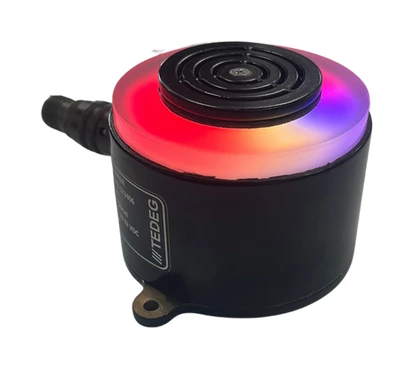
| Alerts silenced | LEDs and audible alert | — (the unit feeds no loads) | T-Light warning unit blackout mode |
| Outputs cut | Every load being supplied | Cut | A1000 / D1000 Remote Commander Blackout button |
Blackout that switches off indicators
Each of the six power lines on the PowerGuard TPS-24DCAC military power conversion unit has its own green LED indicator. The front-panel BLACKOUT switch extinguishes all status indicators through a relay group, and the power lines are not interrupted. Radios and sensors keep running while the panel stays dark.
Blackout that silences alerts
On the T-Light programmable warning unit, blackout mode switches off the LEDs and the audible alerts completely. The unit takes commands over RS-485 or CAN-Bus (the protocol is chosen at order), and its audible alert reaches a maximum of 110 dB in three levels. It can also run with sound off and visual warnings only, which is a "silent" state distinct from full blackout.
Blackout that cuts outputs
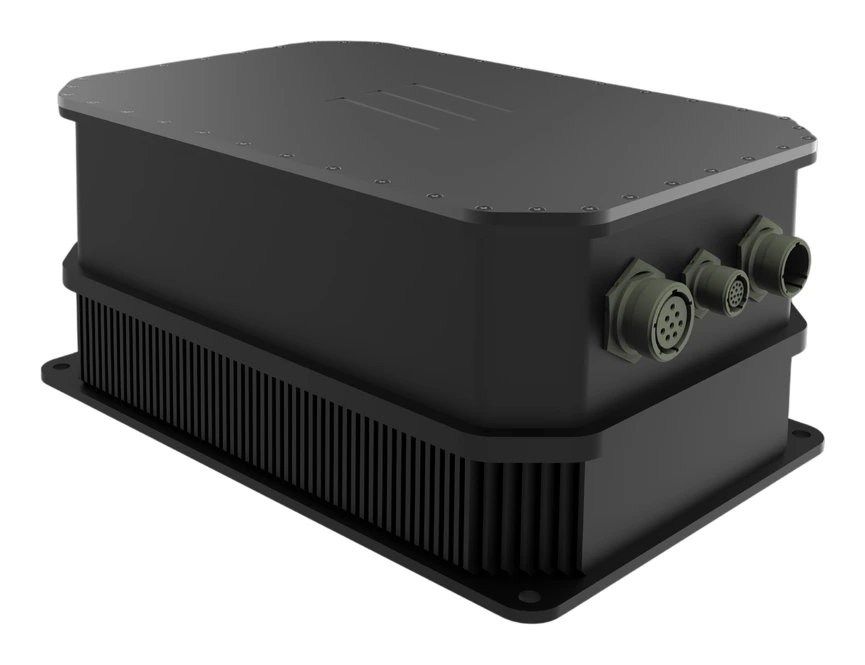
For the PowerGuard-A1000 AC-DC converter and the PowerGuard-D1000 DC-DC converter, the optional Remote Commander Control Box provides a Blackout button that instantly disables all outputs. This behaviour removes energy, not just indication: every 24 VDC load fed by the converter stops. On the D1000 box, Blackout status is also shown on its own LED.
All three behaviours are valid. The mistake is a specification that says only "blackout mode required" without stating which one: a panel that cuts outputs when it should only dim shuts down the mission electronics.
Designing Blackout at System Level
Treating blackout as a system behaviour rather than a device feature calls for a few design decisions:
- One command source: blackout should start from a single switch on the driver's or commander's panel, or from the mission computer, and reach every subsystem.
- Switch or data bus? A hard-wired switch is simple but needs a line to each device. A bus command reaches many devices in one message; the identifier it uses is defined in the interface control document (ICD). We cover that side in CAN bus and SAE J1939 in military vehicles.
- If the message is lost: when a device stops receiving the blackout command, does it hold its last state or return to normal? That default should be written down.
- Leaving blackout: if every indicator and warning lights at once on return to normal, the vehicle becomes visible in an instant; the order of return and who is authorised to command it should be defined.
- Critical alerts during blackout: with external warnings silenced, critical conditions such as overtemperature or low voltage still have to reach the crew, through a dimmed in-cabin display or a separate path.
- Display backlight: how displays behave in blackout is set together with any requirement for use with night-vision goggles.
Vetronics and tactical products are listed under military vetronics and tactical systems, and the power side under military AC-DC and DC-DC converters.
Questions to Ask in the Specification
- 1.On which devices does blackout switch off what: indicators, sound, external lamps, power outputs?
- 2.Will the command come from a hard-wired switch, the data bus, or both?
- 3.Which identifier and content define the bus message in the ICD?
- 4.What is each device's default state if the message is lost?
- 5.Which loads must never be cut during blackout?
- 6.What is the sequence and authority for leaving blackout?
- 7.How will a critical fault be reported to the crew during blackout?
- 8.Can the device state be queried? (On T-Light, connection status and the last received command can be queried.)
Frequently Asked Questions
Does blackout mode cut the power lines?
It depends on the product. The TPS-24DCAC BLACKOUT switch extinguishes only the indicators; the Blackout button on the optional A1000/D1000 control box disables all outputs. State the required behaviour in the specification.
What is the difference between blackout mode and silent mode?
In silent mode only the audible alert is switched off and the visual warning continues. In blackout mode both light and sound are switched off. The T-Light warning unit offers both options.
Should the blackout command come from a switch or the data bus?
A typical approach uses both: the commander's switch informs the mission computer, which distributes the command over the bus, while devices without a bus interface are blacked out over a hard-wired line.
How is a critical fault reported during blackout?
Route critical conditions inside the cabin: a warning line on the dimmed display or a separate internal alert. Otherwise blackout hides the fault as well.
Conclusion
Blackout mode means different things from device to device: indicators off, alerts silenced or outputs cut. Blackout that works is these behaviours acting together on one command, in a defined order, with predictable defaults. To discuss your vehicle's blackout scenario and the configuration of the related products, request a quote or reach our team through the contact page.